The iconic Pic du Midi d’Ossau reflected in four alpine lakes. This loop takes you directly under the North Face on a route that most people treat as a multi-day trip. We prefer it as a fast-and-light day loop with a mandatory stop at the Refuge d’Ayous halfway through.
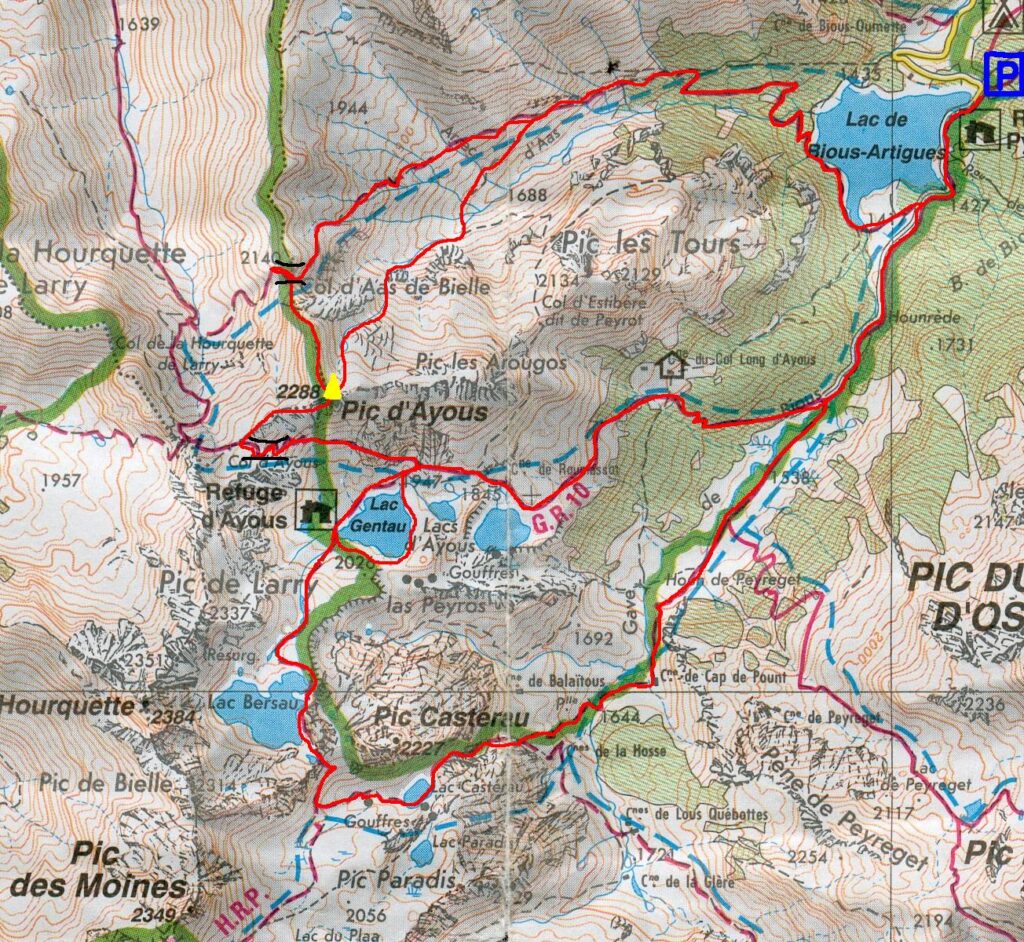
- Distance: 10 miles / 16.5km
- Elevation: 🏔️ Ascent: 720m – Descent: 760m
- Type: 🔁 Loop
- Trailhead: 📍 Parking de Bious-Artigues (€6.50)
- Duration: 3 hrs 30 min – 5 hrs
- Mountain hut: 🍺 Refuge d’Ayous
- Highest point: 2,096 m
- Lowest point: 1,414 m
- Difficulty: Moderate (well-marked paths / no scrambling)
Refuge d’Ayous
- Alcohol: ✅
- Food: ✅
- WC: ✅ (free)
- Water: ✅ (free)
- Beds: ✅
- Elevation: 1,980 m
- Vibe: High-energy social spot where day-hikers and thru-hikers cross paths.
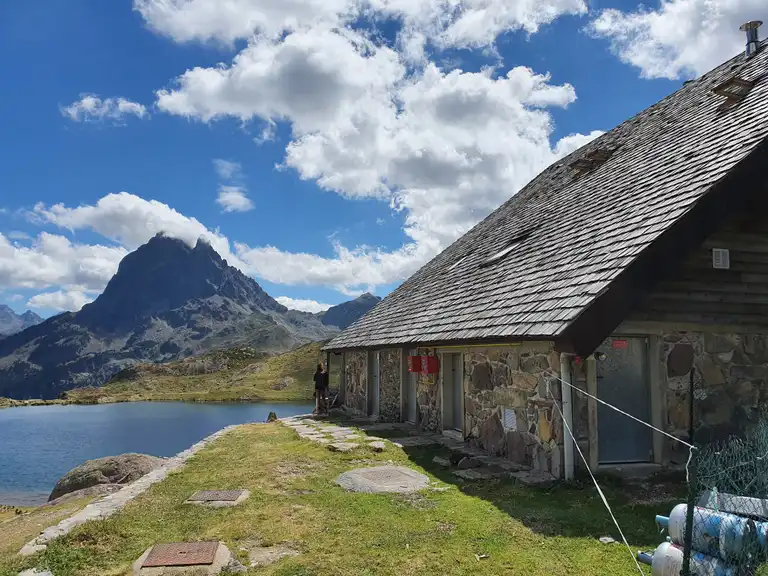
- The View: The terrace faces directly across the water toward the Pic du Midi d’Ossau.
📍Where to start
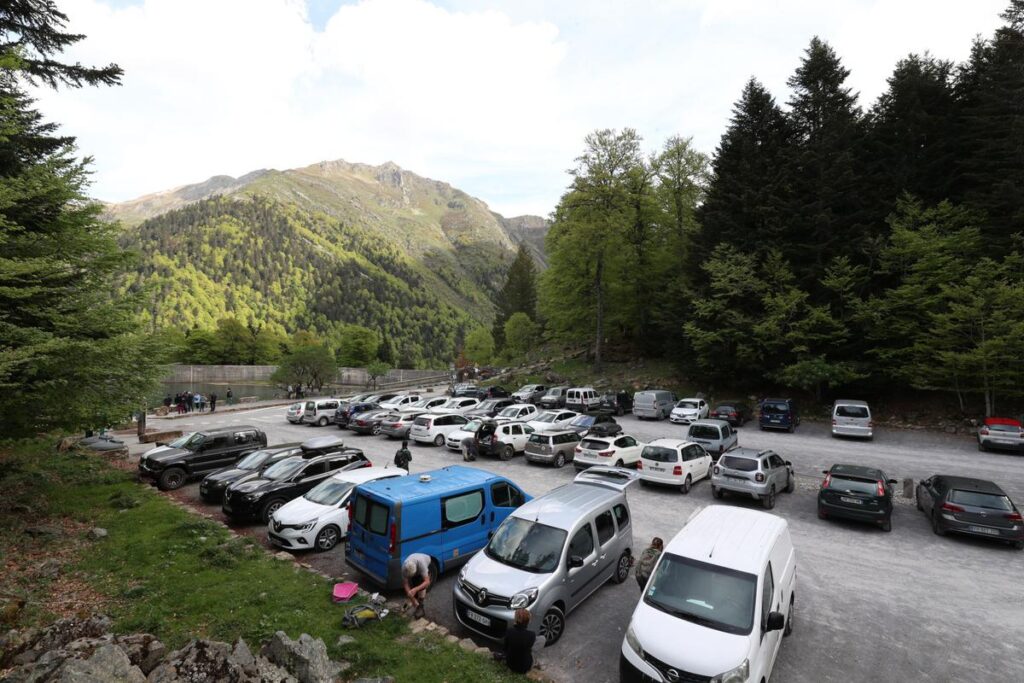
Located deep in the Pyrenees National Park in the heart of the Ossau Valley, this loop starts at the Bious-Artigues dam. Park at the upper lot if you’re early, or the lower one if you want a warm-up mile, then head past the lake to pick up the GR10 trail into the trees.
The drive in is stunning, following perfectly paved roads that wind through iconic Tour de France territory, including the legendary slopes of the Col d’Aubisque and Col de Marie-Blanque. It’s a scenic 1 hour 10 minute drive from our recommended base town, giving you plenty of time to fuel up on coffee before hitting the trailhead and even more time to enjoy the incredible food and drink waiting for you back in Pau. Check out our Summit & Sláinte Scorecard for Pau here for the best post-hike spots.
Starting the hike:
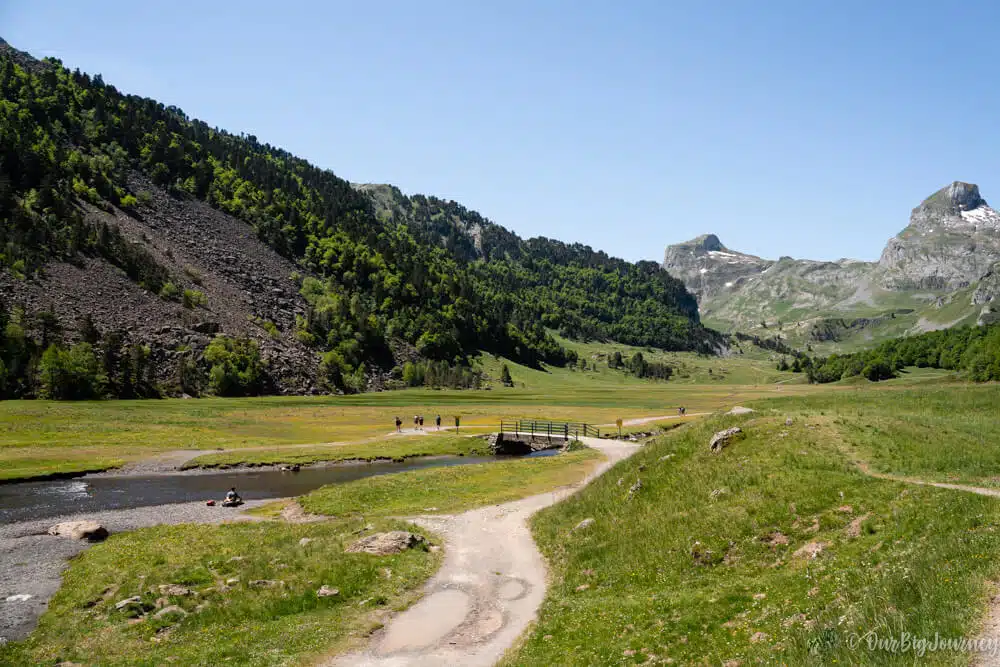
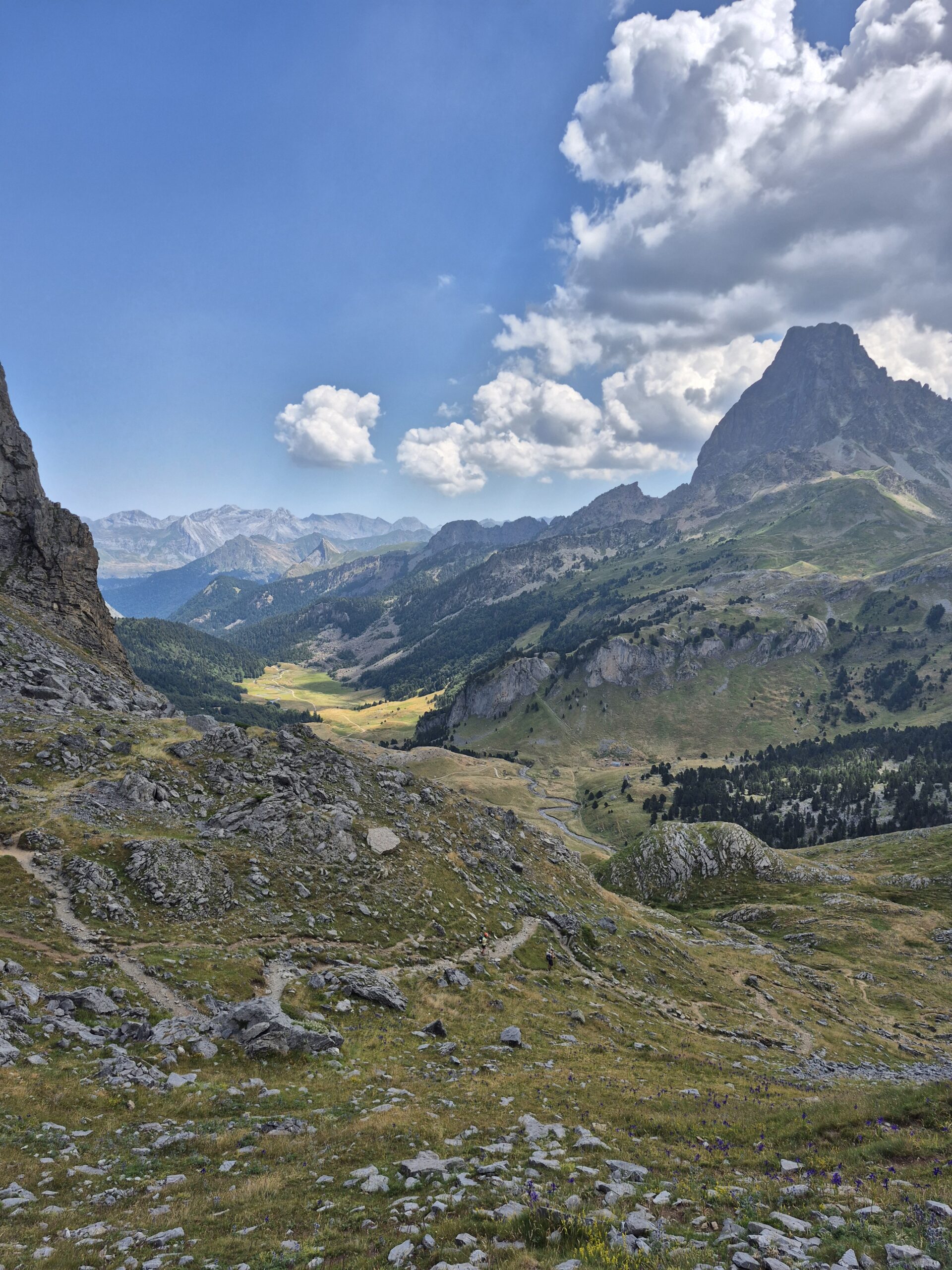
The hike begins at the Bious-Artigues dam (1,422m). The first kilometer is a flat, gravel warm-up along the eastern shore of the lake, providing a direct view of the Pic du Midi d’Ossau ahead. After crossing the bridge at the far end of the water, the terrain changes as you join the GR10. The trail enters a dense beech forest and begins a sustained, rocky ascent that gains elevation quickly. These trees provide some shelter against the sun if it’s a warm day, and in our case, some shelter from a huge midday thunderstorm. As the trees begin to thin, the path opens into the high-altitude pastures of the Plateau de Bious. You soon reach a major signposted junction: turning left over the bridge leads toward the Lac d’Aas de Bielle for a longer clockwise circuit, while continuing straight on the GR10 maintains the direct line toward the first lakes and the Refuge d’Ayous. We opted for the longer loop but if you are short on time the out and back route to the refuge cuts the hike down to 6 miles with 500m total elevation. You will, however miss out on two of the alpine lakes and some stunning views over the Ossau Valley.
Lake #1: Lac Castérau – 1,943m
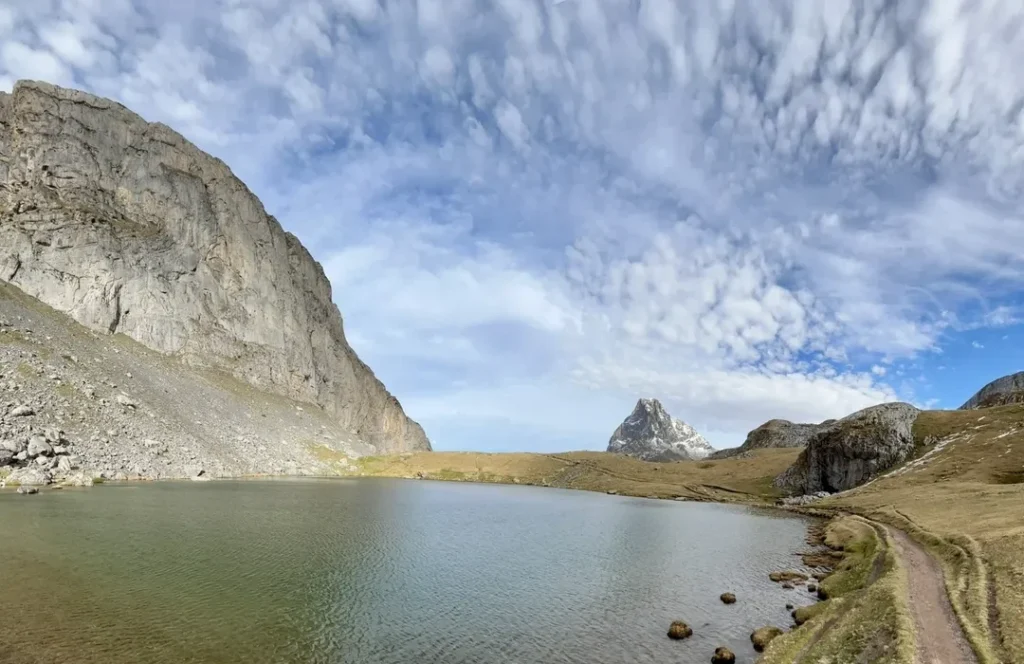
From the junction on the Plateau de Bious, the clockwise route turns right and heads west, leaving the GR10 to enter the Vallon d’Aas de Bielle. The path follows a steady, sustained ascent through open pastoral land, paralleling a mountain stream as it gains elevation toward the base of the Pic de Castérau. After a final steeper push through rocky terrain, the trail reaches the first body of water, Lac Castérau, at 1,943m. The lake is situated in a bowl beneath the cliffs of its namesake peak and serves as the gateway to the higher alpine basin.
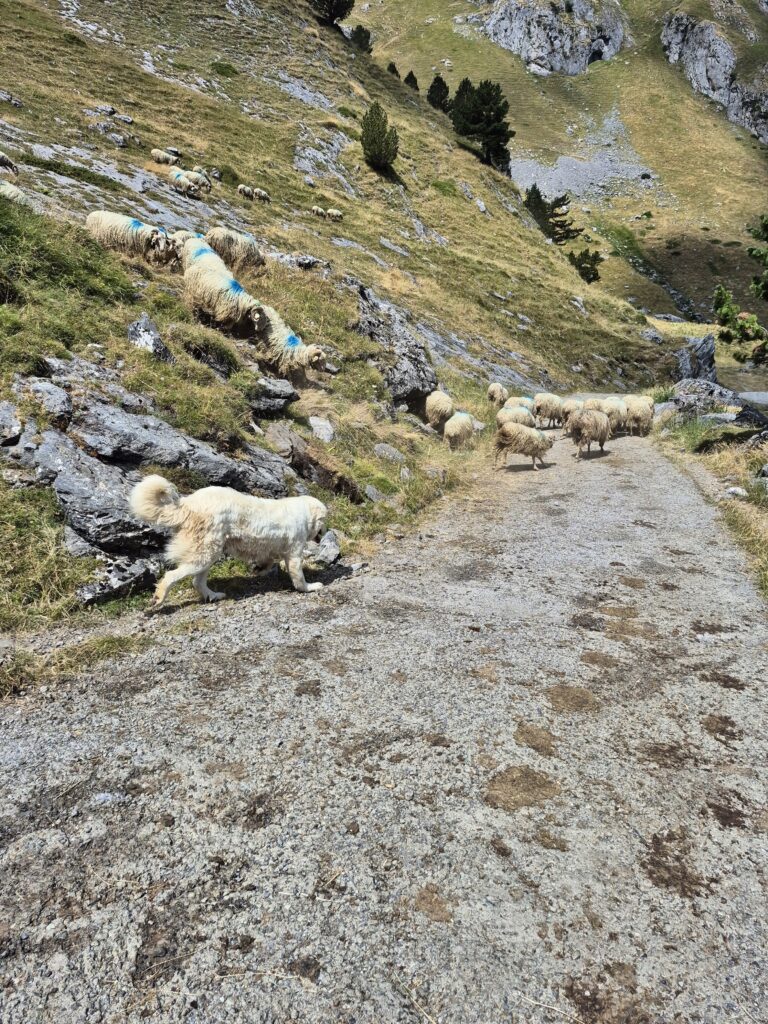
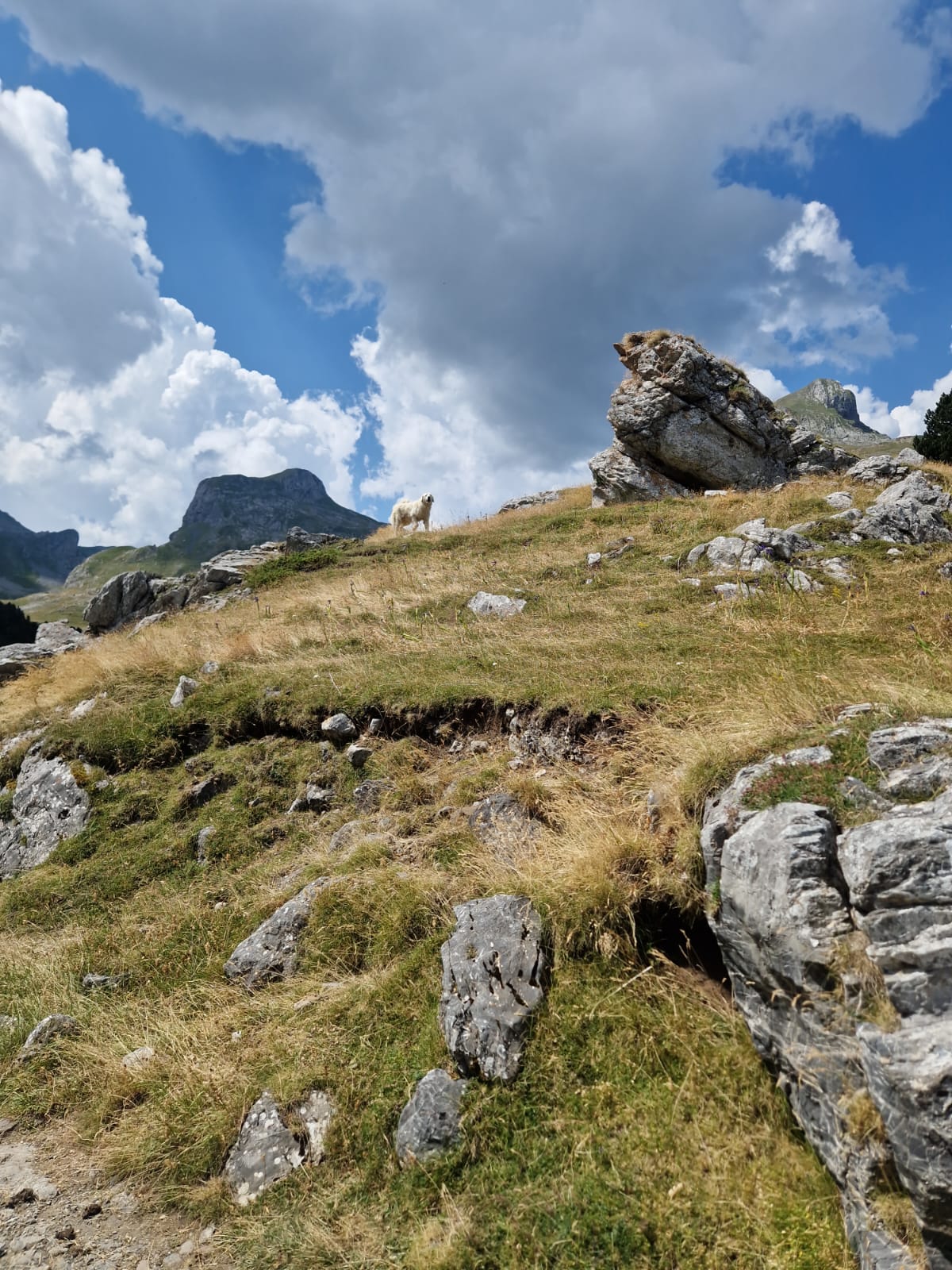
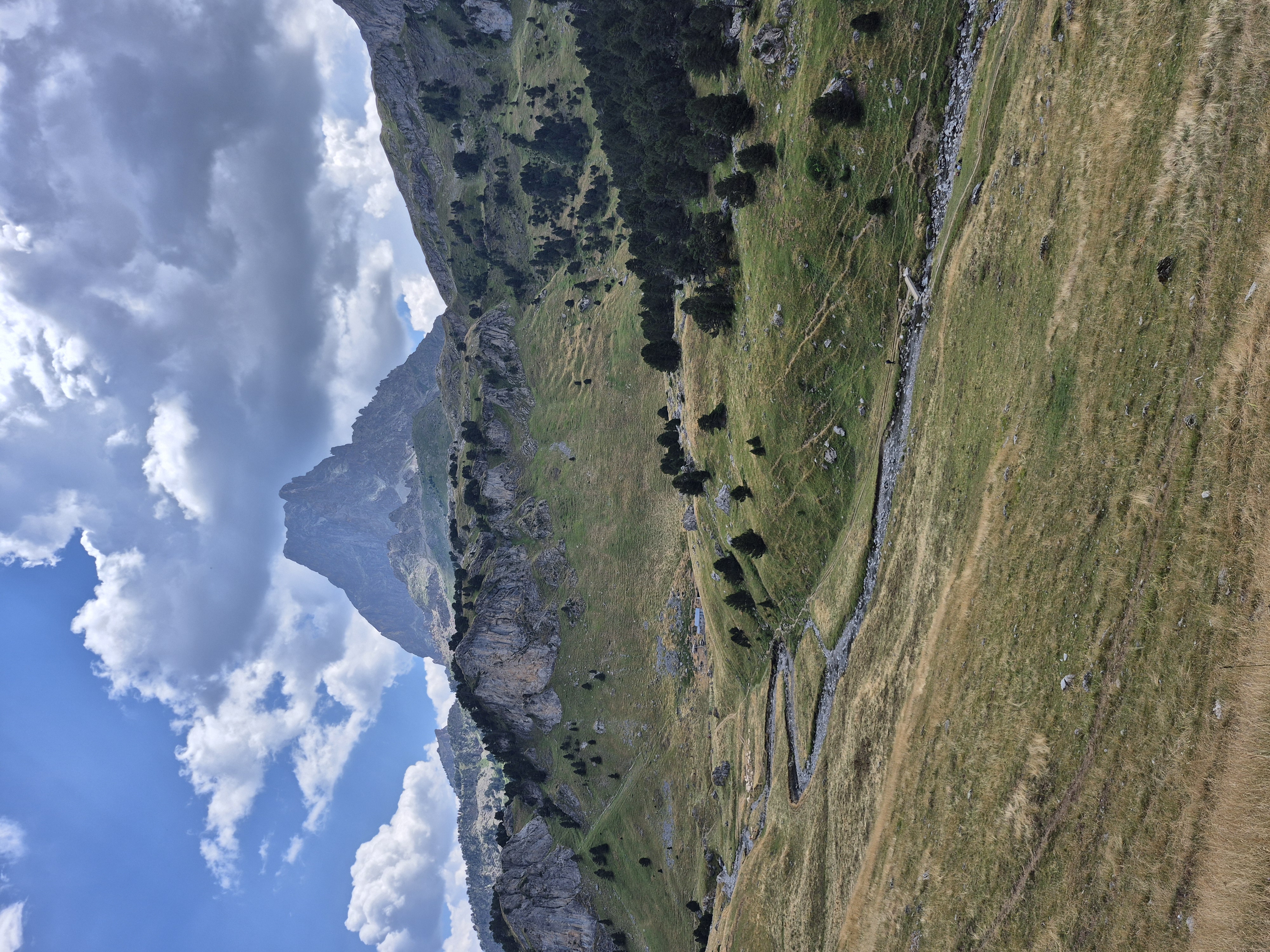
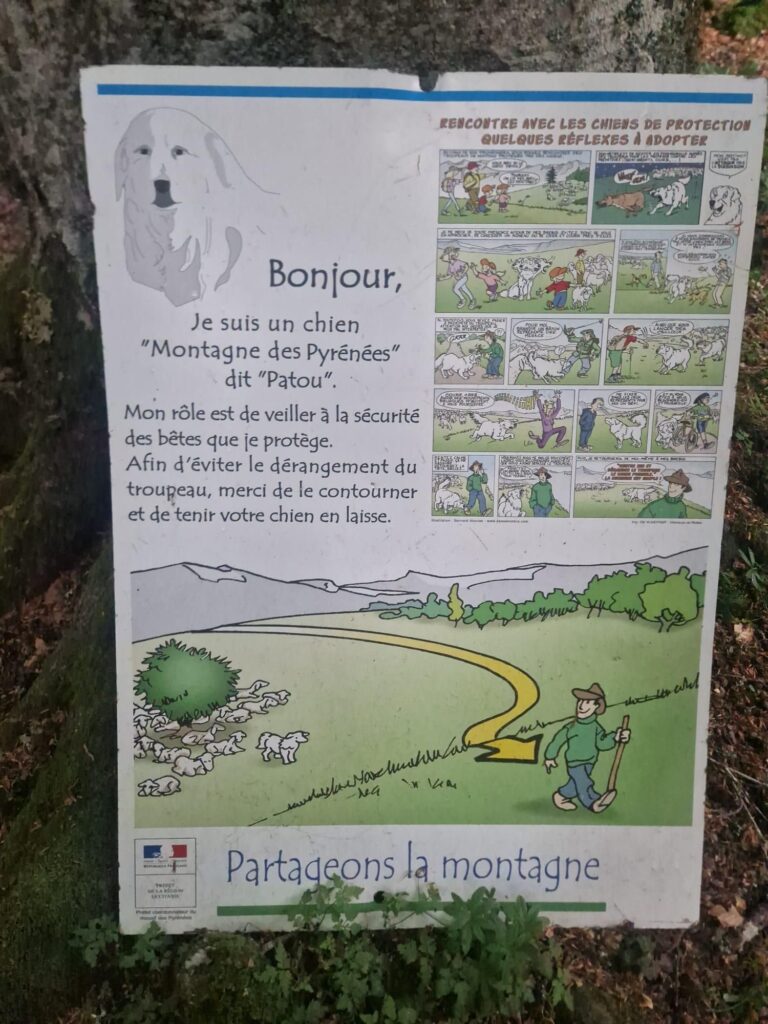
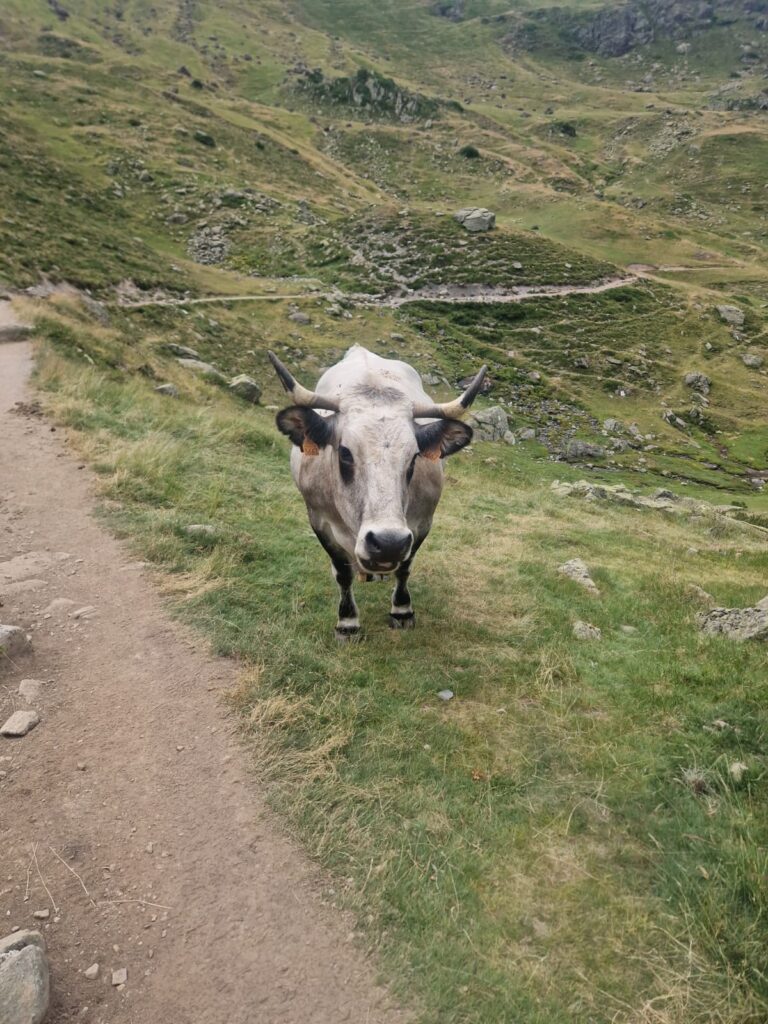
From the valley floor, we spotted an incredibly orderly line of sheep navigating their way down from the high ridges. As we gained elevation and our paths crossed, we realized why they were moving with such precision. There wasn’t a farmer in sight; instead, the flock was being managed by two massive Great Pyrenees mountain dogs – one leading the charge and the other bringing up the rear. These dogs, known locally as Patous, operate with a high degree of autonomy and follow established routes between grazing grounds.
It was one of the absolute highlights of the trip to see these animals working with such independence. While the leader kept the sheep moving, the second dog took a commanding position on a hill above us, barking firmly until we moved well clear of the trail. It was a very clear, “no-nonsense” signal to give them space. We couldn’t believe the sheer scale of these magnificent dogs. They look remarkably like Mary, our Golden Retriever (who you can see on our about page here), but at least three times the size and clearly in charge of the mountain.
Lake #2: Lac de Bersau – 2,080m
From Lac Castérau, the trail turns sharply and begins a more demanding, rocky ascent toward the highest point of the circuit. You’ll navigate a series of steep switchbacks that climb the ridge overlooking the Castérau basin. As you crest the Col des Moines, the terrain transitions into a stark, high-alpine environment characterized by exposed rock and low vegetation.
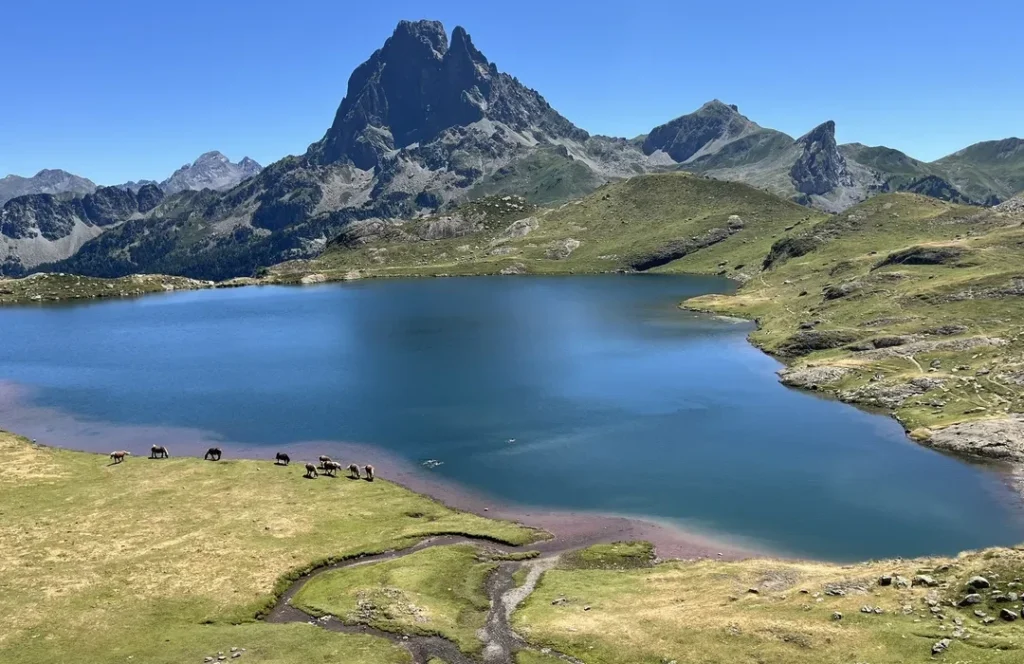
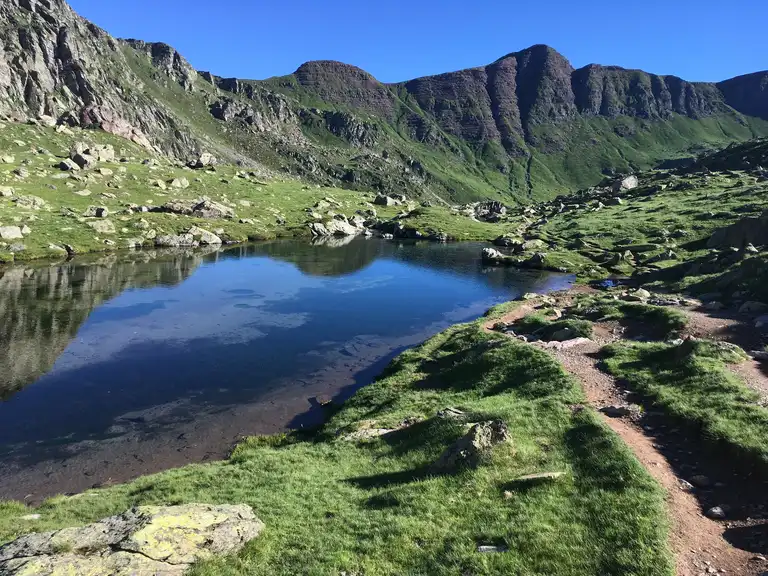
The path levels out as you reach Lac de Bersau at 2,080m. This is the largest and deepest lake in the chain, often holding a deep blue color even under cloud cover. Situated in a rugged plateau, it marks the summit of the lake sequence and provides a panoramic view of the surrounding peaks before the trail begins its descent toward the refuge.
Refuce d’Ayous & Lake #3: Lac Gentau – 1,947m
From Lac de Bersau, the trail begins a steady descent toward the northeast. This section of the path is well-defined and rocky, dropping approximately 130m in elevation over a series of wide bends. As you descend from the high-alpine plateau, the landscape opens up to provide the most prominent view of the Pic du Midi d’Ossau directly ahead.
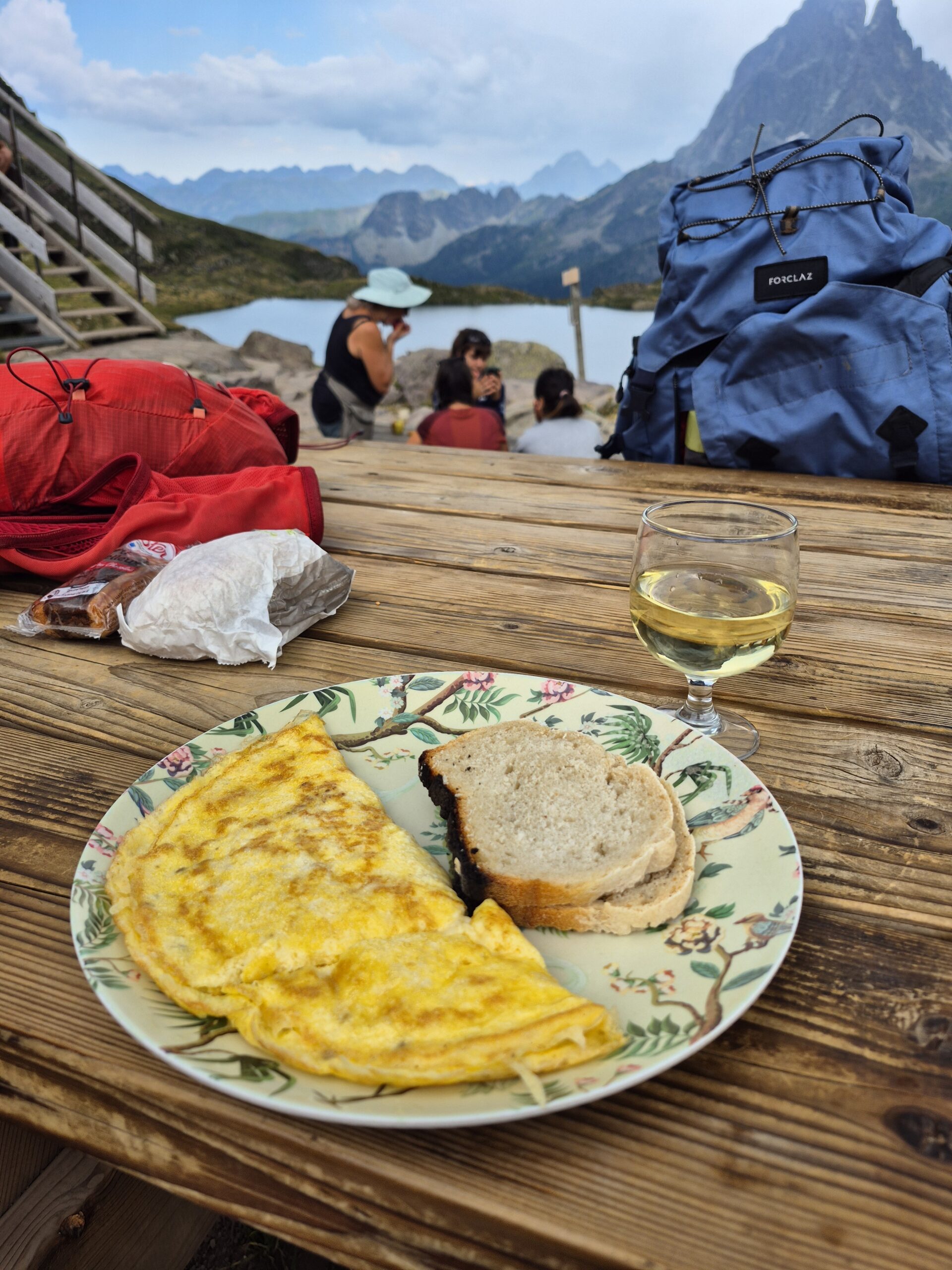
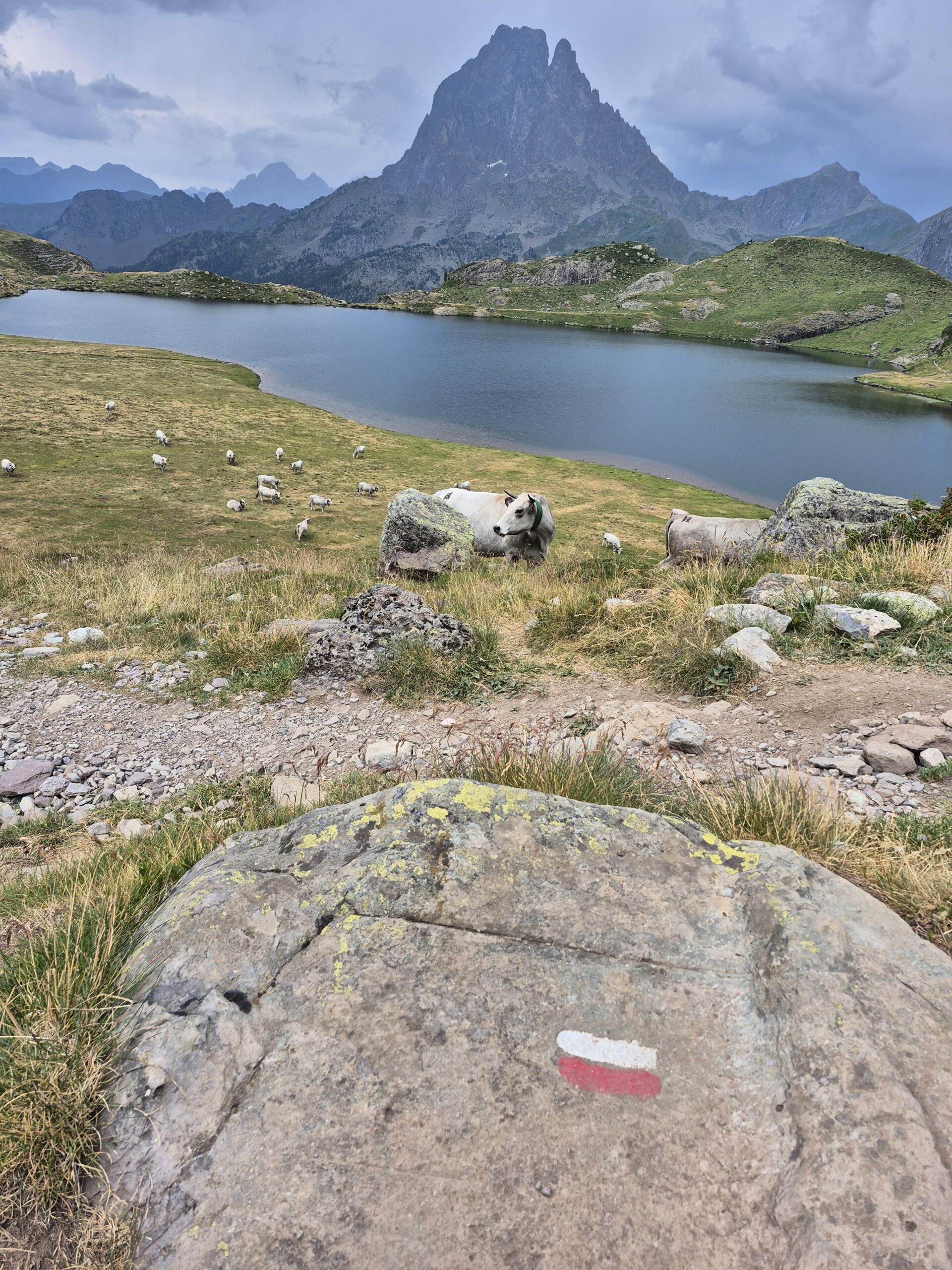
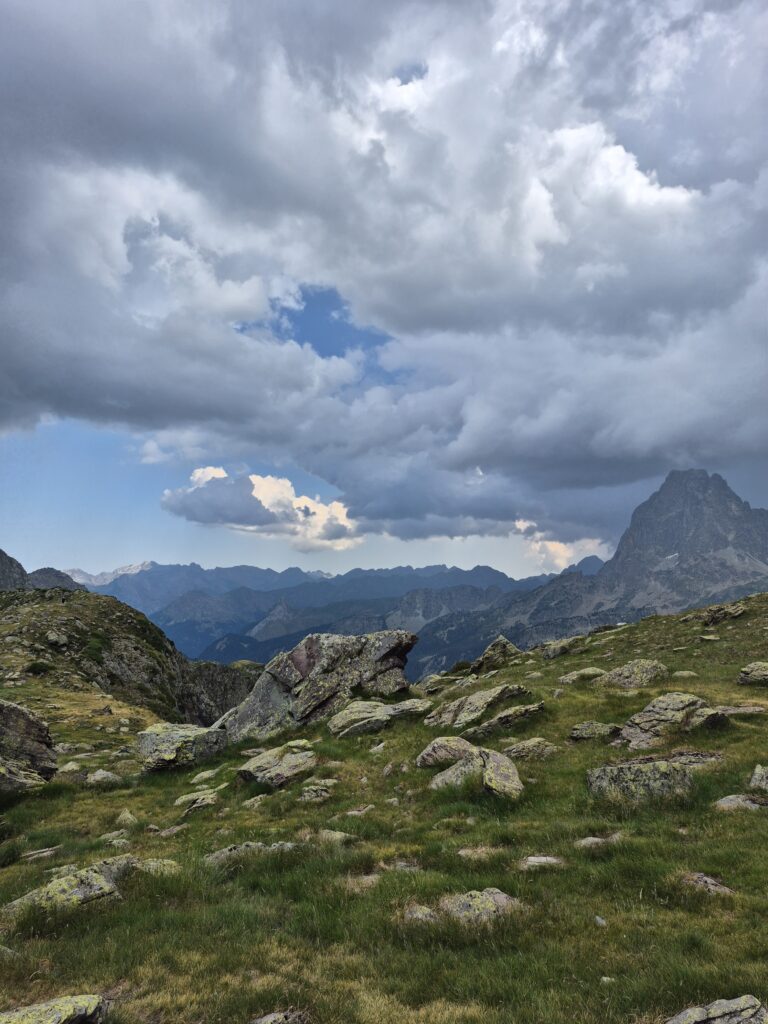
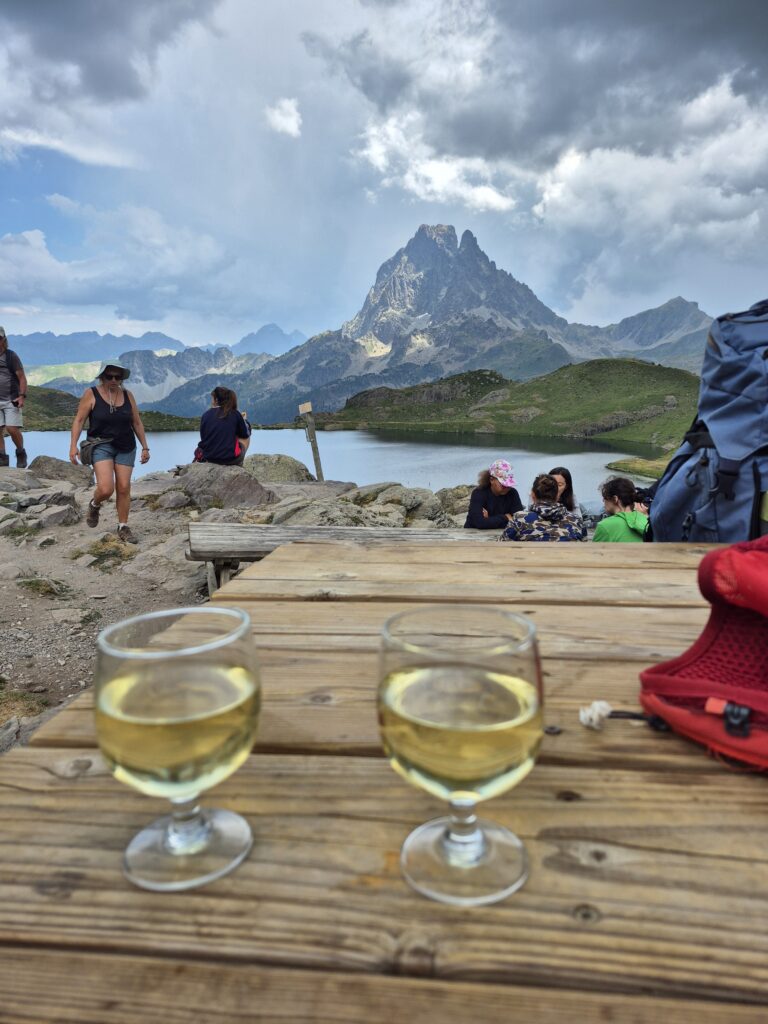
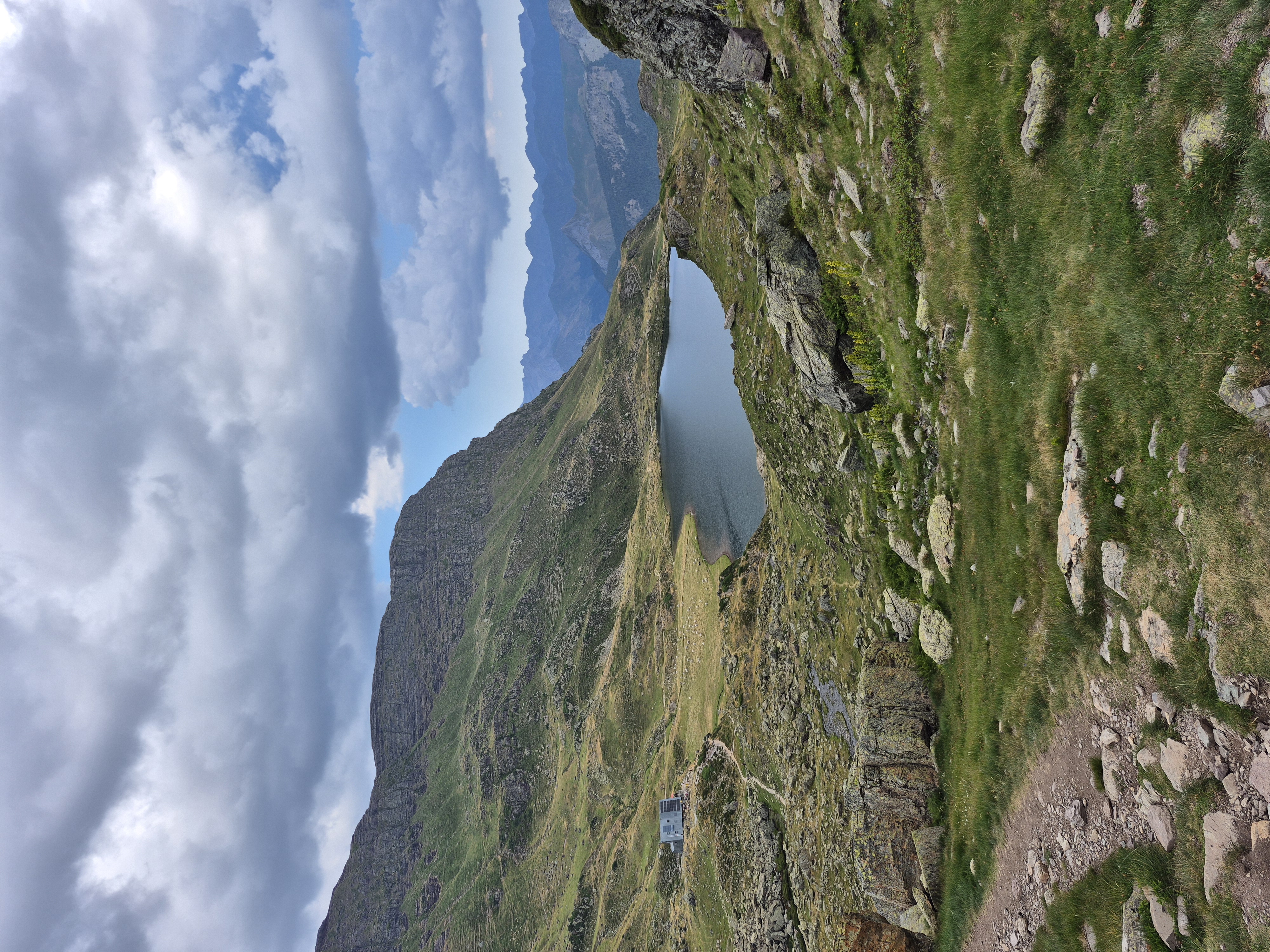
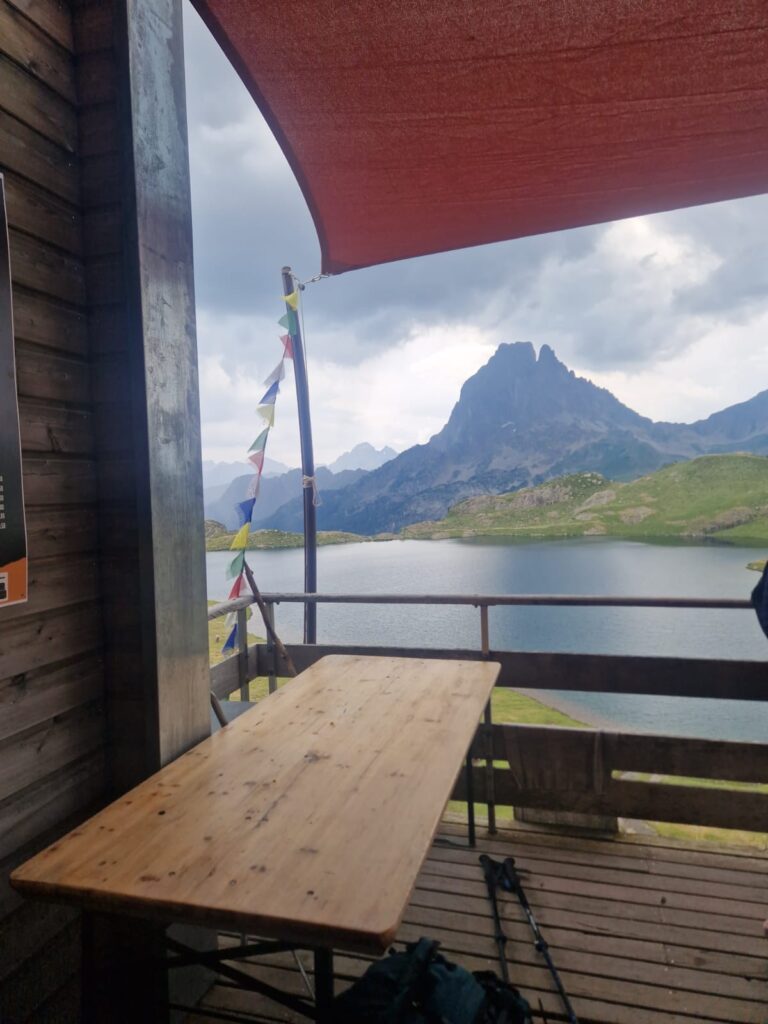
The trail leads you onto a grassy promontory overlooking the next basin, where you reach Lac Gentau (1,947m). This is the site of the Refuge d’Ayous, which sits on a small rise above the water. This lake is the primary focal point of the circuit, as its position offers the classic mirror reflection of the Pic du Midi d’Ossau. The refuge is a key logistics point on the loop, and we stopped for a high-quality omelette and some excellent local wine from the region. It is a social hub for hikers, and we spent time with a group of Germans who were in the middle of a six-day thru-hike across the Pyrenees. Sharing the terrace with long-distance trekkers adds a great atmosphere to the stop, highlighting the refuge’s role as both a day-hike destination and a vital stage for those crossing the entire range. This is such a special and peaceful place and we could easily have spent hours here sipping wine and listening to the bells of the local livestock. See here for the key stats.
Optional detour – Pic d’Ayous -(2,288m)
For those with time and energy, we highly recommend the optional detour to the summit of Pic d’Ayous (2,288m) beginning near the Col d’Ayous, just above the refuge.
The Ascent to the Summit
- The Turn-off: From the main trail near the Refuge d’Ayous, follow the signposted path heading west toward the ridge line.
- Terrain: The ascent shifts from a standard hiking trail to a steep, zig-zagging path over loose scree and broken rock.
- Difficulty: While not a technical climb requiring ropes, it is a strenuous physical effort involving approximately 340m of additional vertical gain from the lake level. The final ridge section is narrow and exposed, requiring steady footing.
- The View: The summit provides a 360-degree panorama. Unlike the lakeside views, this vantage point puts you at eye-level with the mid-section of the Pic du Midi d’Ossau and offers a top-down perspective of all five lakes (Roumassot, Miey, Gentau, Bersau, and Castérau) simultaneously.
Quick Stats:
- Additional Time: 1 hour to 1 hour 30 minutes (round trip from the refuge).
- Peak Elevation: 2,288m.
- Key Sight: The border peaks of Spain are visible to the south on clear days.
Lake #4: Lac Roumassot – 1,845m
It’s hard to leave the peacefulness of the terrace of Refuge d’Ayous and the delicious glasses of local wine, but when you are finally ready (or in our case, when you hear the rolls of thunder echoing round the valley and see the flashes of lightning ) head east around the lake to start descending. After the lake, the trail here begins the final descent, dropping steeply away from Lac Gentau. This section consists of a well-trodden, rocky path that follows the natural drainage of the upper basin. Within minutes, you reach Lac du Miey (1,914m), the smallest and more central of the lower lakes.
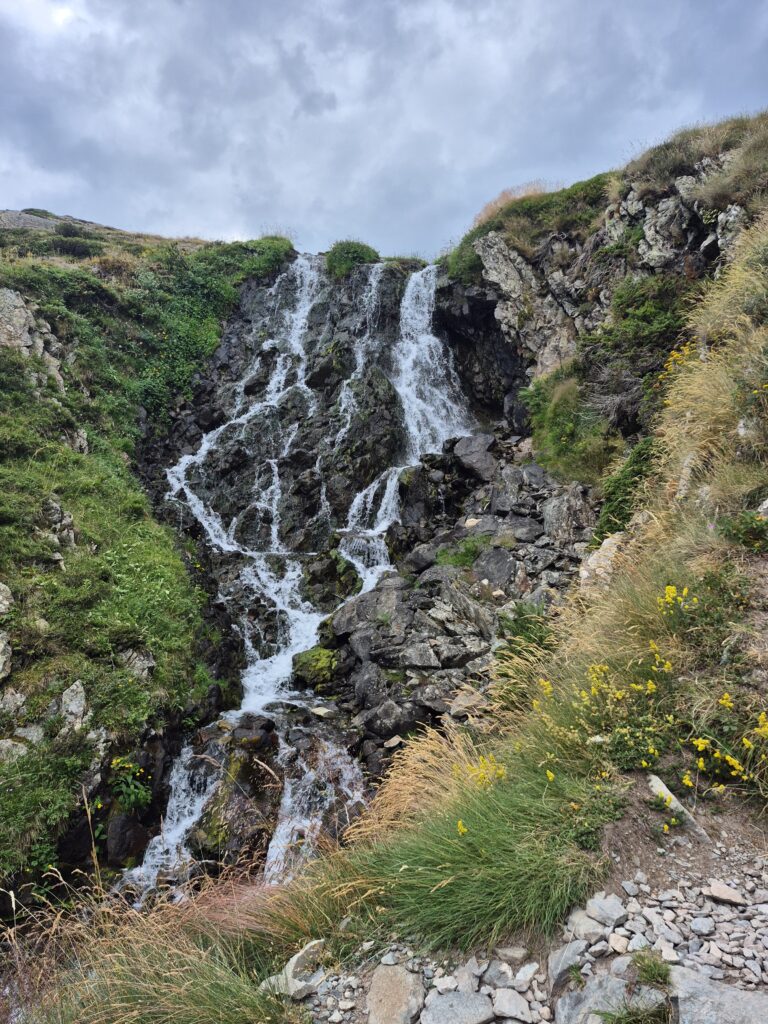
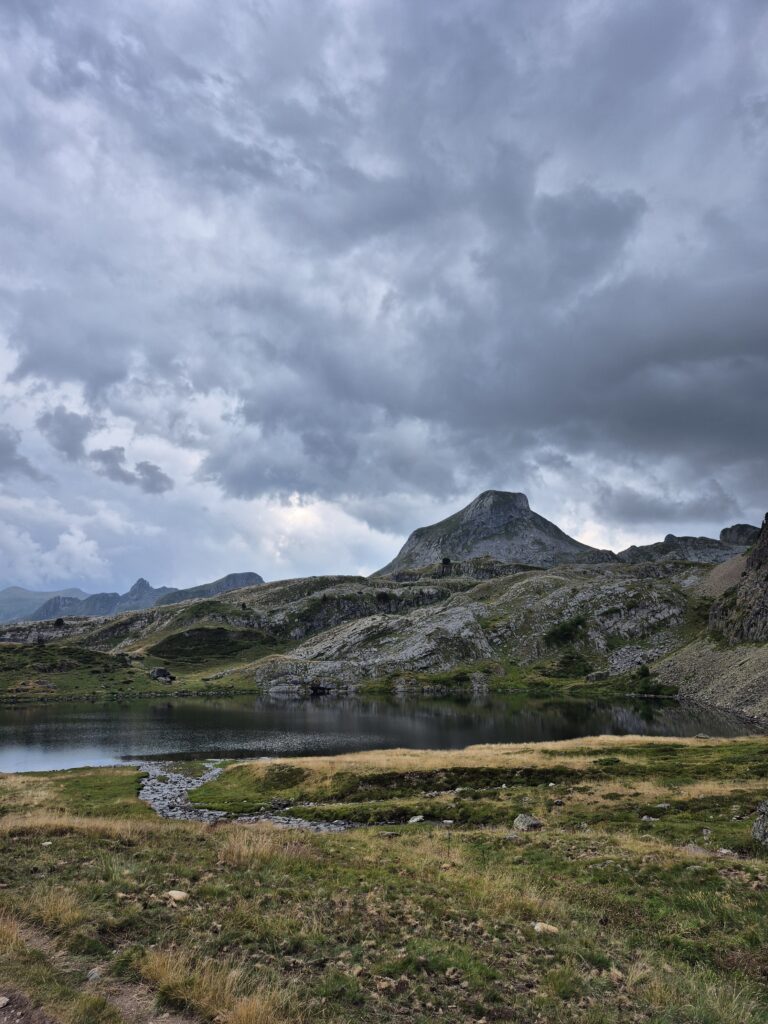
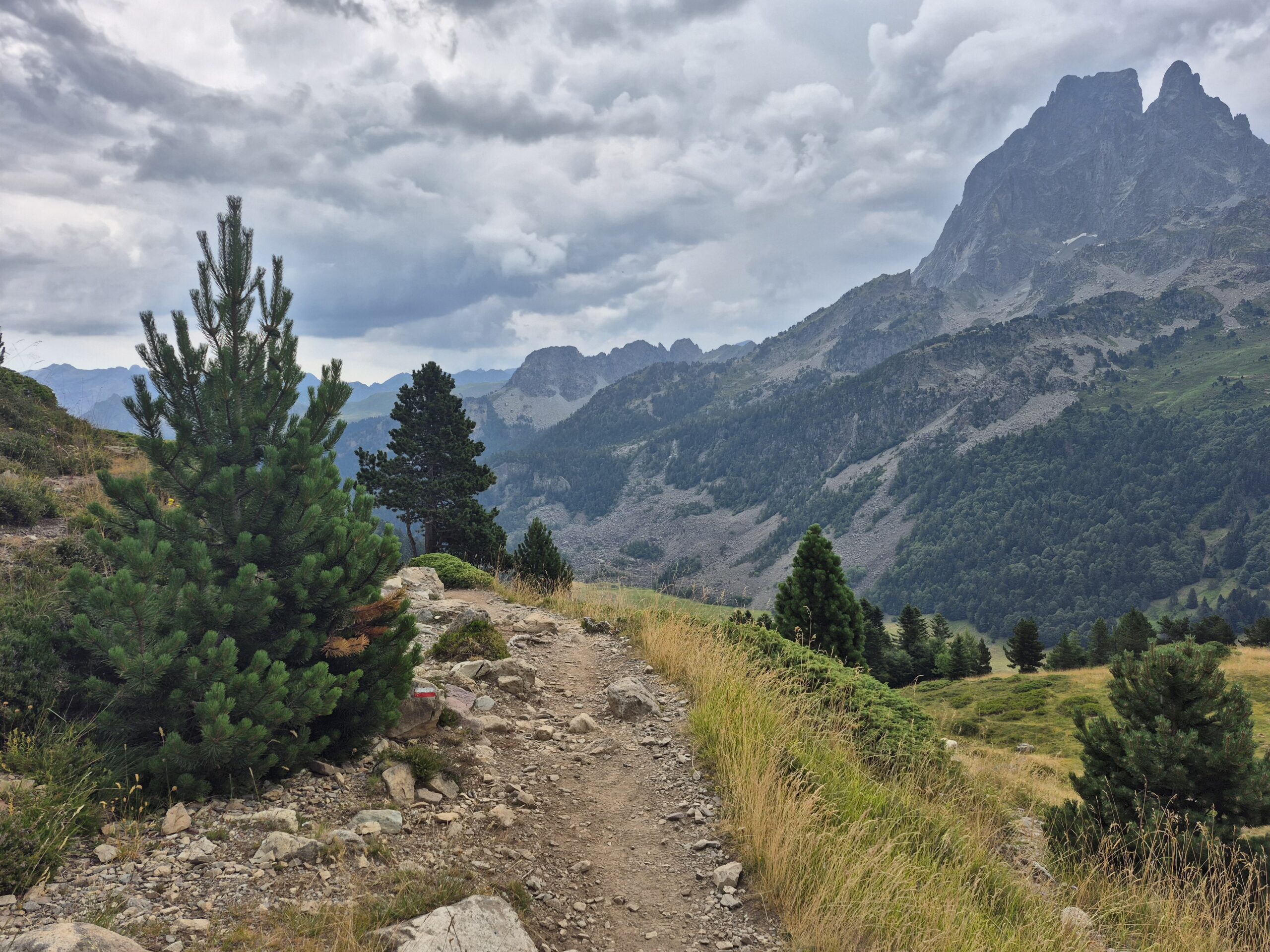
The descent continues over a series of natural rock “stairs” and grassy switchbacks until you arrive at the shore of Lac Roumassot (1,845m). This is the final lake of the chain. At its northern edge, the water spills over a stone ledge, creating a small waterfall that marks the entrance back into the lower valley. From this vantage point, you get a final, low-angle perspective of the Pic du Midi d’Ossau before the trail re-enters the forest for the trek back to the Plateau de Bious.
The Final Leg
The final leg of the circuit drops from the waterfall at Lac Roumassot (1,845m) back into the beech forest. The trail follows the GR10 on a sustained, rocky descent through the trees, eventually leveling out as it enters the wide pastures of the Plateau de Bious. From here, you retrace your initial steps across the flat valley floor, crossing the bridge to reach the eastern shore of Lac de Bious-Artigues. The walk concludes with a 1 km flat stretch along the water’s edge, returning to the parking area at 1,422m. On the day we did this amazing hike, we were chased downhill by huge thunderstorm and ended the hike like drowned rats. As you can see from our strava map below, it did however give us the push we needed to jog the descent back to the car which gave us more time to enjoy some spectacular food and drink in our chosen base for this hike – check out our Summit & Sláinte Scorecard for Pau here.
🎒 The Essentials: What’s in My Pack?
The weather in the Ossau Valley can shift rapidly once you clear the tree line at the Plateau de Bious. Here is the gear I relied on for the loop (and the summit push):
- Footwear: We like to move fast in the mountains and want the option of running the flats or descents. To that end, my wife and I both wear and love Hoka Speedgoat trail running shoes. I’ve been a huge fan of these shoes since the Speedgoat 2. While they don’t have the aggressive, deep lugs of my Inov-8 X-Talon Ultra 260 V2s, they are a much more versatile shoe and can handle almost anything the Pyrenees throws at them. The Vibram Megagrip outsole provides exceptional grip and enough cushioning for long days on the trail without sacrificing ground feel. I specifically prefer the non-Gore-Tex versions; if my feet get wet, I want them to drain and dry quickly rather than trapping the water inside. You’ll definitely appreciate that grip on the “stairs” between Lac Gentau and Lac Roumassot, where the terrain gets rocky and uneven.
- Socks: I am a huge fan of Stance running socks – so much so that I find it hard to wear anything else, even on my “off” days. They feature quirky designs and they wick away moisture incredibly effectively. I’ve never had a blister with them, even when running through the notoriously wet Irish fells.
- Baselayer: I find that my standard running shorts and T-shirts are the most comfortable for fast hiking. I’m a huge fan of No Club Running Club’s tees. They feature super cool artwork, use quick-drying lightweight fabric, and—crucially for the exposed Pyrenean ridges—offer UPF 40+ UV protection.
- The “Secret Weapon”: On this trip, I officially fell in love with Passenger’s 365 Active button-up shirts. They are lightweight, quick-drying, and have a Polygiene anti-odour finish to keep you fresh. Having never hiked in a button-up shirt before, it’s been a revelation; they allow the air to flow through and look smart enough for a pub visit afterward. I’m not ashamed to admit I wore mine for four straight hiking days without a wash, and it still smelled fine. What a find!
- Windbreaker: A lightweight windbreaker is essential. Even on a sunny day, the wind at Lac de Bersau (2,080m) can be biting. My current go-to is the Montane Featherlite Windproof Jacket. It’s an incredibly light, packable, and breathable layer. I specifically prefer the non-hooded version; if it actually starts to rain, I’ll be reaching for a dedicated waterproof shell anyway, and I can’t stand a spare hood blowing about and annoying me when moving at speed on a tricky descent.
- Waterproof layer: I carry Montane Minimus Nano Waterproof Pants, which I use as part of my mandatory gear for fell races as they pack up into the size of an apple, but I have to admit that on European summer hiking trips, I am yet to pull them out from my bag. I tend to stick my waterproof jacket on and trust that my bottom half will dry out when the rain stops. For my top half I carry my trusty Montane Minimus jacket which has been keeping me warm and dry for the last 3 years. It’s super lightweight and packs up into it’s own pocket.
- Running Cap: Fractel caps are my headwear of choice. Lightweight,UPF 30+ UV protection, quick-drying, and roll up small. Love them! Have to stop buying them!
- The “Can’t Live Without” Accessory: Whether I’m running or hiking, I never hit the trail without a Buff. They are incredibly versatile and perfect for regulating heat; I’ll wear mine as a neck gaiter when the morning air is crisp, then move it to my wrist or use it as a headband to manage sweat as the effort increases. It’s the ultimate multi-tool for temperature control.
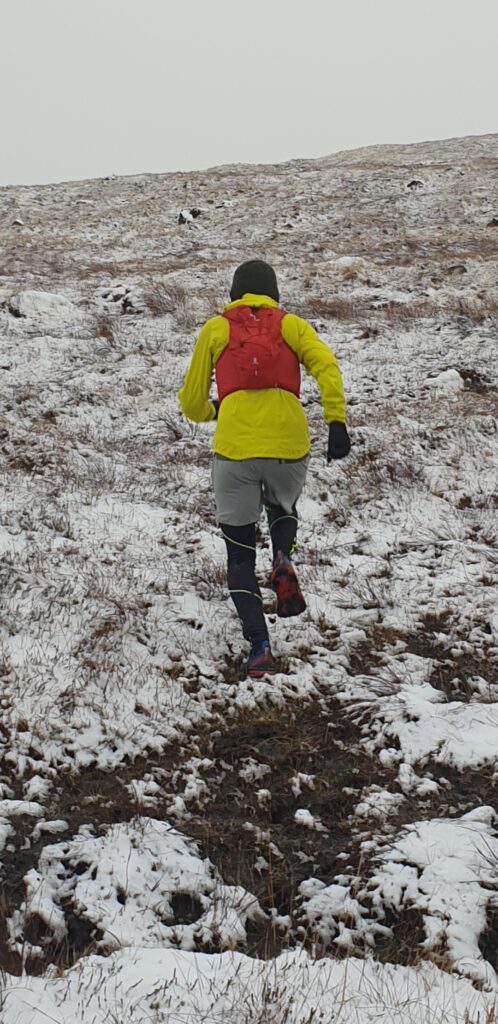
- Pack & Hydration: Since we like to move quickly, I favor a running hydration vest over a traditional backpack. I use the Salomon ADV Hydra Vest 8, which holds all my layers and gear perfectly with zero bounce when I decide to pick up the pace. I carry two 500ml flasks on the shoulder straps for easy access. On this trip, I used the Salomon SOFT FLASK XA FILTER. These are a total game-changer; they allowed me to refill directly from the waterfalls and streams along the Ayous circuit without worrying about bacteria. I use this pack for everything from long marathon training runs, to carrying mandatory gear in fell races, to long hikes like this one. Above is a picture of it in the Mournes.
- Navigation: My go-to for planning and following hikes is Outdooractive. I use the Premium subscription, which is essential for this kind of terrain because it allows you to download high-resolution maps for offline use when signal drops in the deep valleys. It also gives you the ability to print off to-scale paper maps—a must-have backup for any serious mountain day.
- The Spanish Secret: When I’m specifically on the Spanish side of the border, I also switch over to Wikiloc. It has a much higher volume of user-generated content for Spanish routes, which is great for finding those “hidden” trail variations that might not show up on the more curated apps.
- Watch: I’m currently using a Garmin 645 Music. It has enough battery to survive a full day of hiking or running, and the “breadcrumb” return-to-start function has saved me more than once from some sticky situations. However, I’ve hit the limit of what a non-mapping watch can do in the high mountains. I’m looking to upgrade to a unit with full GPS topo maps and significantly better battery life in the near future—so stay tuned for an upcoming gear review!