As always, we match our hiking itineraries with the best post-hike bases. Leave the pintxos bars behind (for now) and head into the heart of Gorbeia Natural Park for the most iconic summit in the Basque Country. Broad, green, and often wrapped in mist, Mount Gorbea is crowned by its famous cross – visible from miles away and earned with every step of the climb.
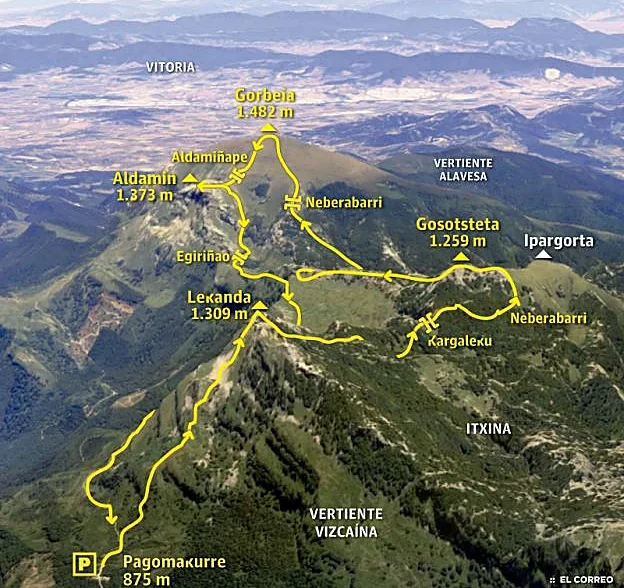
- Distance: 8 miles / 13 km
- Elevation: 🏔️ Ascent: 783m – Descent: 783m
- Type: ⇄ Out & Back
- Trailhead: 📍 Pagomakurre
- Duration: 3 hrs 30 min – 5 hrs
- Mountain hut: 🍺 Refugio Ángel Sopeña.
- Highest point: 1,482 m
- Lowest point: 875 m
- Difficulty: Moderate (no scrambling)
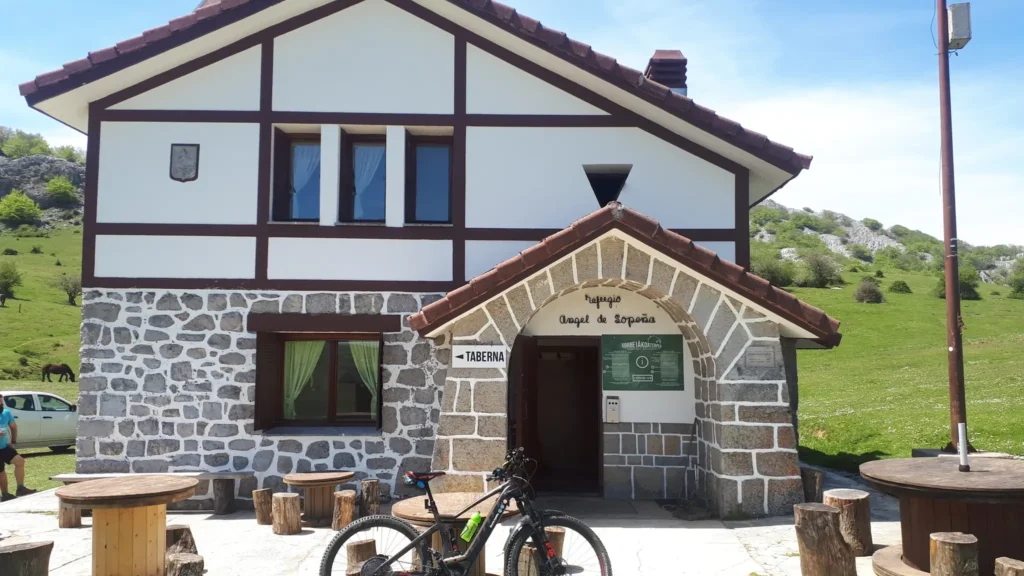
Refugio Ángel Sopeña
- Alcohol: ✅
- Food: ✅
- WC: ✅ (free)
- Water: ✅ (free)
- Beds: ✅
- Elevation: 1,150 m
📍Where to start
The adventure begins at the Pagomakurre recreational area, nestled within the Gorbeia Natural Park. To get here, head to the town of Areatza (about 40 minutes from Bilbao and Vitoria-Gasteiz, or an hour from Haro which is where we travelled from). Check out our Summit & Sláinte Scorecard for Vitoria-Gasteiz here, Haro here, or Bilbao here for the best post-hike spots.
From Areatza, a winding asphalt track leads you up into the mountains to the trailhead. There is plenty of parking, but like Arantzazu, this spot is popular. Arrive early to secure a place, especially on weekends when local hikers flock to the ascent.
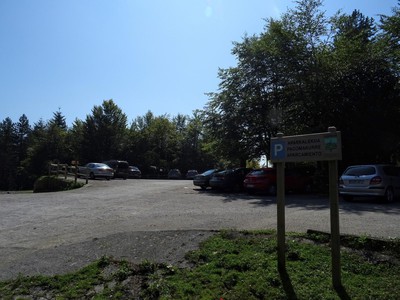
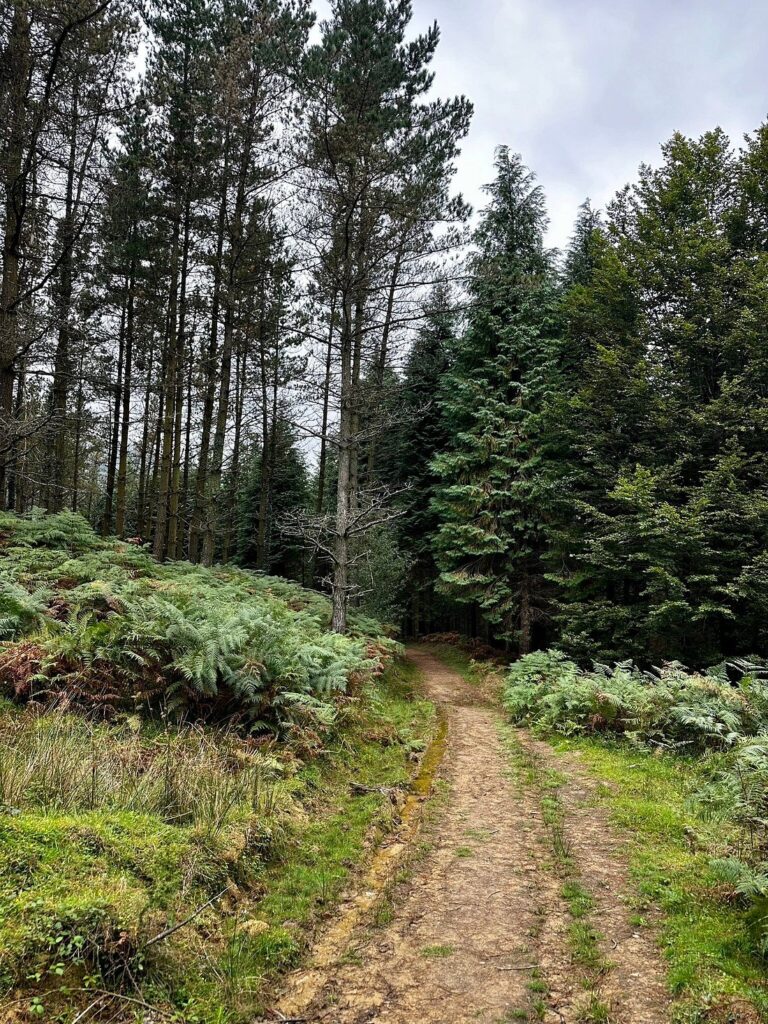
From the car park, the route is obvious: a wide track heading uphill into open countryside. No warm-up. You’re climbing straight away.
Starting the hike: The Itxina Skyline
The trail kicks off on a wide, well-maintained track. Almost immediately, you are greeted by the dramatic limestone walls of the Itxina Massif on your right. This area is shrouded in local folklore—tales of the Basajaun (the Lord of the Woods) abound here.
The initial 2.6km is a steady, honest climb. While it’s a wide path, the gradient is persistent. As you ascend, keep looking back; the valley opens up behind you, offering a preview of the scale of this natural park.
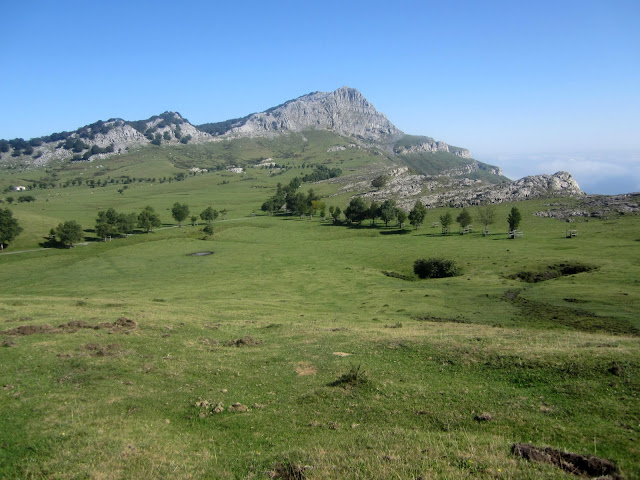
The Plateau: Campas de Arraba – 1,082m
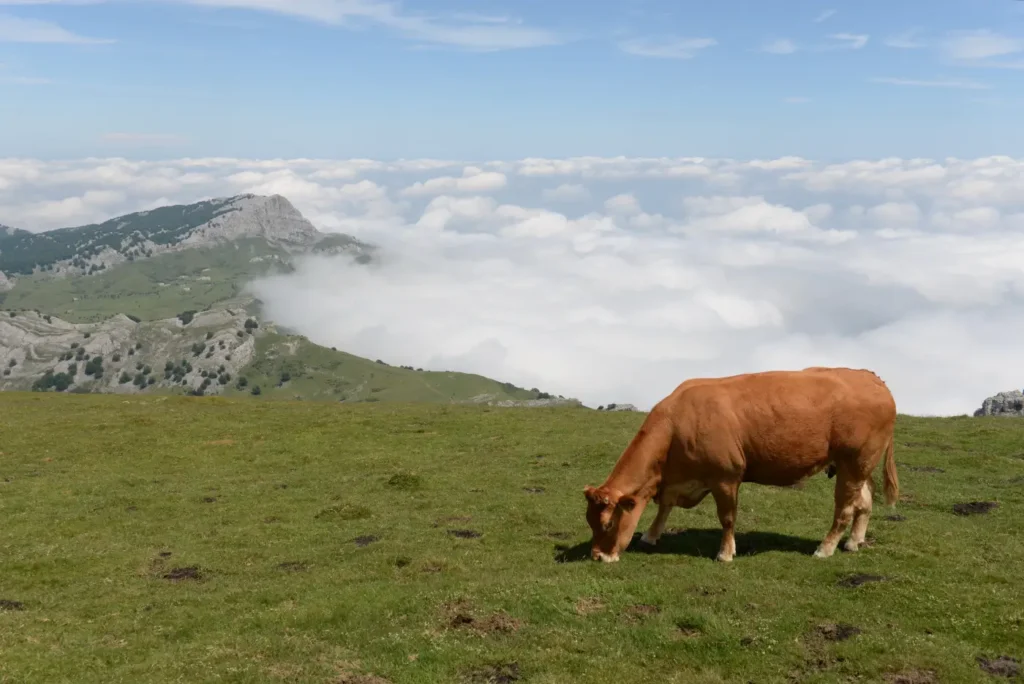
As the track levels out, you emerge into the Campas de Arraba. Much like the Fields of Urbia, this is a sprawling pastoral paradise. In the summer months, the air is thick with the ringing of cowbells and the sight of horses grazing freely against the backdrop of the rocky peaks.
This is a great spot to catch your breath. You’ll find two mountain refuges here – perfect for a quick water top-up and bathroom break. As always, we prefer to reward ourselves with a copa de vino and a snack on the way back when we have done the bulk of the climb.
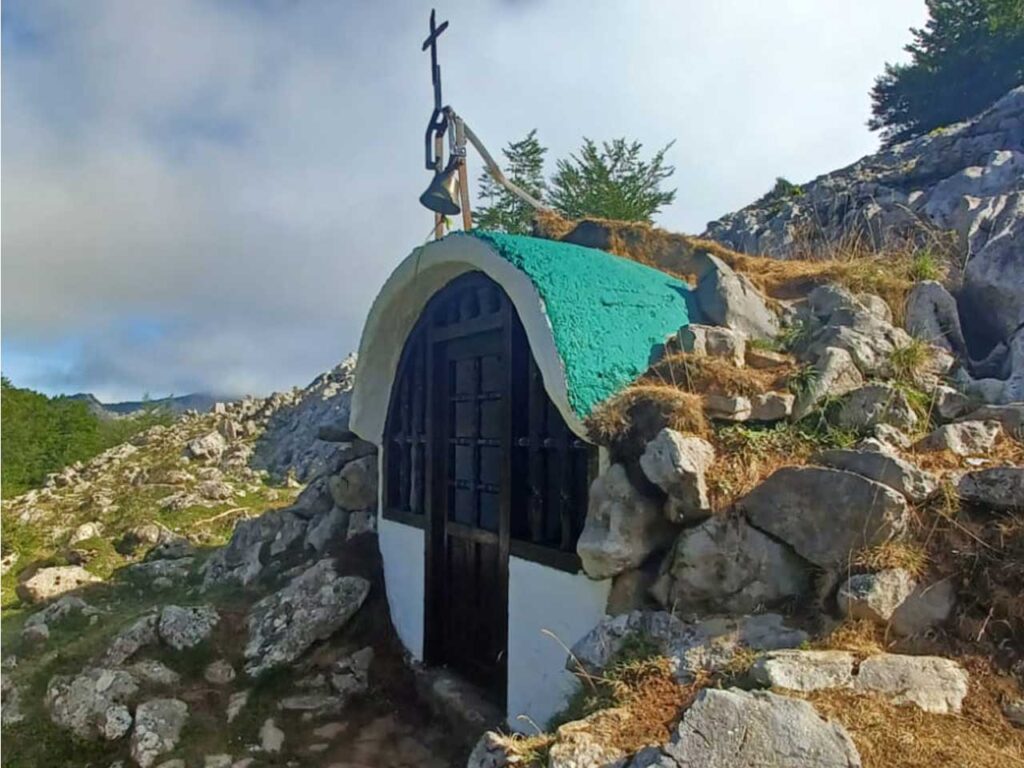
The Hidden Sanctuary: Egiriñao & The Virgin of the Snows
Leaving the flat meadows of Arraba, the trail narrows and becomes more rugged. You’ll skirt the Gatzarrieta rock—keep an eye on your footing here as the terrain becomes a bit more “broken” and rocky.
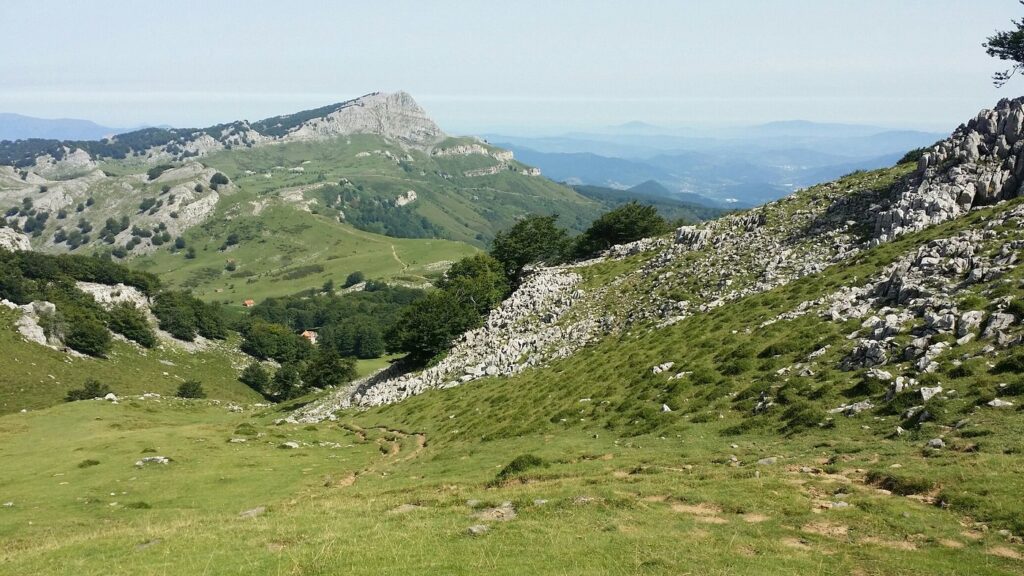
Soon, you’ll enter a small, atmospheric beech forest that hides the Refugio de Egiriñao. Right next to it sits a tiny, humble hermitage dedicated to the Virgin of the Snows. It’s a quiet, spiritual moment before the mountain demands your full attention for the final ascent.
The Final Ascent: The Gorbeia Cross – 1,482m
From the refuge, the “real” Gorbeia begins. The path leads you toward the Aldamiñoste pass, situated between the peaks of Aldamin and Gorbeia.
- The Push: This is the steepest section of the day. The trail fragments into several stony paths – just keep your eyes on the summit.
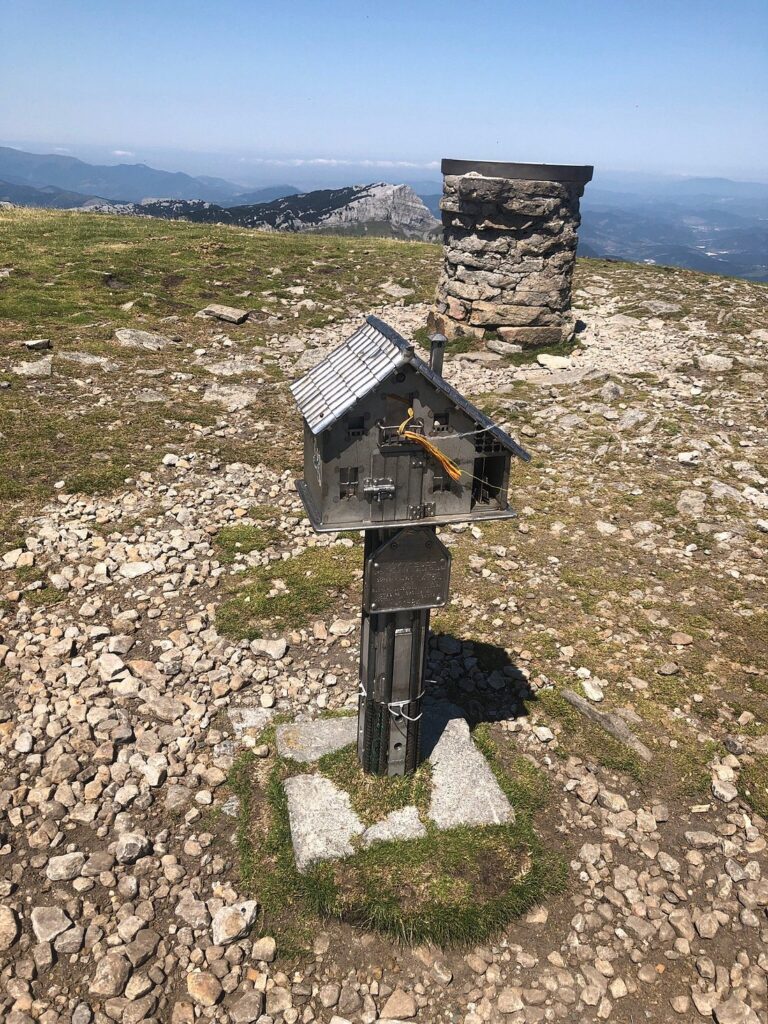
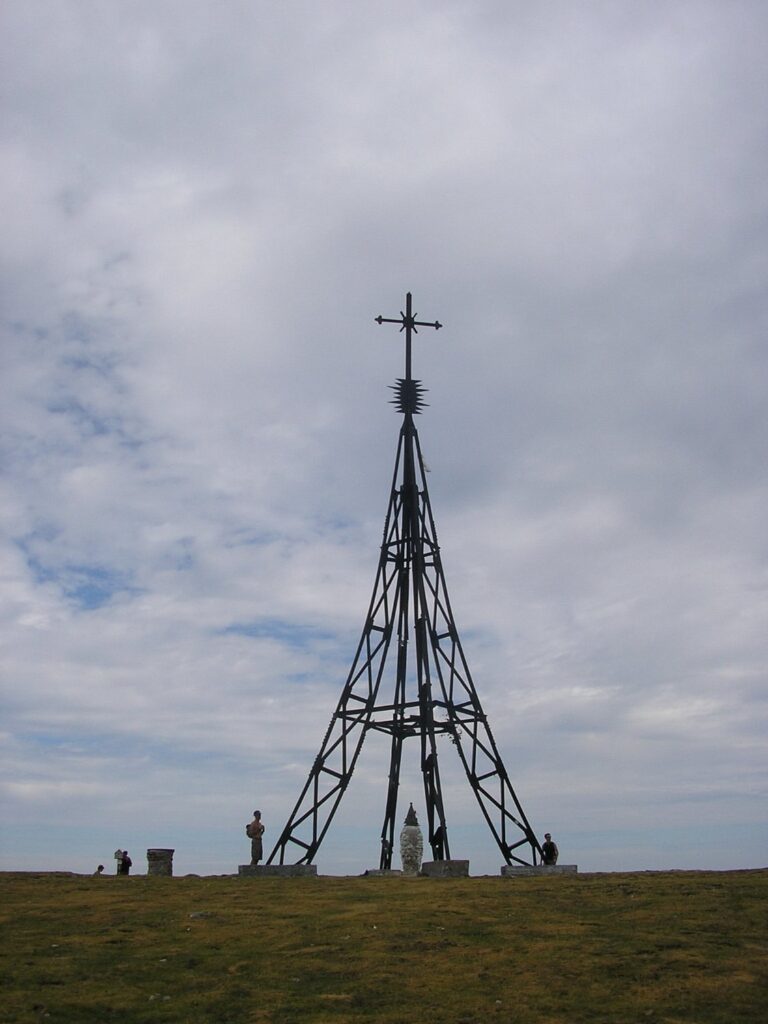
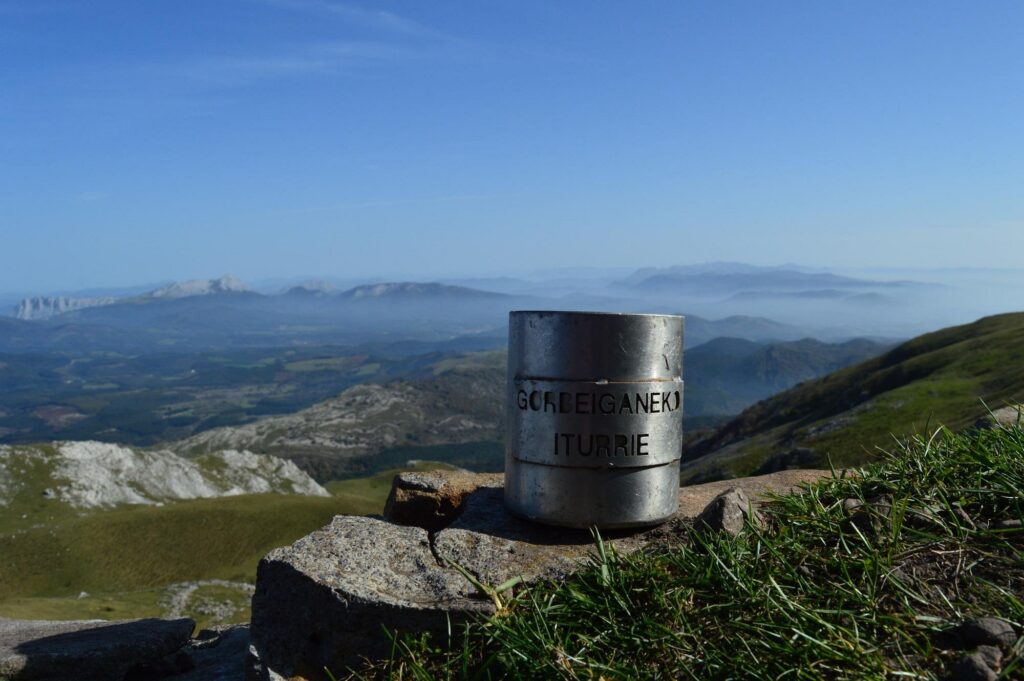
- The Cross: As you crest the final slope, the massive Gorbeia Cross (Cruz de Gorbeia) reveals itself. Standing nearly 18 meters tall, it’s a symbol of the region.
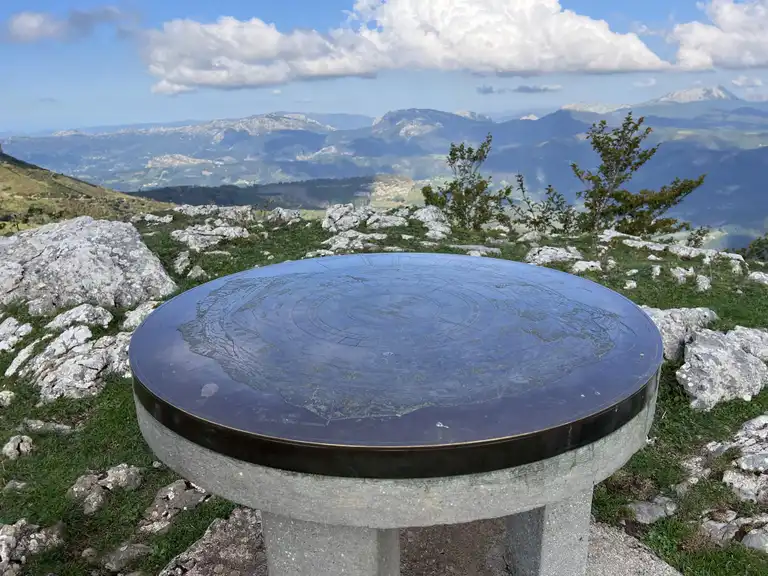
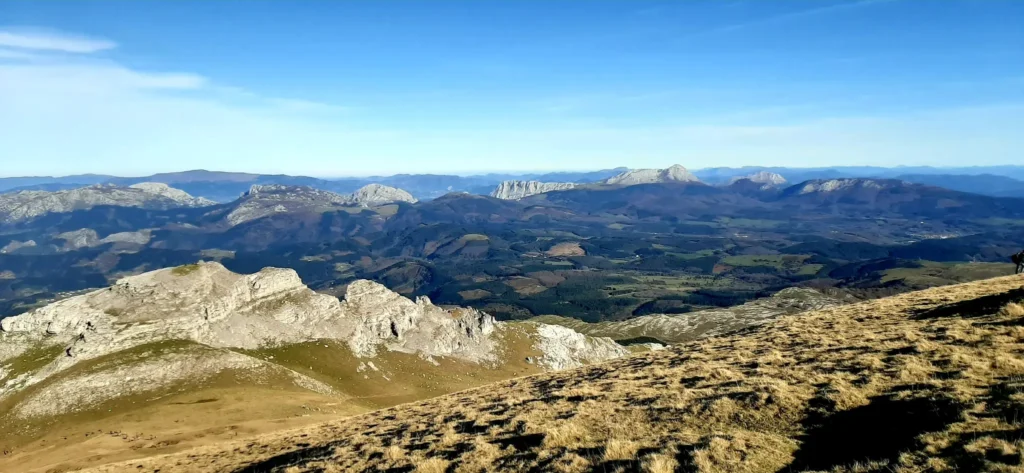
- The View: On a clear day, the 360-degree panorama is staggering. You can see the sea to the north and the jagged peaks of the Basque mountains stretching out in every direction.
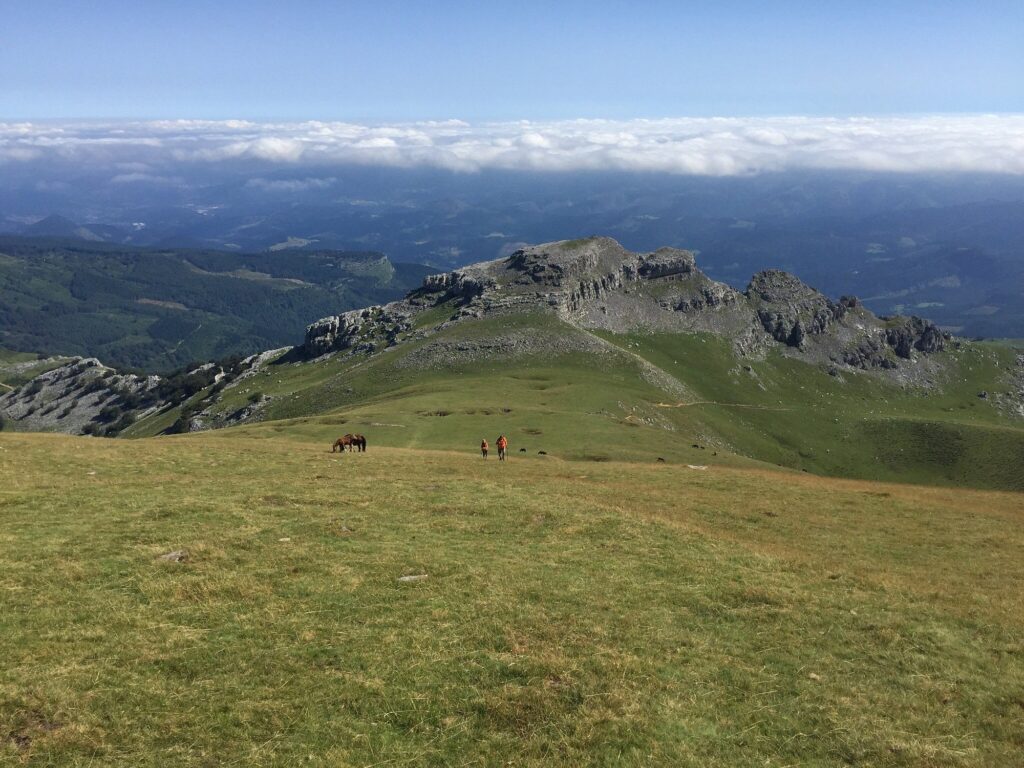
Pro Tip: Gorbeia is notorious for sudden fog. If the clouds roll in, the bells of the grazing flocks are your best guide – local legend says they ring to warn you of the Basajaun hiding in the mist!
Refugio and recovery
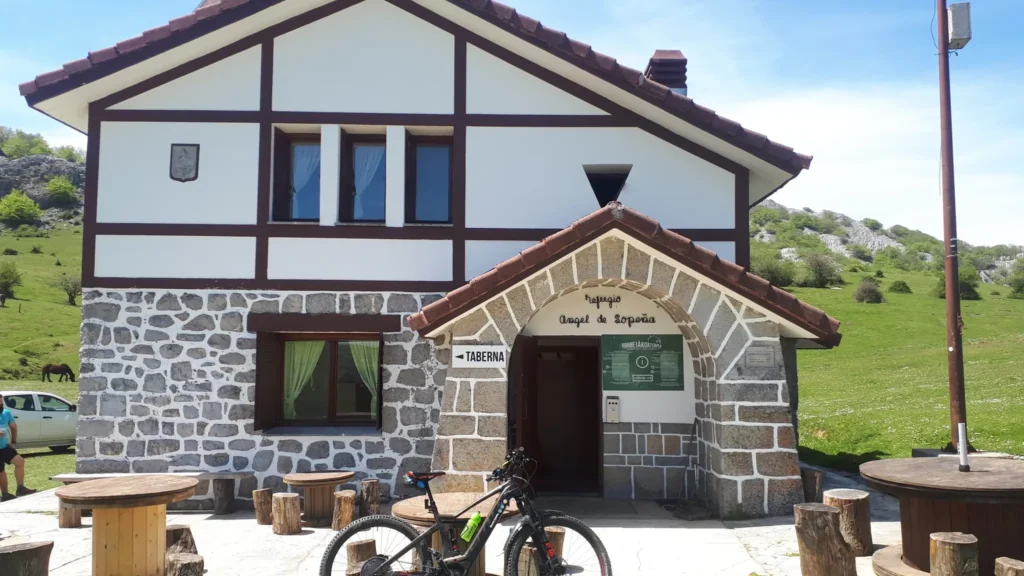
After the descent back to the Campas de Arraba, it’s time for the “Sip” part of the journey. Stop at one of the refuges for a bocadillo or a cold drink. There is nothing quite like sitting in those high meadows, looking back up at the summit you just conquered.
When you are finally ready to drag yourself away from the wine and views, it’s time to head on towards Vitoria-Gasteiz, Haro, or Bilbao which all offer plenty of spots for a proper post-hike feast. Check out our Summit & Sláinte Scorecard for Vitoria-Gasteiz here, Haro here, or Bilbao here for the best post-hike spots.
🎒 The Essentials: What’s in My Pack?
The weather in the Basque Country can shift rapidly once you start to gain elevation. Here is the gear I relied on for the summit push:
- Watch: I’m currently using a Garmin 645 Music. It has enough battery to survive a full day of hiking or running, and the “breadcrumb” return-to-start function has saved me more than once from some sticky situations. However, I’ve hit the limit of what a non-mapping watch can do in the high mountains. I’m looking to upgrade to a unit with full GPS topo maps and significantly better battery life in the near future—so stay tuned for an upcoming gear review!
- Footwear: We like to move fast in the mountains and want the option of running the flats or descents. To that end, my wife and I both wear and love Hoka Speedgoat trail running shoes. I’ve been a huge fan of these shoes since the Speedgoat 2. While they don’t have the aggressive, deep lugs of my Inov-8 X-Talon Ultra 260 V2s, they are a much more versatile shoe and can handle almost anything the Pyrenees throws at them. The Vibram Megagrip outsole provides exceptional grip and enough cushioning for long days on the trail without sacrificing ground feel. I specifically prefer the non-Gore-Tex versions; if my feet get wet, I want them to drain and dry quickly rather than trapping the water inside. You’ll definitely appreciate that grip on the “stairs” between Lac Gentau and Lac Roumassot, where the terrain gets rocky and uneven.
- Socks: I am a huge fan of Stance running socks – so much so that I find it hard to wear anything else, even on my “off” days. They feature quirky designs and they wick away moisture incredibly effectively. I’ve never had a blister with them, even when running through the notoriously wet Irish fells.
- Baselayer: I find that my standard running shorts and T-shirts are the most comfortable for fast hiking. I’m a huge fan of No Club Running Club’s tees. They feature super cool artwork, use quick-drying lightweight fabric, and—crucially for the exposed Pyrenean ridges—offer UPF 40+ UV protection.
- The “Secret Weapon”: On this trip, I officially fell in love with Passenger’s 365 Active button-up shirts. They are lightweight, quick-drying, and have a Polygiene anti-odour finish to keep you fresh. Having never hiked in a button-up shirt before, it’s been a revelation; they allow the air to flow through and look smart enough for a pub visit afterward. I’m not ashamed to admit I wore mine for four straight hiking days without a wash, and it still smelled fine. What a find!
- Windbreaker: A lightweight windbreaker is essential. Even on a sunny day, the wind at Lac de Bersau (2,080m) can be biting. My current go-to is the Montane Featherlite Windproof Jacket. It’s an incredibly light, packable, and breathable layer. I specifically prefer the non-hooded version; if it actually starts to rain, I’ll be reaching for a dedicated waterproof shell anyway, and I can’t stand a spare hood blowing about and annoying me when moving at speed on a tricky descent.
- Waterproof layer: I carry Montane Minimus Nano Waterproof Pants, which I use as part of my mandatory gear for fell races as they pack up into the size of an apple, but I have to admit that on European summer hiking trips, I am yet to pull them out from my bag. I tend to stick my waterproof jacket on and trust that my bottom half will dry out when the rain stops. For my top half I carry my trusty Montane Minimus jacket which has been keeping me warm and dry for the last 3 years. It’s super lightweight and packs up into it’s own pocket.
- Running Cap: Fractel caps are my headwear of choice. Lightweight,UPF 30+ UV protection, quick-drying, and roll up small. Love them! Have to stop buying them!
- The “Can’t Live Without” Accessory: Whether I’m running or hiking, I never hit the trail without a Buff. They are incredibly versatile and perfect for regulating heat; I’ll wear mine as a neck gaiter when the morning air is crisp, then move it to my wrist or use it as a headband to manage sweat as the effort increases. It’s the ultimate multi-tool for temperature control.
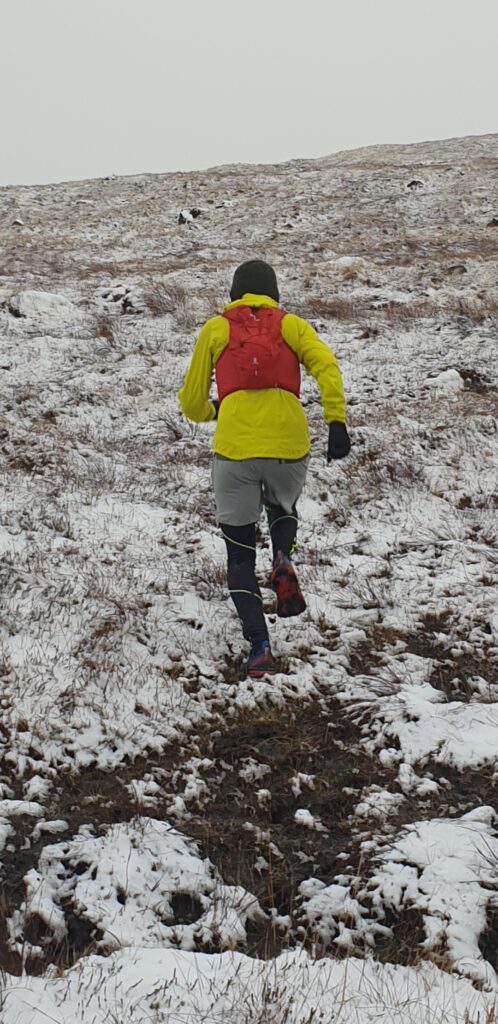
- Pack & Hydration: Since we like to move quickly, I favor a running hydration vest over a traditional backpack. I use the Salomon ADV Hydra Vest 8, which holds all my layers and gear perfectly with zero bounce when I decide to pick up the pace. I carry two 500ml flasks on the shoulder straps for easy access. On this trip, I used the Salomon SOFT FLASK XA FILTER. These are a total game-changer; they allowed me to refill directly from the waterfalls and streams along the Ayous circuit without worrying about bacteria. I use this pack for everything from long marathon training runs, to carrying mandatory gear in fell races, to long hikes like this one. Above is a picture of it in the Mournes.
- Navigation: My go-to for planning and following hikes is Outdooractive. I use the Premium subscription, which is essential for this kind of terrain because it allows you to download high-resolution maps for offline use when signal drops in the deep valleys. It also gives you the ability to print off to-scale paper maps—a must-have backup for any serious mountain day.
- The Spanish Secret: When I’m specifically on the Spanish side of the border, I also switch over to Wikiloc. It has a much higher volume of user-generated content for Spanish routes, which is great for finding those “hidden” trail variations that might not show up on the more curated apps.