The Summit and Sláinte Scorecard: Har0
What do these scores mean? Read the full Standards here
Affordability: 🍺🍺🍺🍺🍺🍺🍺🍺🍺 9/10
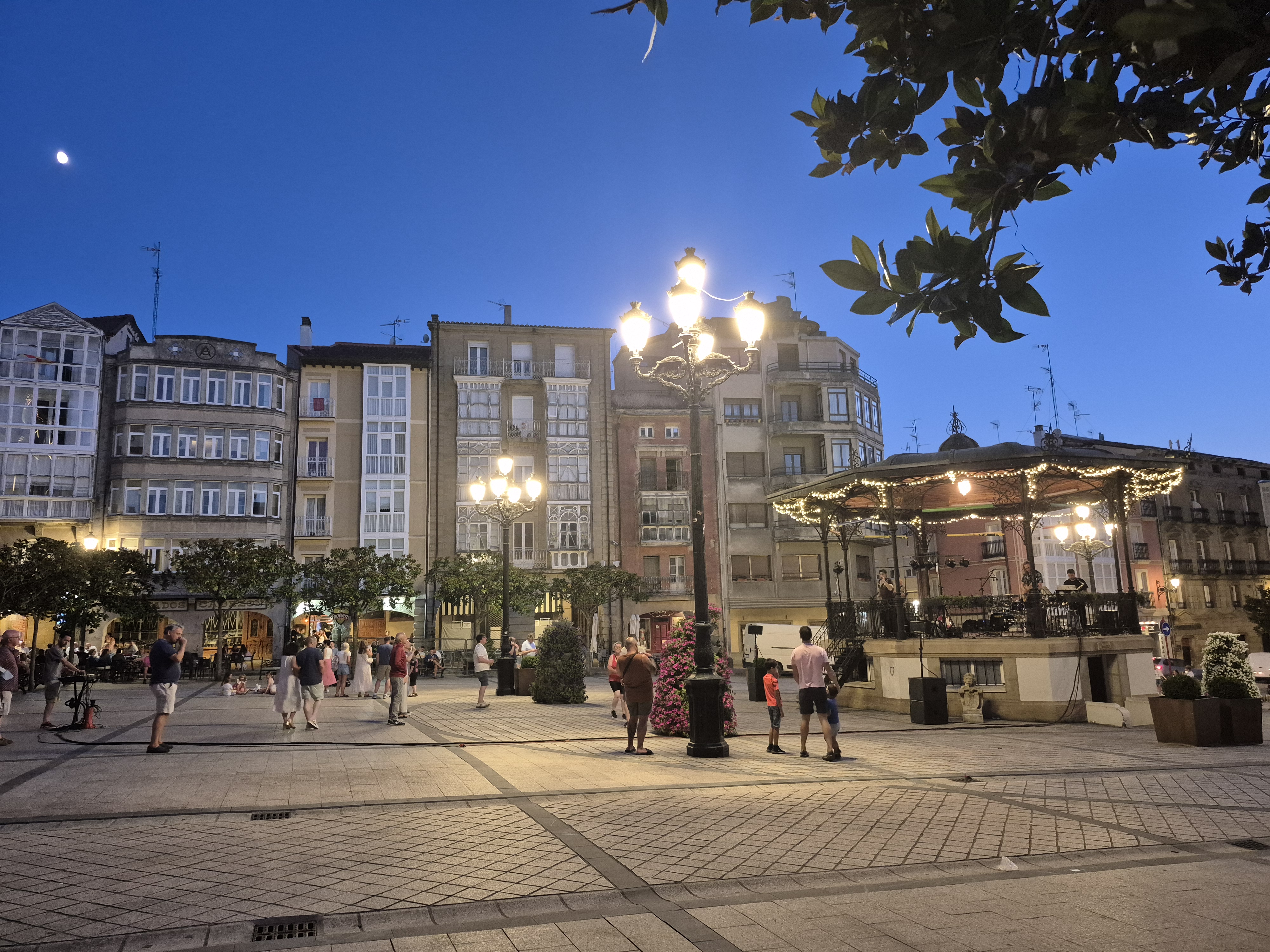
Prettiness: 🍺🍺🍺🍺🍺🍺🍺🍺 8/10
Food & Drink: 🍺🍺🍺🍺🍺🍺🍺🍺🍺🍺 10/10
Late-Night Liveliness: 🍺🍺🍺🍺🍺🍺🍺🍺 8/10
The Spillage Factor: 🍺🍺🍺🍺🍺🍺🍺🍺🍺🍺 10/10
Nomadic Dining: 🍺🍺🍺🍺🍺🍺🍺🍺🍺 9/10
Multi-Gen Mix: 🍺🍺🍺🍺🍺🍺🍺🍺🍺🍺 10/10
Seamless Dining: 🍺🍺🍺🍺🍺🍺🍺🍺🍺 9/10
Overall Craic Rating: 🍺🍺🍺🍺🍺🍺🍺🍺🍺 9/10
Verdict: Haro has that intangible “soul.” Between the treehouse stays, the 30km vineyard cycles, and the spontaneous street parties led by brass bands, it is a destination that delivers a high-octane feeling of life. It’s not just a place to drink wine; it’s a place where the wine forces you to join the party.
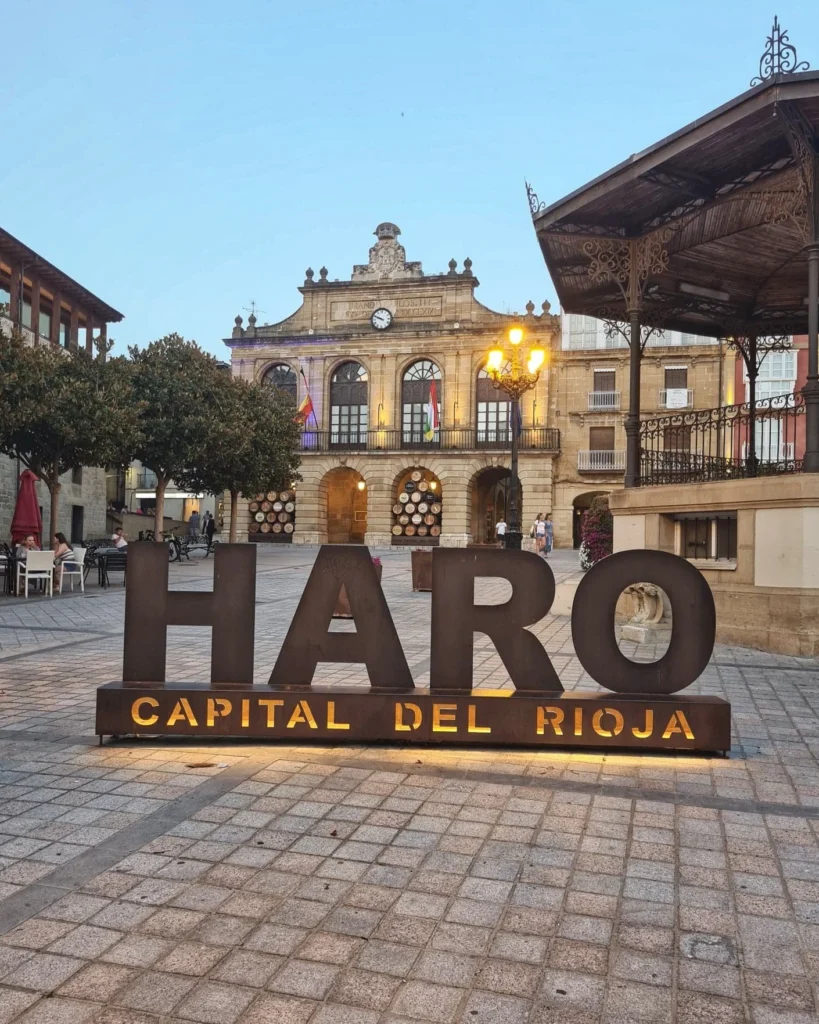
If you want to truly experience Rioja, you stay in Haro. It is the undisputed “Wine Capital,” a town where the history of the Bodegas is woven into the very cobblestones. While it might not have the manicured prettiness of Laguardia, Haro more than makes up for it with a raw, authentic energy and a “sea of vines” that hugs the hilltop. This is the gold standard for travelers who value depth over surface-level charm. You aren’t just hunting for “lucky finds” here; you have a deep bench of world-class options, from the Michelin-starred, wood-fired mastery of Nublo to the legendary roast lamb at Terete. The variety is staggering – you can jump from the modern natural wines of Moraza to the ultra-traditional oak-aged staples at Muga in a single afternoon.
What truly sets Haro apart, however, is the value and the “spillage.” In the world-famous Barrio de la Estación, you can pull up a stool at titans like CVNE or Gómez Cruzado and get a pour of high-end Reserva for €2–€5. Once you move into the winding tapas alleys of La Herradura, a “chiquito” and a world-class bite often come in under €4; you will absolutely look at your partner at the end of the night and wonder if they simply forgot to charge you.
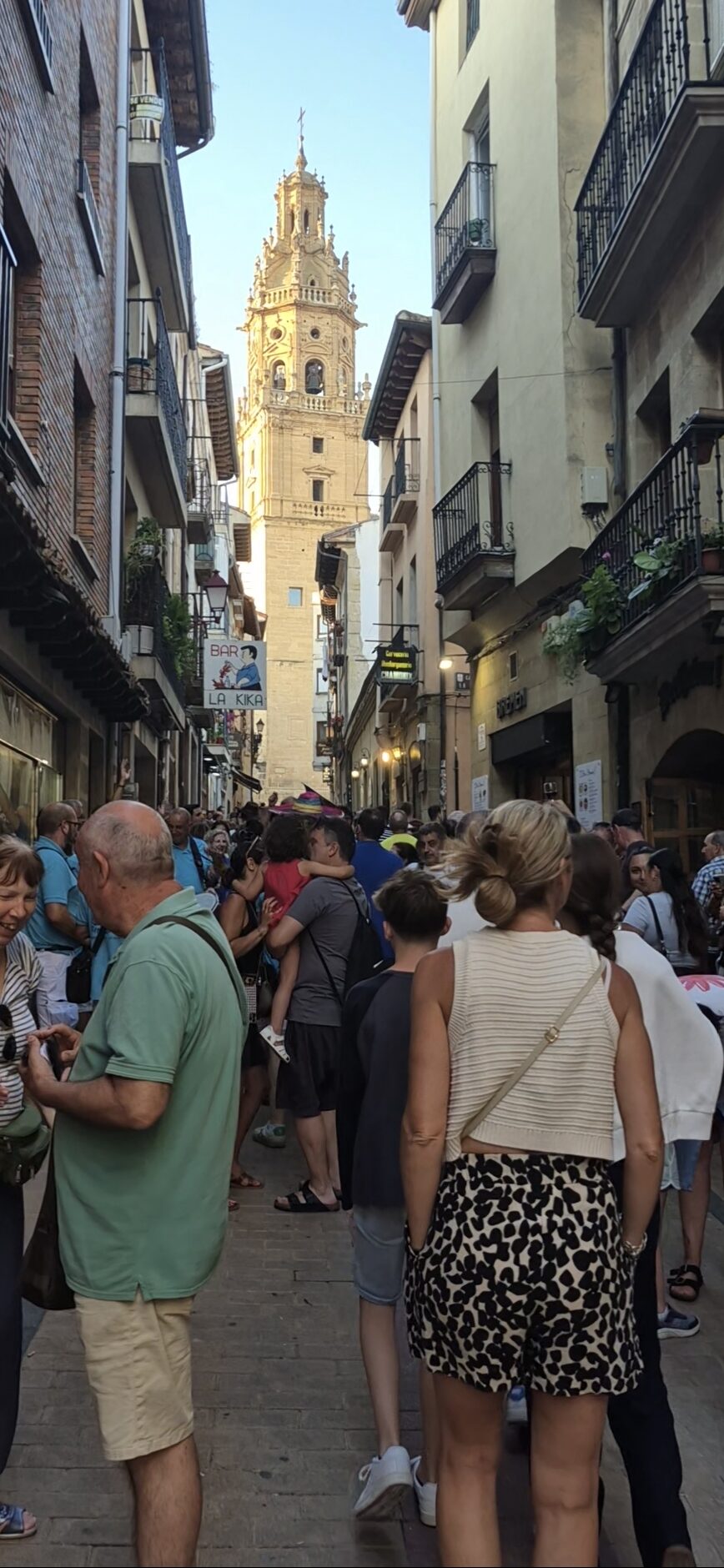
Because of the local dining culture, spots like Los Caños are only just hitting their stride at 10 PM. If a Charanga (brass band) is in town, the energy rivals any major city. It is the definition of “vibrant street-spill” – there is no “inside” or “outside” in the tapas district. The narrow streets are packed with people standing with glasses in hand, leaners against stone walls, and a constant flow of conversation. It’s the peak of post-cycle social energy, a nomadic dining culture where you move from Bar Chamonix to Vinum Vita, grabbing a different specialty at every door. In Haro, the adventure doesn’t end when the sun goes down – it’s just getting started.
The Logistics: Getting There and where to stay
While the Rioja region feels like a world away, getting to the “Wine Capital” is remarkably straightforward, especially if you’re using the Basque Country as your starting point.
If you are coming from Vitoria-Gasteiz, like we did, it is a scenic and easy 40-minute drive via the N-124. The transition from the high-altitude greenery of the Basque mountains to the sun-drenched, vine-draped hills of Rioja Alta is one of the most rewarding stretches of road in Northern Spain. Alternatively, it’s a one hour drive from Bilbao.
- Parking: Once you arrive in Haro, park near the town centre or the train station; the town itself is incredibly walkable, which is essential given the tapas-crawling nature of the visit. If you park in a paid “Blue Zone” and overstay your time (like we did), you’ll likely find a ticket on your windshield. Don’t panic: Haro offers a remarkably civilised 24-hour grace period where you can enter the code from your ticket into any parking meter and pay a small “annulment fee” (usually around €5.00) to cancel the €40.00+ fine on the spot.
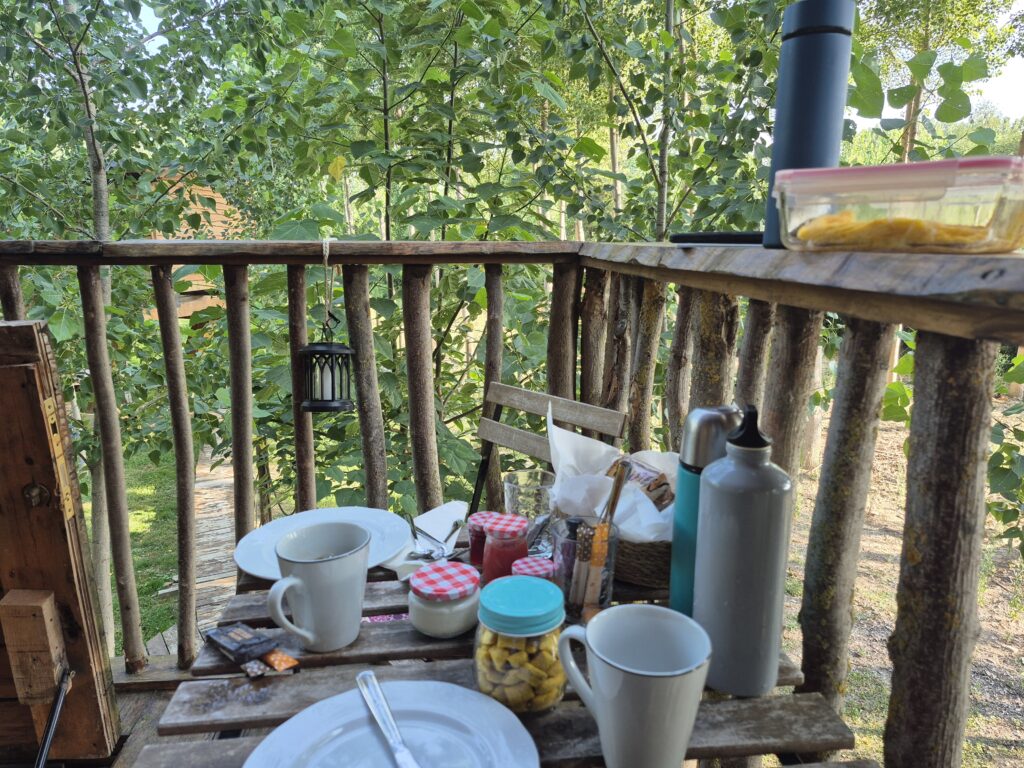
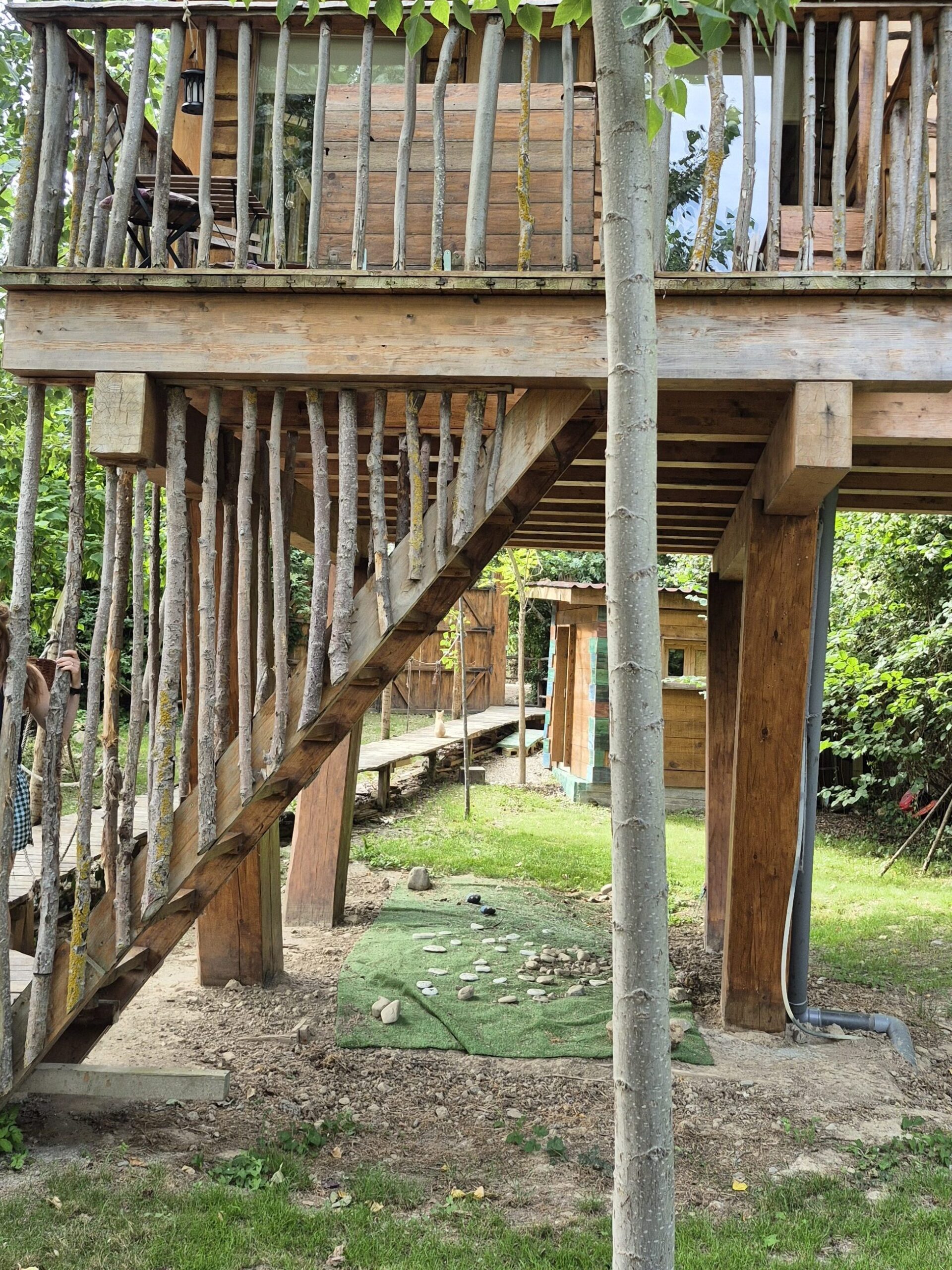
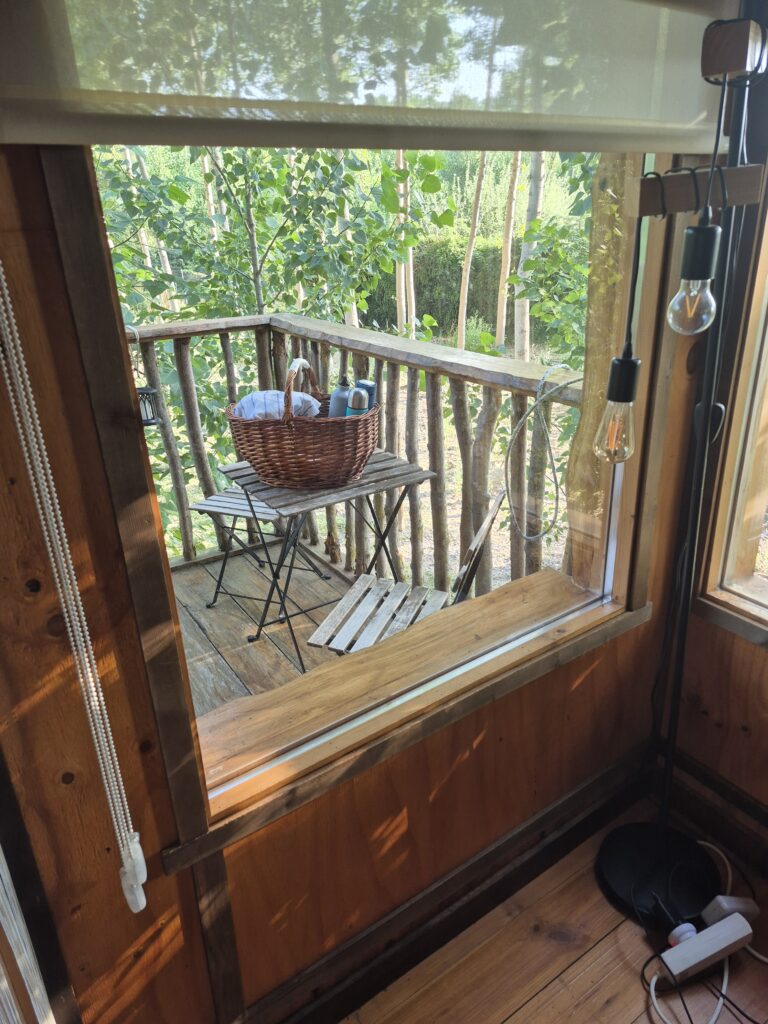
For this leg of the trip, we traded the medieval sprawl for the tranquility of the trees. We stayed in a spectacular designer treehouse located just on the outskirts of Haro—a 130m² architectural marvel that puts you at eye-level with the Riojan landscape. There is nothing quite like waking up to panoramic views of the vines before heading into town for a 10:00 AM tasting at Muga.
The hospitality here was next-level. Our host was incredible, helping us navigate local reservations and even personally driving us into Haro. She went as far as calling a local taxi service to ensure we had a ride pre-booked for the end of the night – a lifesaver when you’re deep into the “spillage” of La Herradura.
But the highlight of the stay? The morning ritual. Each day, a picnic breakfast basket appeared below the treehouse, clipped to a manual pulley system. We’d haul it up to the balcony to find a feast of homemade bread and jam, a fantastic wedge of Spanish tortilla, and a steaming pot of coffee and tea. Sitting in the canopy, pulling up your breakfast while overlooking the vineyards, is the ultimate way to start a Rioja adventure.
The Companion Peak for these Pints
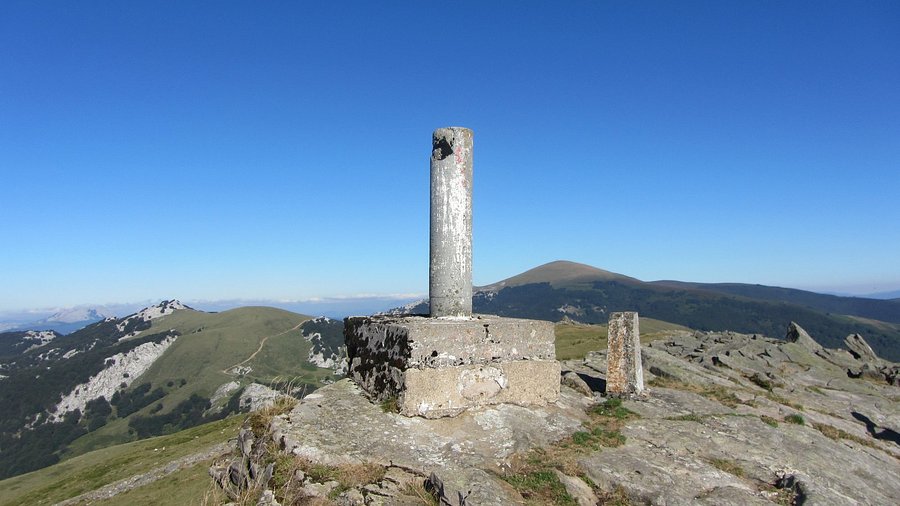
As always, we pair our hikes with the best possible post-adventure base. This time, climb to the cross-crowned summit of Gorbeia, the highest peak spanning Bizkaia and Álava, starting through the misty, moss-covered trails of Otzarreta Beech Forest before emerging onto open mountain slopes and the iconic 17-metre summit cross at 1,482m. Then trade altitude for indulgence in Haro, where Rioja flows freely, tapas bars spill into the streets, and a perfectly cooked chuletón awaits – making every step of the climb feel more than worth it. See here for our companion hike itinerary for Gorbeia.
Alternatively, see here for our companion hike itinerary for Aizkorri.
The vineyards: The reason you come
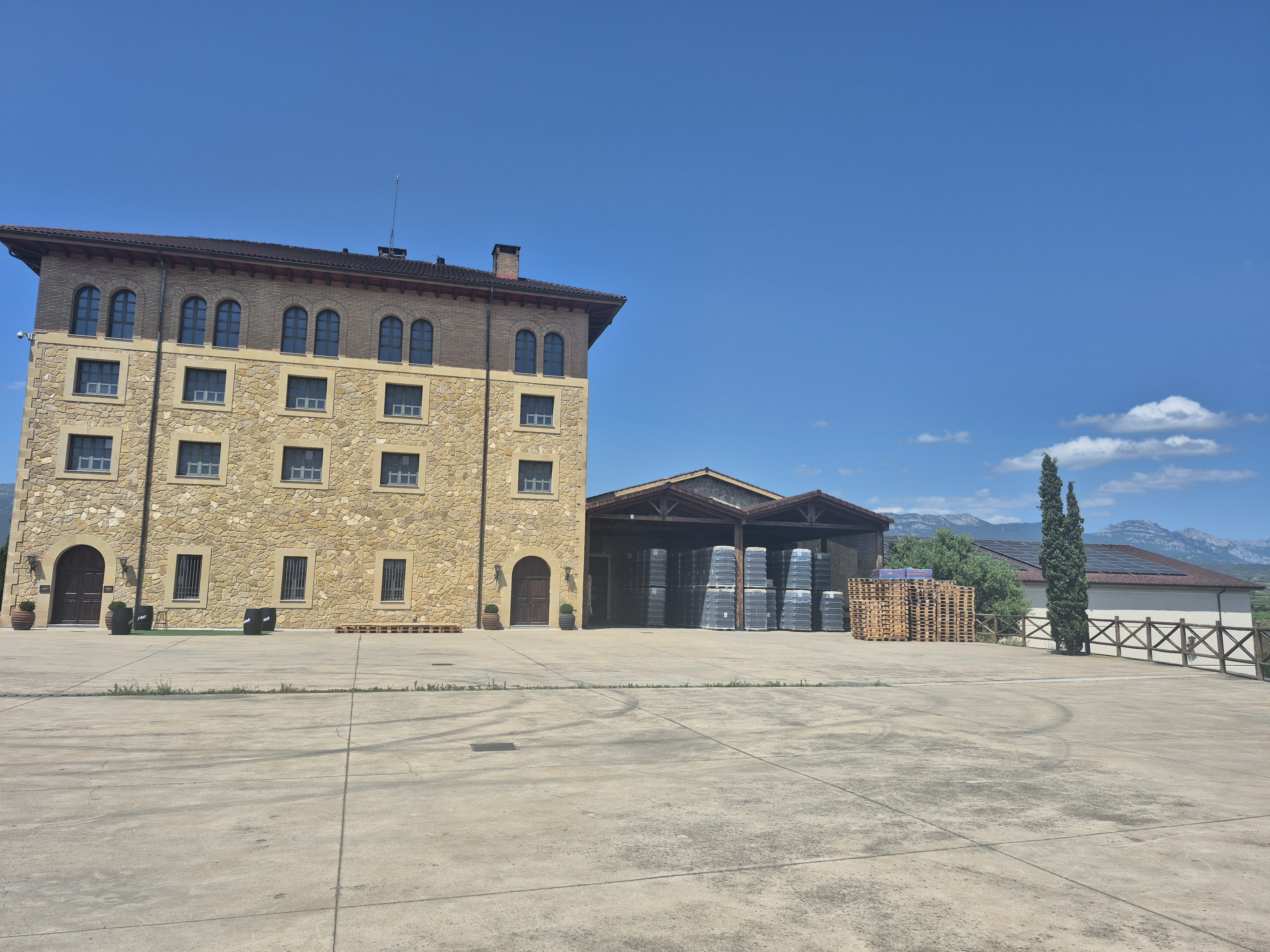
To “earn your pour” in Rioja, you need to know which cellar door to knock on. The region is a mix of “Cathedrals of Wine” and modern architectural marvels. Here is the breakdown of the essential wineries from your notes, categorized by location and what makes them worth the stop.
Know Before You Go: Pro-Tips
| Category | Advice |
| Booking | Always book the “Big Name” tours (like Muga) in advance, but feel free to walk into CVNE or TIHOM for a glass at the bar. |
| The “Siesta” Gap | Many wine bars and smaller shops in Haro close between 3:00 PM and 7:00 PM. Use this time for your long lunch in Briones or a siesta in the treehouse. |
| The “Door Rule” | Digital hours are often wrong. If a bar looks closed but there’s a sign on the door, check it – they might just be opening an hour later than Google says. |
The “Golden Mile”: Haro’s Barrio de la Estación
All of these are within a 15-minute walk of each other and Haro’s town center.
- Bodegas Muga
- Famous For: One of the few wineries in the world with its own cooperage (they make their own barrels on-site).
- Architecture: Traditional Riojan stone with the iconic “Torre Muga” tower.
- The Move: Tour (90 mins). You need to see the vats and the coopers at work. Since you have a 10:00 AM booking, you’re hitting the peak time for activity.
- R. López de Heredia
- Famous For: Being a “living museum.” They use the same techniques and tools today that they used in 1877.
- Architecture: A surreal blend. You have the “cobwebby” 19th-century underground cellars contrasted by a Zaha Hadid-designed ultra-modern tasting pavilion that looks like a decanter.
- The Move: Tasting. Pop into the Zaha Hadid pavilion for a glass of Tondonia. It’s a 10/10 visual experience.
- CVNE (Compañía Vinícola del Norte de España)
- Famous For: The Eiffel Cellar, designed by Gustave Eiffel’s studio. It uses a massive metal truss system so there are no columns to get in the way of the barrels.
- Architecture: A “Wine Village” of independent stone buildings.
- The Move: Tasting at the Wine Bar. It’s flexible and allows you to see the Eiffel architecture without a full 2-hour commitment.
- Bodegas Roda
- Famous For: Precision and modernity. They focus heavily on “innovation” and vertical tastings.
- Architecture: Features a stunning “balcony” overlooking the Ebro River.
- The Move: Tasting. Grab a glass and head to the terrace for the river views.
- Gómez Cruzado
- Famous For: Being the “boutique” choice of the neighborhood.
- The Move: Tasting Flight. It’s more intimate than the giants next door. Perfect for a 45-minute stop.
the Sonsierra & Briones Loop
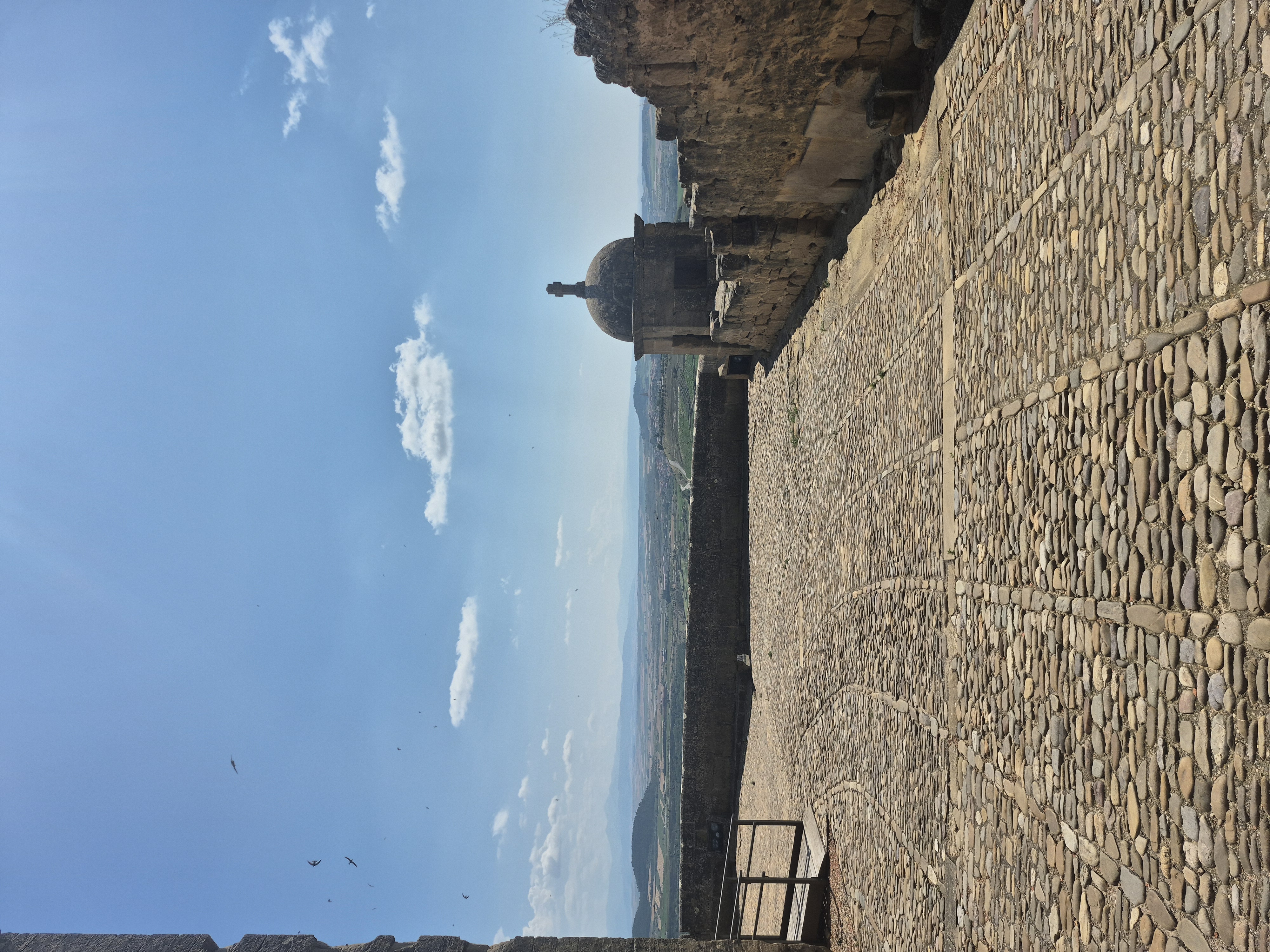
These require the 30km cycle or a short drive (10–15 mins) from Haro. See below for details of our cycling day.
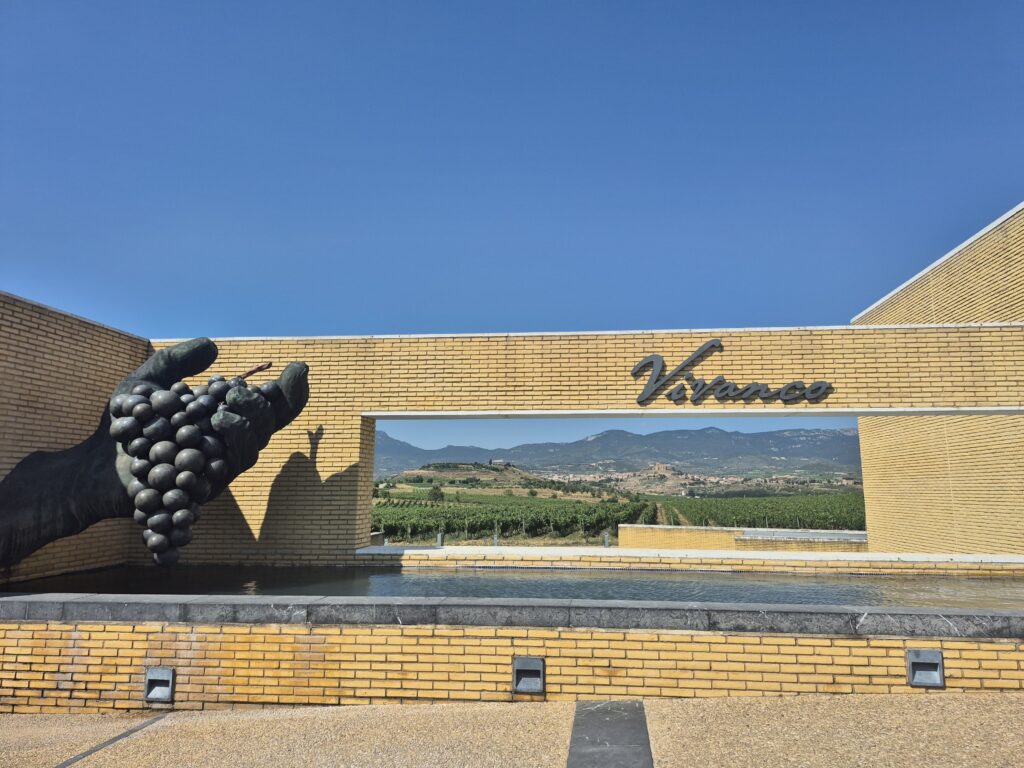
- Vivanco Museum (Briones)
- Famous For: Being widely considered the best wine museum in the world.
- Architecture: A massive, modern complex buried partially underground to preserve the landscape views of Briones.
- The Move: The Museum (2+ hours). Skip the winery tour here and focus on the museum’s art collection (Picasso/Warhol) and the world’s largest corkscrew collection.
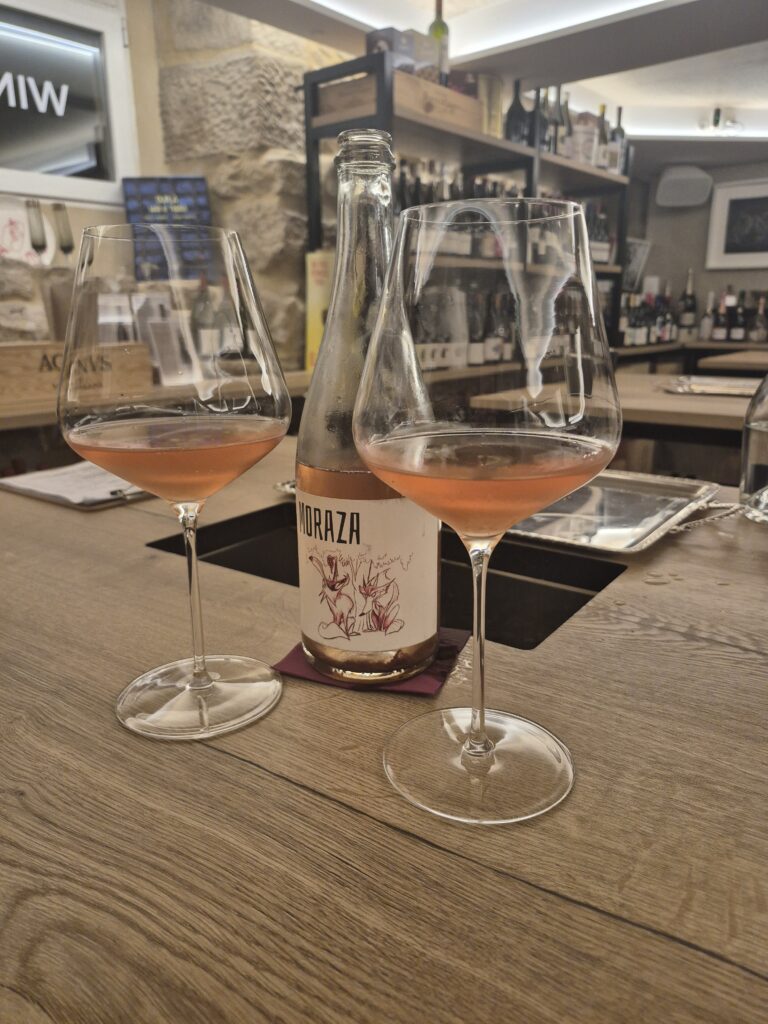
- Bodegas Moraza ★ (San Vicente)
- Famous For: Natural and Biodynamic wines. This is the “new wave” of Rioja—no oak, just fresh, terroir-driven juice.
- Architecture: Simple, functional, and authentic.
- The Move: Tasting. It’s a vital contrast to the “oak-heavy” giants in Haro.
- Hacienda López de Haro (San Vicente)
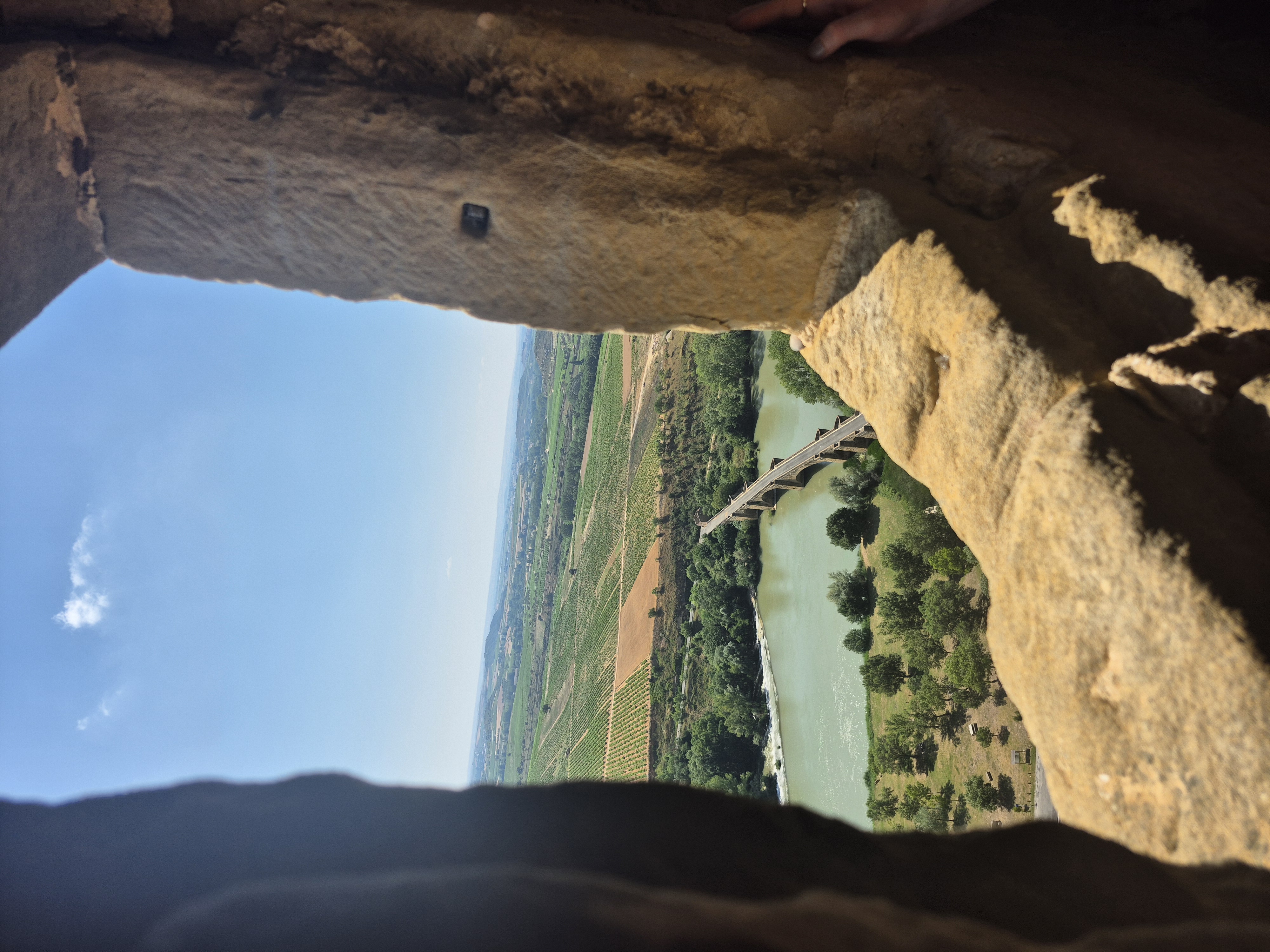
- Famous For: The views. It sits on a high ridge overlooking a meander of the Ebro River.
- Architecture: Modern, sleek, and designed to disappear into the hillside.
- The Move: Tasting on the Terrace. You come here specifically for the “Instagram” views of the valley. Spend 1 hour here at 3:00 PM for the best light.
The “Summit and Sláinte” Top Pick: Bodegas Moraza (San Vicente)
While the “Cathedrals of Wine” in Haro are architecturally stunning and historically famous, they can often feel corporate, impersonal, and a bit cold. If you only have time for one tour and don’t want to spend your entire day stuck inside a dark cellar, our Top Pick is the intimate, high-altitude experience at Bodegas Moraza.
Located just before you reach the town of San Vicente, this family-run winery is the face of the “new wave” of Rioja – focusing on natural, biodynamic, and terroir-driven juice with zero chemicals and no oak to mask the fruit. The architecture is simple, functional, and authentic, but the real magic is the family behind it.
The Experience: More Than a Tasting
When we arrived, we were met not by a suit-and-tie guide, but by Janire Moraza’s husband, their children, their only other employee (a cousin), and his hunting dogs. The experience was instantly personal. Janire pulled up in the family car, swapped out the children’s car seats, and invited us for a drive to see what Rioja actually looks like.
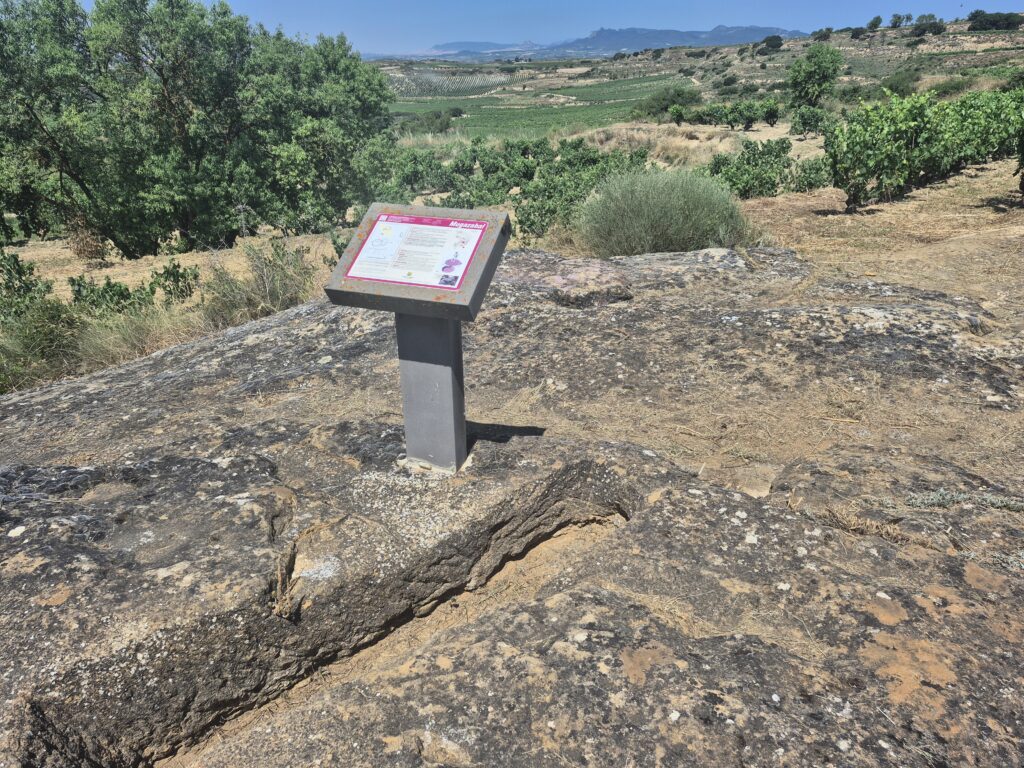
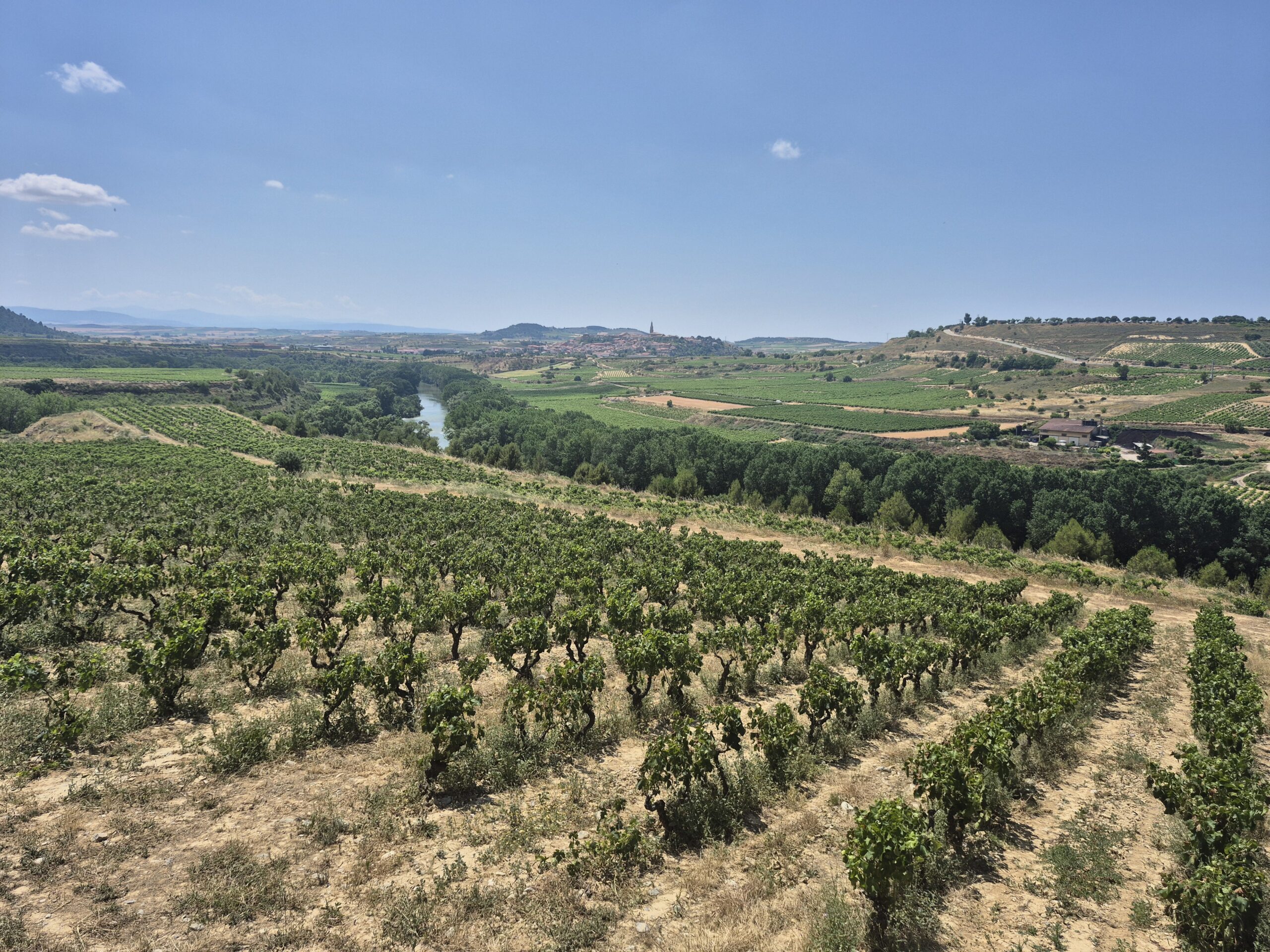
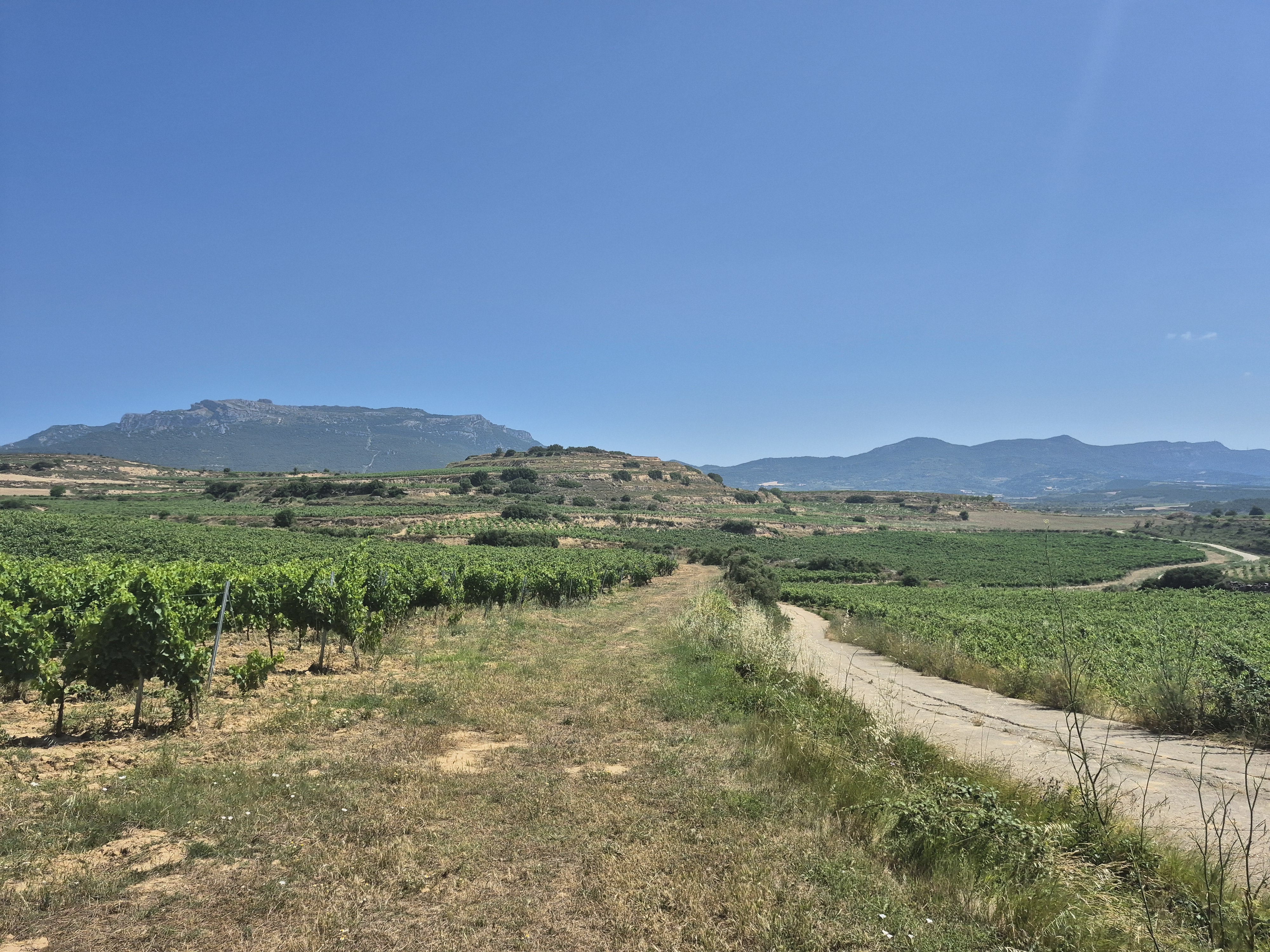
She took us on a full tour of the region’s rolling hills, stopping at private viewpoints to explain the strategic “patchwork” of Rioja. You learn how a single vineyard might own dozens of tiny plots across different soils and terrains – some shaded, some wind-protected – to suit specific grape varieties. We even trekked through hidden vineyards to see the remains of ancient Roman winemaking “presses” carved into the stone, using gravity and natural grooves – a sight few tourists will ever see.
The Deep Connection
Back at the winery, Janire (the head winemaker) walked us through the meticulous, difficult process of making natural wine in a region steeped in rigid tradition. You can feel the weight of their caretaking duties; this isn’t a job for them, it’s a multi-generational responsibility to the land.
The tour ended in her family kitchen, where Janire personally poured six glasses of her incredible wine. She drank alongside us, offering deep insights into each bottle. It was a level of intimacy that the larger, “corporate” neighbors could never hope to match. All of this cost us less than €50 total. What a bargain!
The Ultimate “Local” Passport
Janire’s generosity didn’t stop at the wine. She spent time mapping out our entire trip, from Hondarribia to Bilbao, giving us the names of her friends – the sommeliers, head chefs, and owners of the best regional spots. In a region where tables are hard to come by, “Janire sent us” became our magic phrase; it never failed to get us a table when places were “fully booked” or land us a recommendation for a bottle we’d never have found on our own.
- Distance from Haro: 9km (High up on the road to San Vicente).
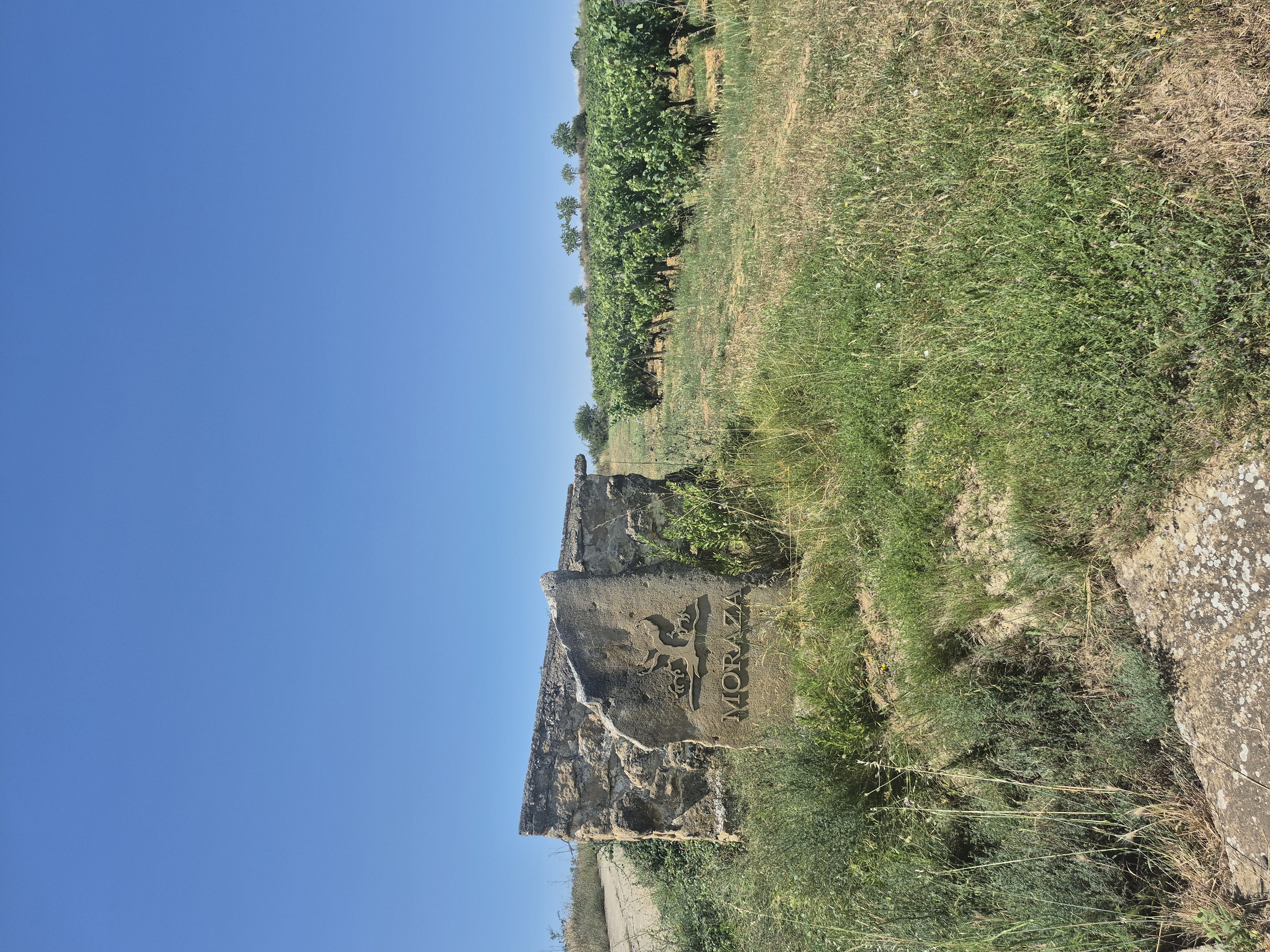
- Famous For: Fresh, high-altitude natural wines (the “Moraza” style). If you are in a wine bar anywhere in Spain and see the distinctive Moraza tree logo on a bottle, particularly if it is a Pet Nat, make sure you order a bottle.
- How Long to Spend: 2–3 hours.
- The Move: The Personal Tour. It is the most authentic, generous, and knowledgeable tour you will find in Rioja.
The Haro Food & Drink Guide: The reason you stay
Haro’s dining scene is a high-octane mix of tradition and modern innovation. Whether you are leaning against a stone wall in La Herradura or sitting down for a three-hour feast, the quality is relentless.
The Tapas & Social Hubs (The “Sip”)
This is where the “Nomadic Dining” score hits its peak. Expect vibrant crowds, open doors, and the best value in Europe.
- ★ Bar Chamonix: The Seafood Market in Disguise
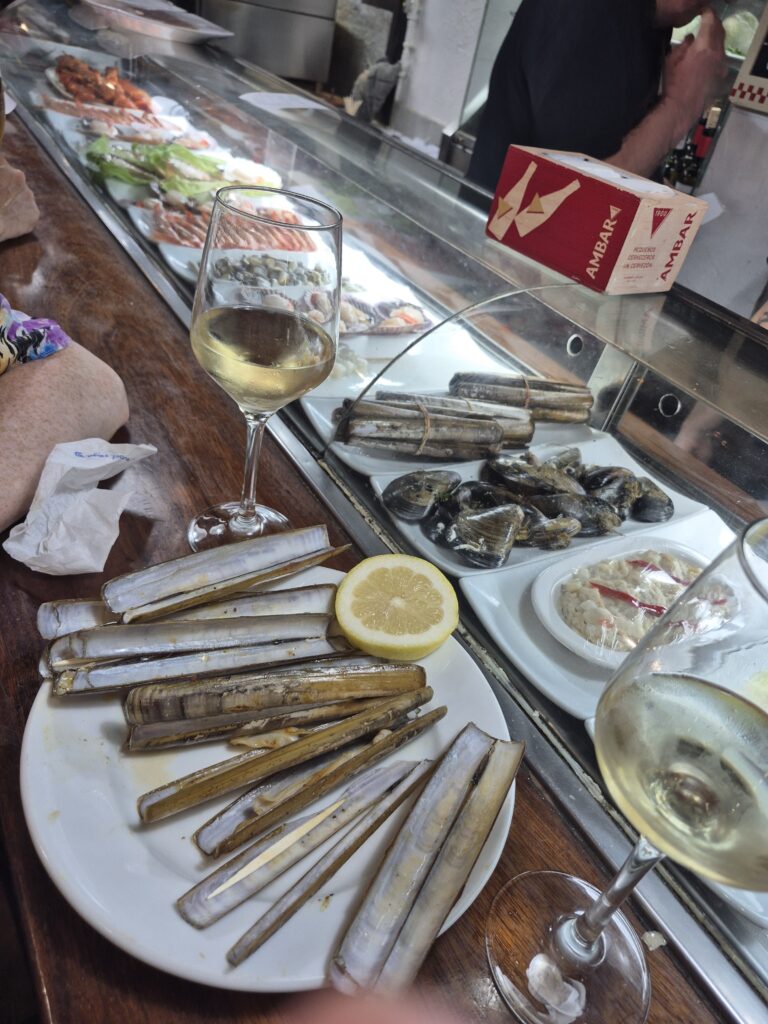
- This is the local gold standard and our absolute favourite discovery. Don’t let the rowdy, crowded exterior fool you – Chamonix is essentially a high-end fresh seafood market disguised as a busy, boisterous bar.
- The Move: Pull up a seat at the bar (if you can find an inch of space) and don’t be afraid to shout. Signal the amazing but hyper-busy barmen and shout out your order. Within seconds, they’ll grab a handful of fresh razor clams (navajas), scallops (zamburiñas), or clams and toss them onto the heat. Minutes later, a steaming plate of the freshest seafood you’ve ever tasted is in front of you.
- Our Advice: While Haro has incredible restaurants, there is a strong case for skipping the formal sit-down meals entirely and feasting on seafood here. It is casual, loud, lightning-fast, and a fantastic sensory experience
- Liveliness: 10/10. Affordability: €.
- Vinum Vita: A modern sanctuary for the curious drinker. They specialize in local pours on tap, allowing you to sample high-end Rioja by the glass without committing to a bottle.
- Specialty: Wines on tap paired with high-quality snacks.
- Bar Benigno: A true local classic. This is the place for a quick “chiquito” (a small, traditional glass of wine). It’s unpretentious, fast, and remarkably cheap.
- Vibe: Old-school Haro. Affordability: €.
- La Rioja Alta Wine Bar: Located near the station, this is where you go for elite-level wines in a sophisticated setting.
- Note: They close early at 3:00 PM, so make this your “pre-lunch” stop.
- Roots Our “All-in-One Superstar.”
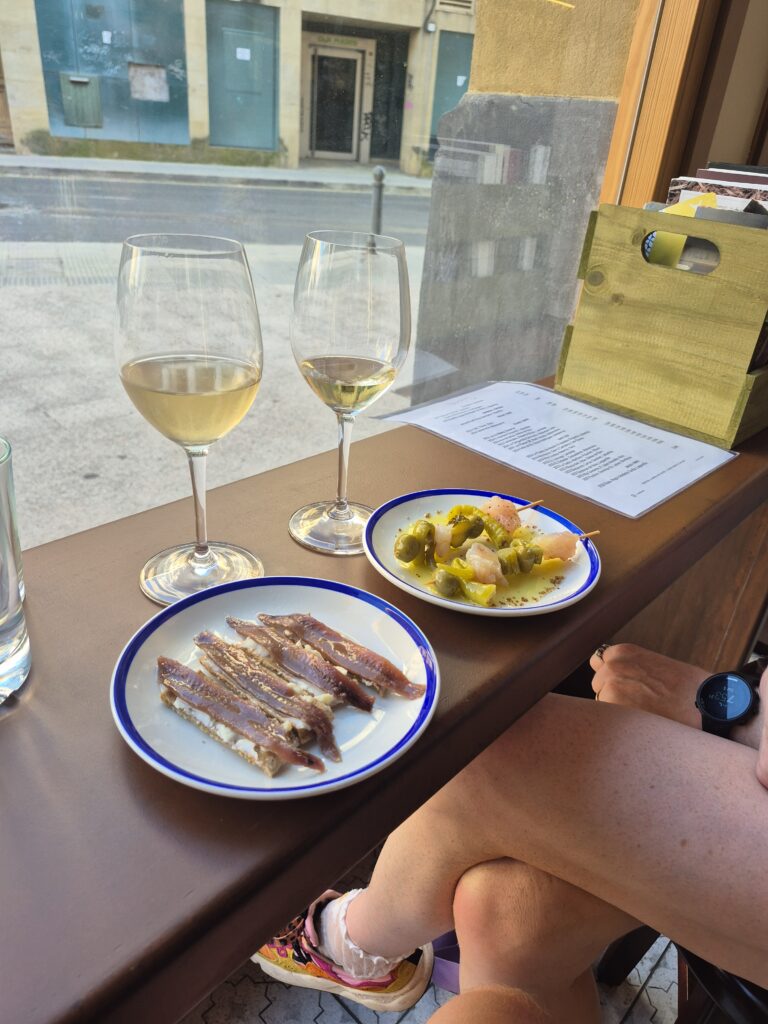
- Specialty: A rare spot that masters specialty coffee, an elite craft beer selection, and modern Riojan wine/food all under one roof. We loved their take on the Gilda and enjoyed some amazing anchovy tostas.
Haro Dining: The Heavy Hitters (The “Snack”)
When it’s time to move from nomadic snacking to a serious sit-down, Haro offers a “deep bench” of world-class restaurants.
- Los Caños: Our top pick for a long, celebratory dinner. We booked for 8:45 PM just as the local energy was peaking. It strikes the perfect balance between high-end Riojan ingredients and a warm, lively atmosphere.
- Liveliness: High. Affordability: €€.
- Terete: A pilgrimage site for foodies. You come here for one thing: the traditional roast lamb (Cordero Asado). It’s cooked in century-old wood-fired ovens and is a rite of passage for anyone visiting the town.
- Specialty: Roast Lamb. Vibe: Historic and grand.
- Nublo: For the adventurous palate. This Michelin-starred powerhouse (1 Star / 2 Repsol Soles) is located in a stunning 16th-century palace. Everything is cooked over open fire, blending ancient techniques with avant-garde presentation.
- Specialty: Wood-fired tasting menus. Affordability: €€€€.
- The Elite Bench: If you can’t get a table at the above, Alboroque (1 Sol), El Trujal del Abuelo, and El Rincón del Noble ensure you never have a bad meal in this town. Each offers a slightly different take on the region’s “Red Gold” – fresh asparagus, artichokes, and milk-fed lamb.
When Haro Becomes One Giant Street Party
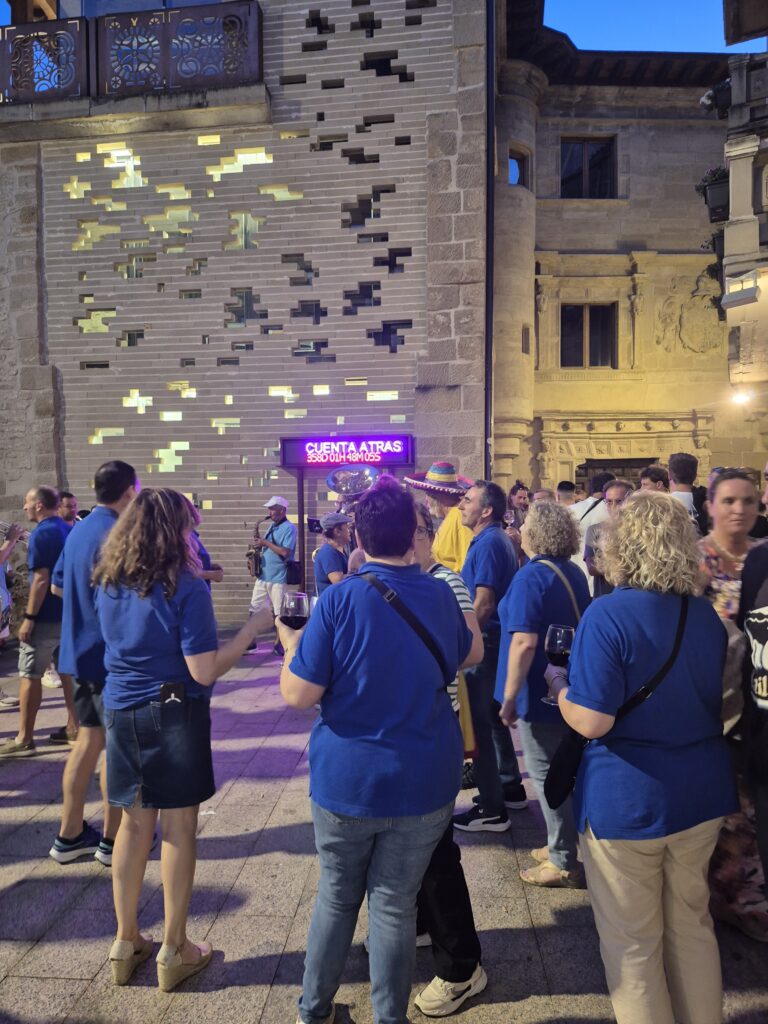
If you’re lucky, you’ll witness the true soul of Haro – an impromptu street party that makes the town feel like it’s vibrating. There doesn’t need to be an official festival on the calendar for the magic to happen. One minute you’re having a quiet drink, and the next, a Charanga (a local brass band) comes marching around the corner with trumpets, saxophones, and wide-brimmed sombreros.
Suddenly, the distinction between “inside the bar” and “on the street” completely vanishes. A massive crowd follows the music, and the cobblestones of La Herradura turn into a dance floor. Everyone—from locals to travelers—is swept up in the parade. If you hear the drums starting up near Bar Chamonix ★, put your glass down and join the crowd. It’s the ultimate, unscripted Riojan experience.
Beyond the Capital: The 30km “Grand Tour” Cycling Loop
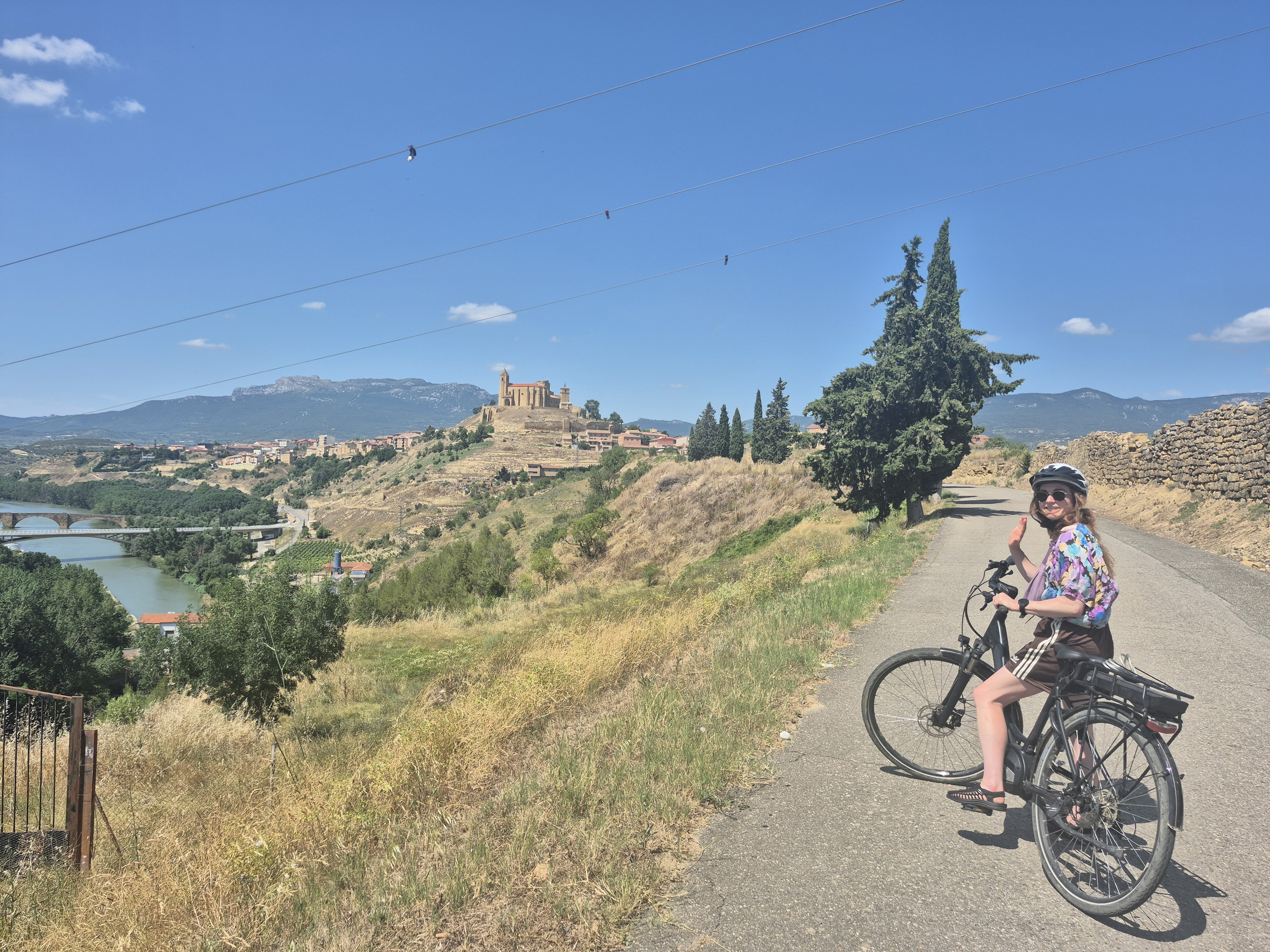
While Haro is the heartbeat, the surrounding villages of the Rioja Alta offer the soul and the scenery. This is our suggested itinerary – the exact loop we took to earn our pours. While we’ve laid it out step-by-step, the best part of Rioja is the freedom to “stumble” from one medieval bar, town, or vineyard to the next as the mood strikes.
The Logistics: Ojasport & Luis
Before you hit the vines, you need the right wheels. We cannot recommend Luis at Ojasport highly enough. His communication was incredibly prompt and he was remarkably flexible with our pick-up and return times.
Luis didn’t just hand over the bikes; he spent time uploading custom maps directly to our phones. He marked out the best vineyard shortcuts, his favorite local pubs, and hidden viewpoints. He even included a few secret spots along the river for a post-cycle dip to cool off. Having a local’s GPS-guided “cheat sheet” made the entire ride seamless.
The Itinerary: A Day in the Vines
- 09:30 | Haro: Pick up your bikes from Luis and head toward the Barrio de la Estación.
- 10:00 – 11:15 | Bodegas Muga (Haro): Start with the giants. This 90-minute tour is essential for seeing their on-site cooperage where they still craft their own barrels by hand.
- The Ride (9km): A gorgeous, rolling pedal toward San Vicente through sea-like expanses of Tempranillo.
- 12:00 – 13:00 | Bodegas Moraza (San Vicente): Our Top Pick. Meet Janire for a personal, high-altitude tour of their natural, biodynamic vineyards (see the full “Moraza” spotlight above).
- The Ride (5km): A short, scenic burst over to Briones.
- 13:30 – 14:30 | Briones Lunch: Grab a quick, world-class bite in the medieval center.
- 15:00 – 16:00 | Hacienda López de Haro (San Vicente): Pedal back toward the ridge for a late-afternoon tasting at this modern architectural gem, famous for its panoramic views of the Ebro river.
- 16:30 – 17:30 | Vivanco (Briones): Swing back into Briones for a final glass at the museum café before the home stretch.
- The Ride (7km): The final, sun-drenched descent back into Haro.
- 18:00 | Return & Refresh: Drop the bikes back with Luis and prep for the evening “spillage.”
The Town Breakdowns
San Vicente de la Sonsierra: The High Ground
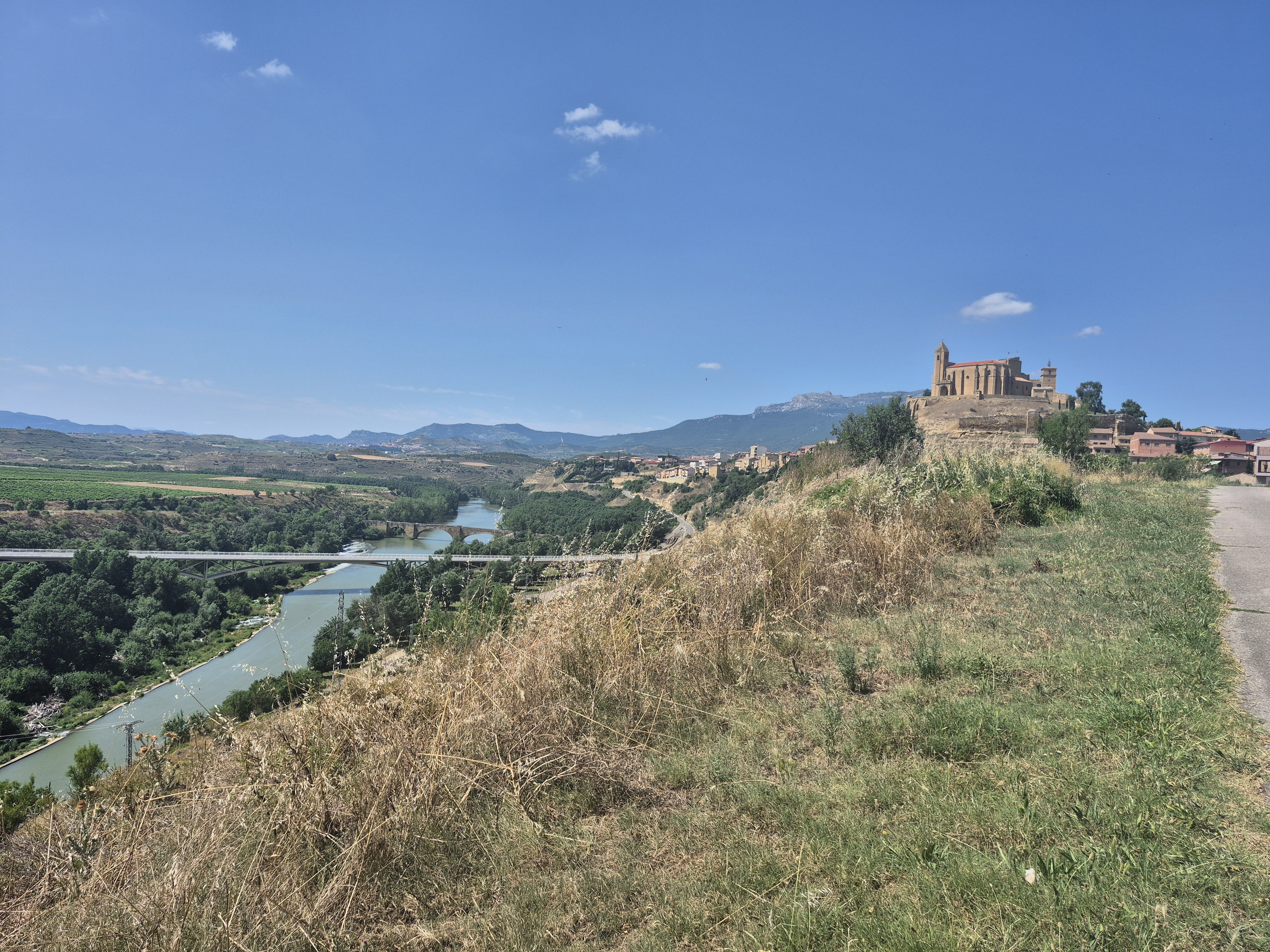
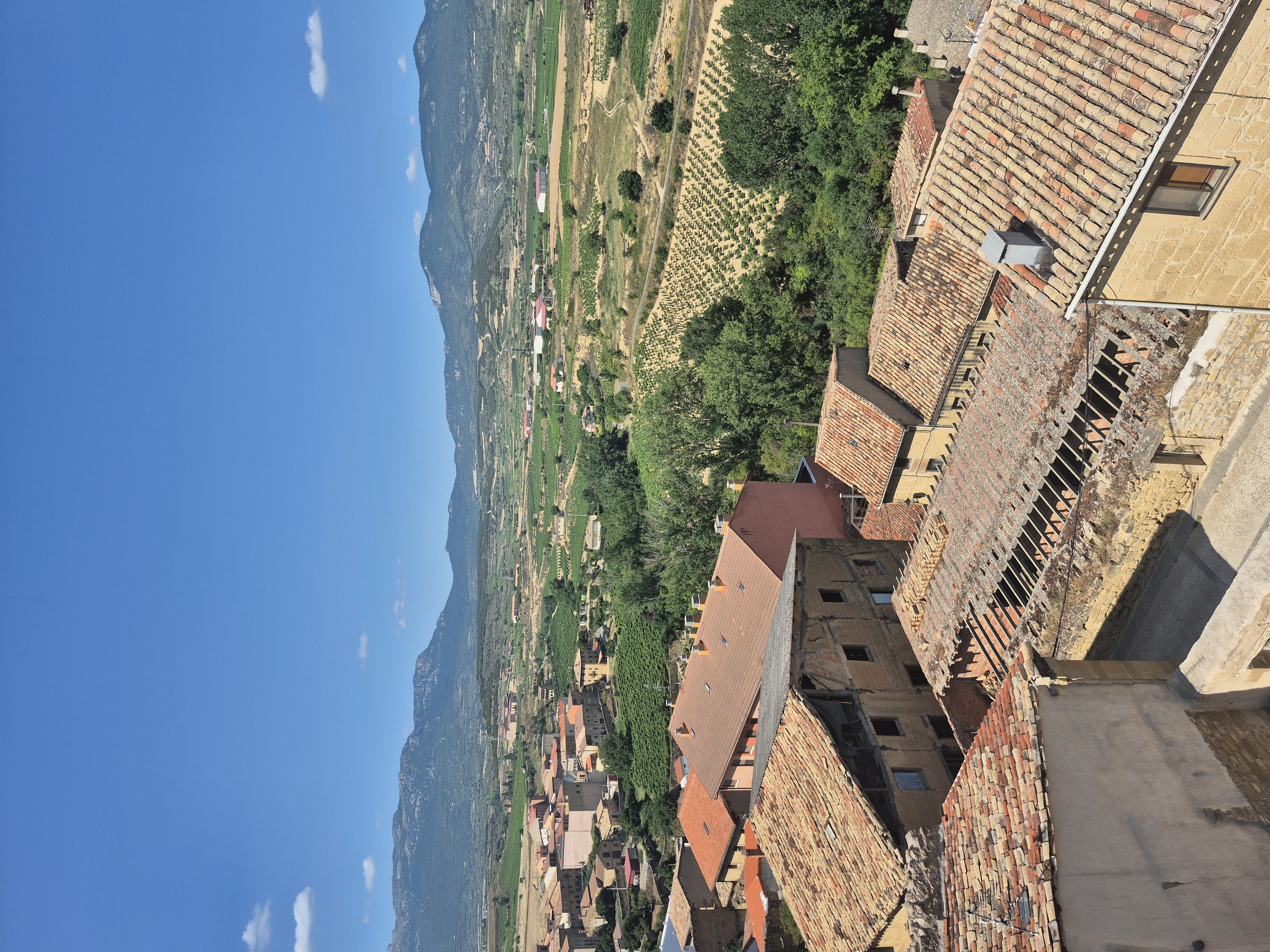
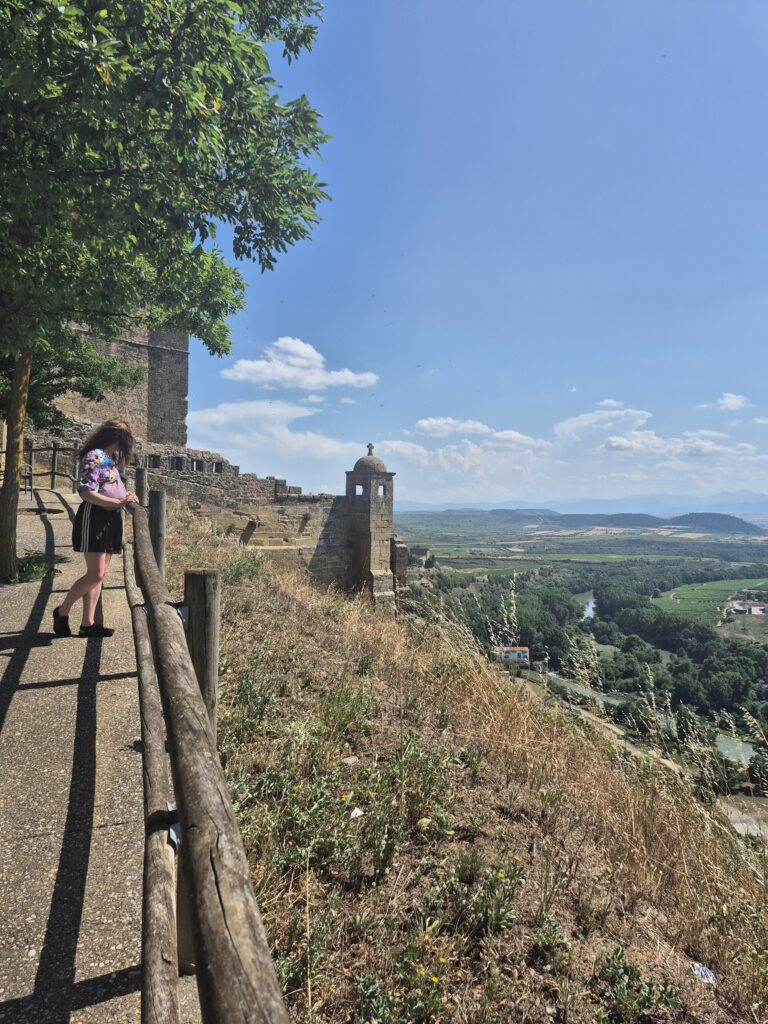
San Vicente is all about drama – from the rugged ruins of the Castillo de San Vicente to the ancient Puente Medieval.
- La Cofradia del Renegado ★: Our absolute must-visit. Natural wines are often referred to as “renegade wines” because they buck the rigid, oak-heavy traditions of the region – hence the name of this bar. It is a high-energy, incredibly friendly hub that serves as the perfect home for the “renegade” spirit.
- Casa Toni (1 Sol): An elite dining choice where traditional Riojan flavors are elevated to fine art.
- La Vieja Bodega: A beautifully restored space with one of the deepest, most curated wine lists in the valley.
- La Tercera Estación: A cozy, welcoming “third station” perfect for a quick pour and a plate of local olives.
Briones: The Living Museum
Widely considered one of the prettiest villages in Spain, Briones is a golden sandstone labyrinth.
- Vivanco Museum of Wine Culture: You could spend hours here; it is the most comprehensive wine museum in the world.
- Vivanco Museum Café: Offers stunning views over the valley while you enjoy their estate-grown pours.
- Allegar (1 Sol): Located within a boutique hotel, this spot focuses on sleek, modern interpretations of local produce.
- Los Calaos de Briones: A traditional underground cellar where the stone walls and cool air make every glass feel historic.
Speciality Coffee Stops
Not a huge choice here – just the one in fact:
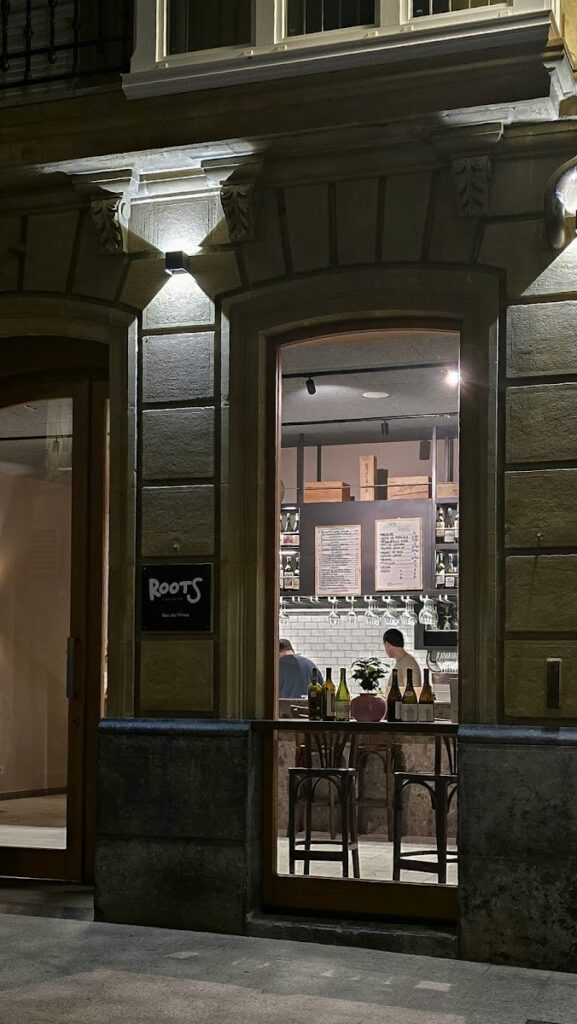
Roots: A rare spot that masters specialty coffee, an elite craft beer selection, and modern Riojan wine/food all under one roof. We loved their take on the Gilda and enjoyed some amazing anchovy tostas.
If you’re ready to trade the designer treehouse and the “renegade” natural wines of the Sonsierra for the most famous tapas street in Spain, follow us to our next stop in Logroño here. We’re heading 40 minutes down the road to tackle the legendary Calle del Laurel, where every bar has a signature pincho and the “spillage” hits a whole new level of intensity. Follow us to the next stop on our Basque Country and Rioja journey in Logroño here.
Alternatively, see here for our previous stop in Vitoria-Gasteiz.