Aizkorri might not be the highest peak in the Basque Country, but it’s easily the most iconic. This route delivers everything: deep forest, vast pastoral plateaus, limestone drama, a mandatory stop at a fantastic refuge (Urbiako Fonda) and a summit crowned with a hermitage.
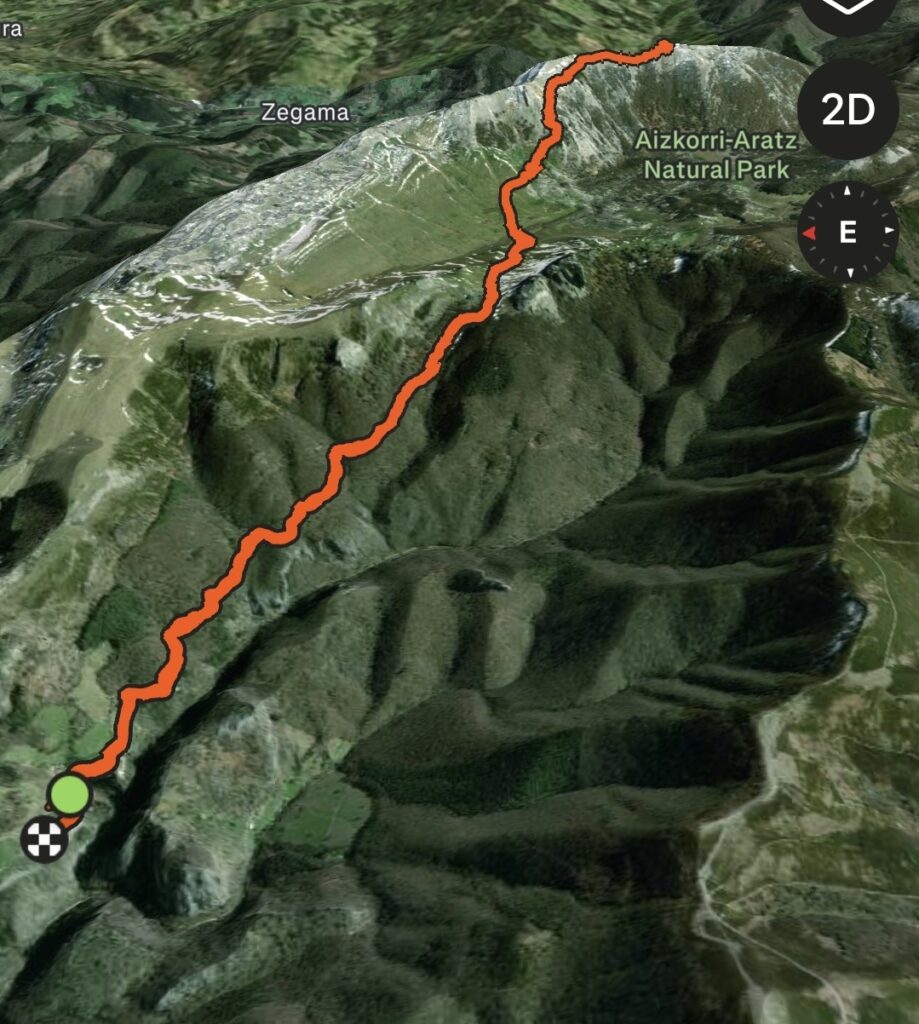
- Distance: 11 miles / 17.5km
- Elevation: 🏔️ Ascent: 955m – Descent: 955m
- Type: ⇄ Out & Back
- Trailhead: 📍 Arantzazu Sanctuary
- Duration: 4 – 5 hrs
- Mountain hut: 🍺 Urbiako Fonda
- Additional Peaks : 🏔️Elorrola Lepoa (1,164m) 🏔️ Aitxuri (1,508m)
- Highest point: 1,528 m
- Lowest point: 754 m
- Difficulty: Moderate – difficult (no scrambling but some narrow ridges)
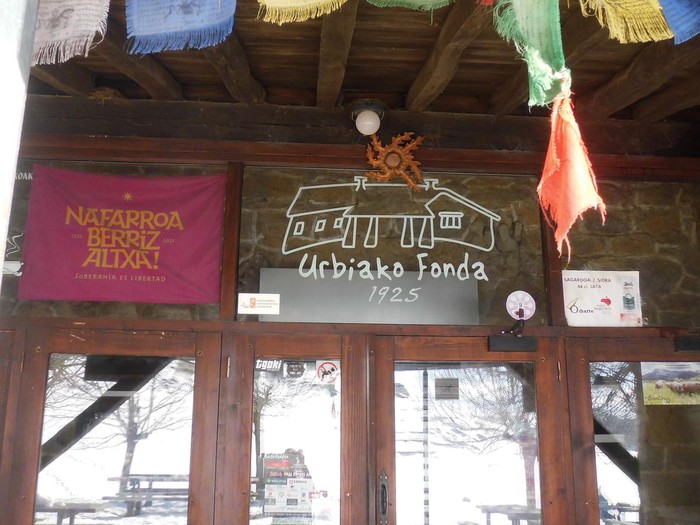
Urbiako Fonda
- Alcohol: ✅
- Food: ✅
- WC: ✅ (free)
- Water: ✅ (free)
- Beds: ❌
- Elevation: 1,131 m
📍Where to start
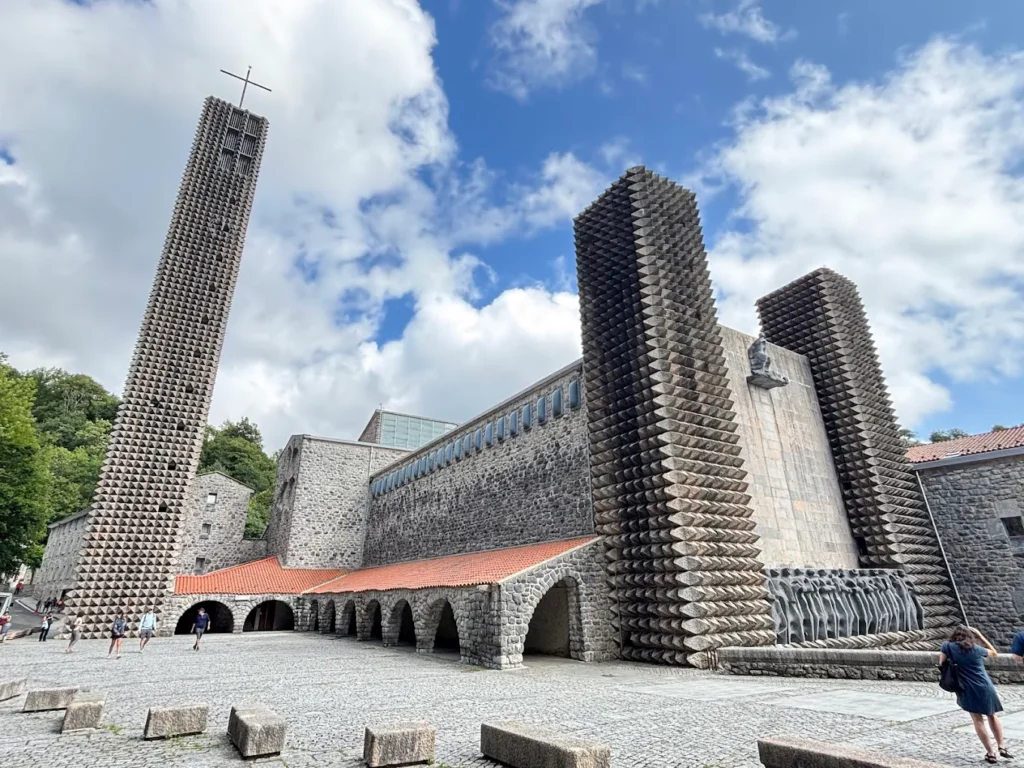
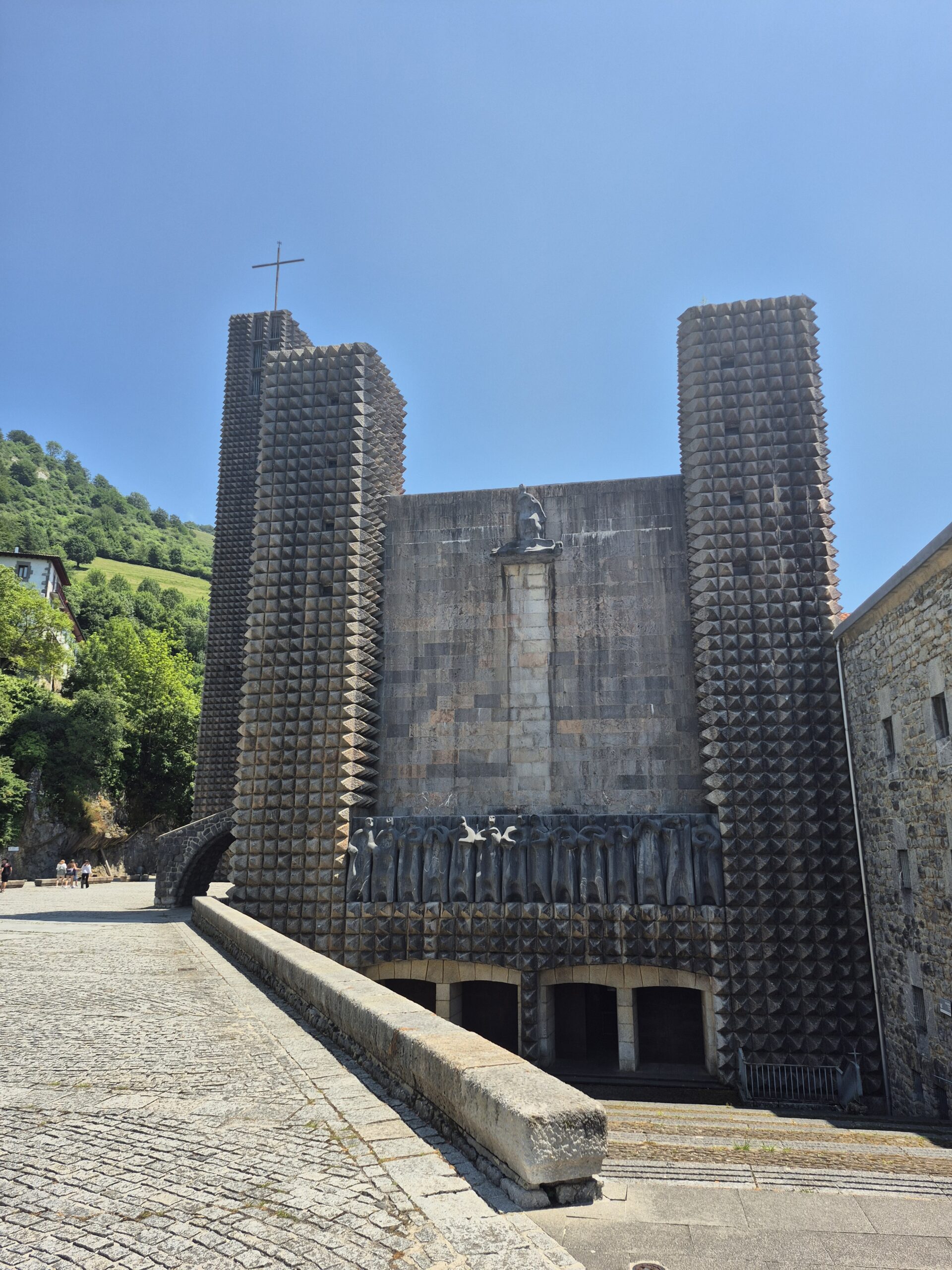
Located in the heart of the Gipuzkoa province, this route begins at the Arantzazu Sanctuary. Perched on the edge of a ravine near the town of Oñati, the sanctuary is an architectural masterpiece. Park in the main visitor lots for free; if you arrive early, you can snag a spot closer to the trail start behind the restaurants. There are also quite a lot of covered spots in the shade on the left hand side which we really appreciated when we arrived back at our car. There are free toilets here should you need them.
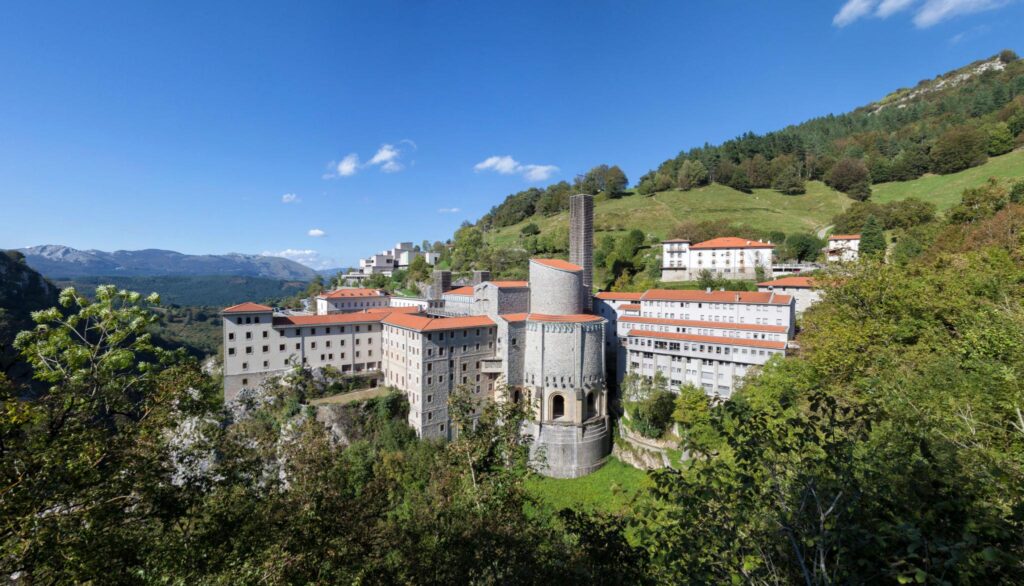
The drive to Arantzazu is spectacular, winding up from Oñati through steep limestone cliffs. It’s a scenic 1-hour drive from San Sebastián, Bilbao, Haro, or our recommended base town Vitoria-Gasteiz, making it a perfect day trip. Check out our Summit & Sláinte Scorecard for Vitoria-Gasteiz here for the best post-hike spots. Before you start, grab a coffee at one of the local bars overlooking the valley – you’ll need the fuel for the initial climb.
Starting the hike: The Forest Climb
The hike begins behind the Sindika hotel/restaurant (head round to the left of the Sanctuary). Look for the yellow and white PR-GI 3001 or the red and white GR-12 markings (these markings are one of our favourite things about hiking in Spain – they might be hiding on a rock on the ground, a tree trunk, or a nearby boulder, but they are always reliable companions). The first two kilometres consist of a steady, shaded ascent through a dense ancient beech forest.
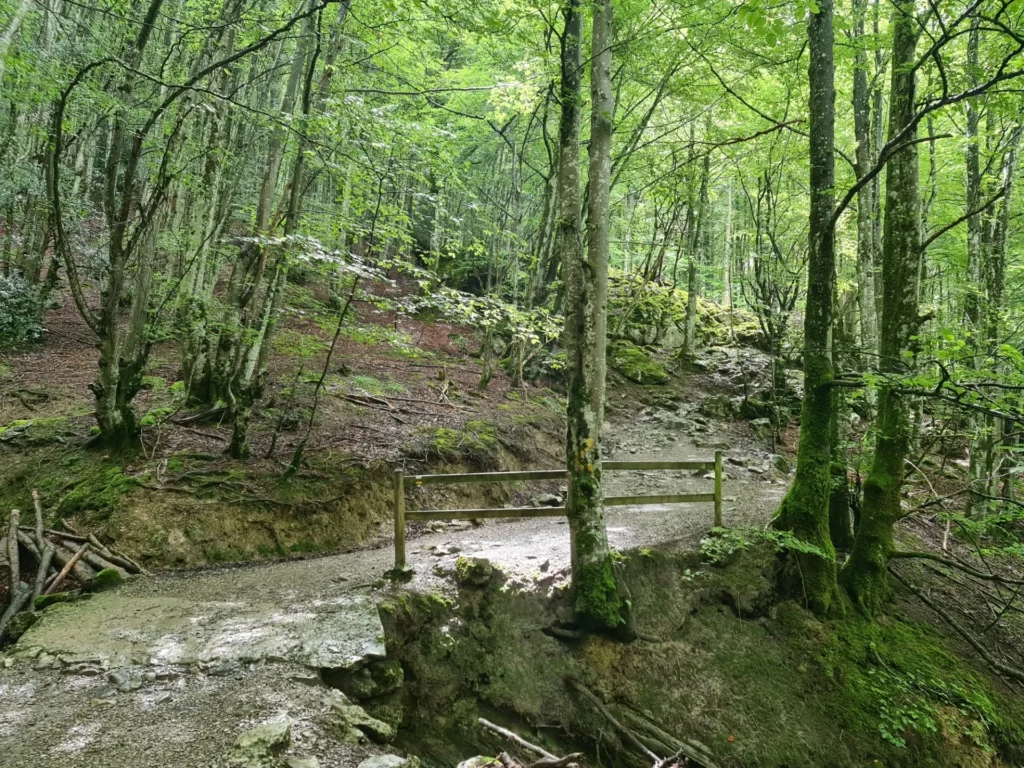
The path here is a wide, rocky track that gains elevation quickly. These trees provide excellent shelter if you’re hiking on a typical misty Basque morning, or in our case, a scorching 35 degrees day – you will miss these trees when you leave them. As the canopy begins to thin, the trail levels out and the limestone “towers” of the Aizkorri range begin to peek through the foliage.
The Plateau: Fields of Urbia – 1,155m – 4.5km
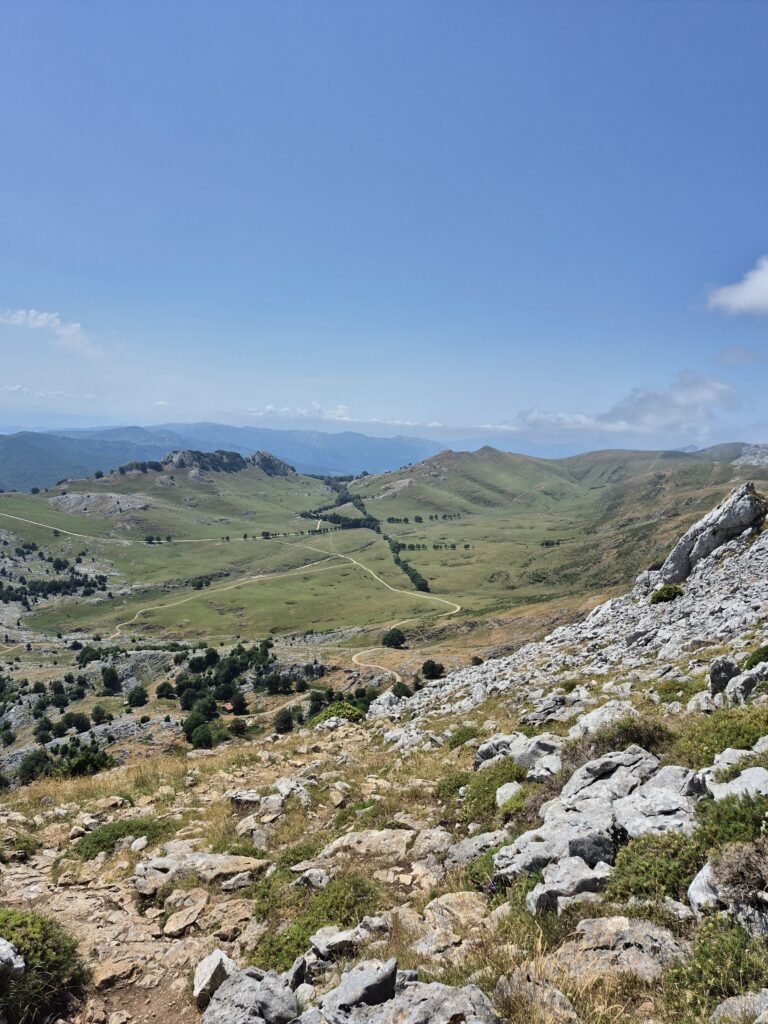
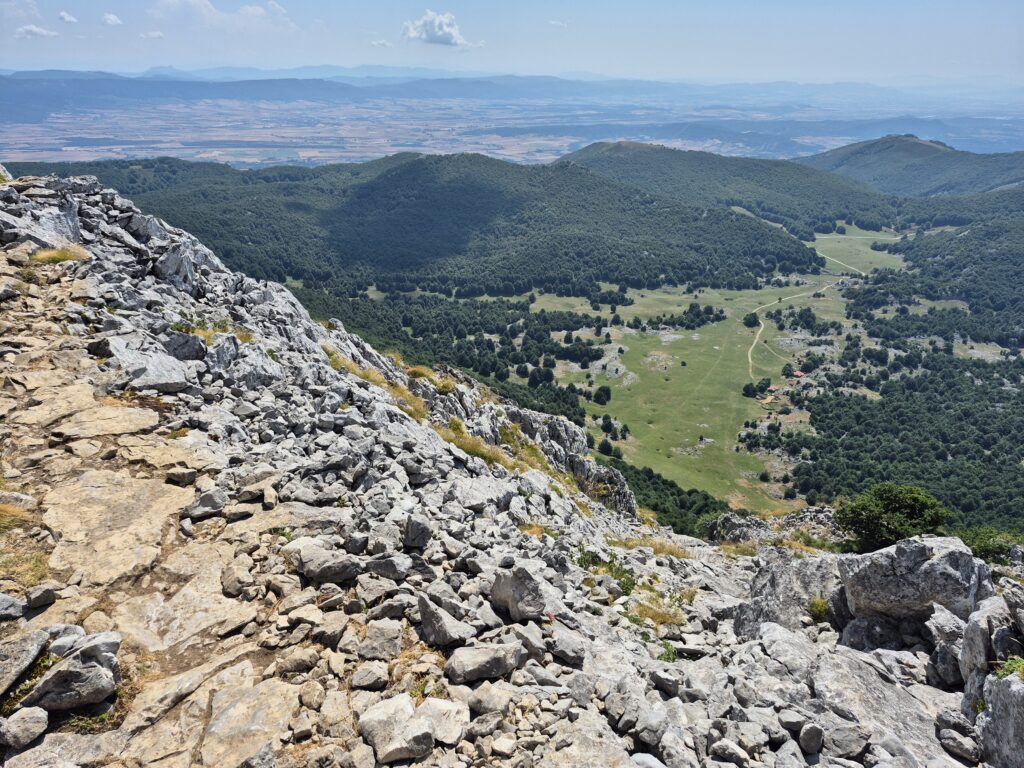
As you clear the tree line, you emerge into the Urbia Fields (Campas de Urbia). This is a high-altitude pastoral paradise – a vast green plateau dotted with grazing Latxa sheep, horses, cows with bells, and limestone outcrops.
Following the line of ancient trees that marks the path across the meadows, you’ll reach the central hub of the plateau. In late spring and summer, the sound of sheep bells is constant here. We loved how peaceful it felt up here, surrounded on all sides by peaks. It feels worlds away from the industrial valleys below.
Here you will find the refuge Urbiako Fonda. At this stage you are less than 5km through and you have a lot of climbing left to do, so we recommend simply using the facilities, purchasing some Idiazabal cheese, for the summit, and refilling your water before carrying on so that you can enjoy stopping here for food and drink on your way back after conquering Aizkorri.
The Ridge Traverse: Aitxuri (1,551m) & Aketegi (1,548m) – 7.5km
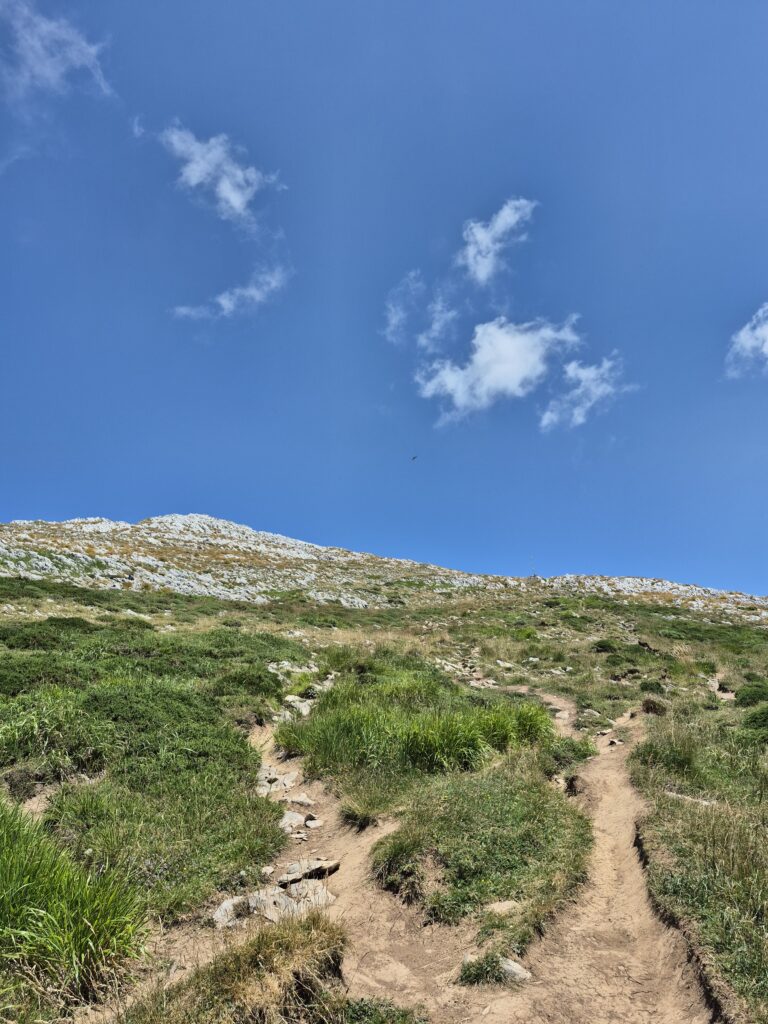
From the Refugio de Urbia, the trail begins a more demanding, rocky ascent toward the highest point of the circuit. While the main trail to Aizkorri stays lower, you’ll want to take the steeper turn-off heading east toward the limestone crest.
Summit #1: Aitxuri – 1,551m
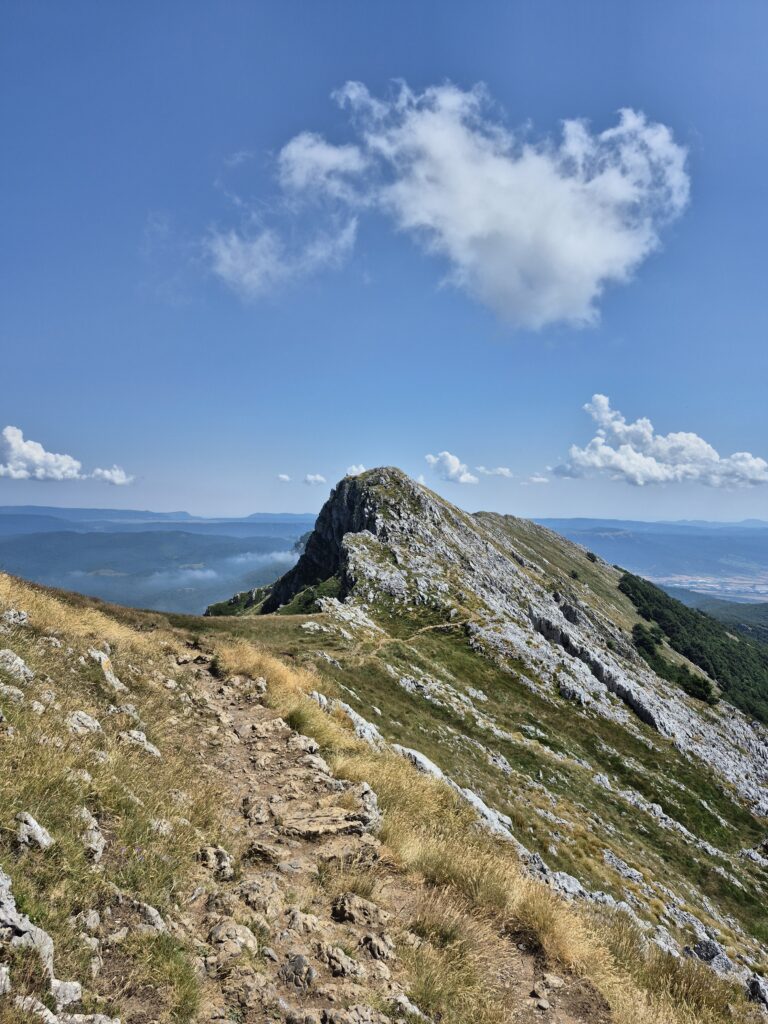
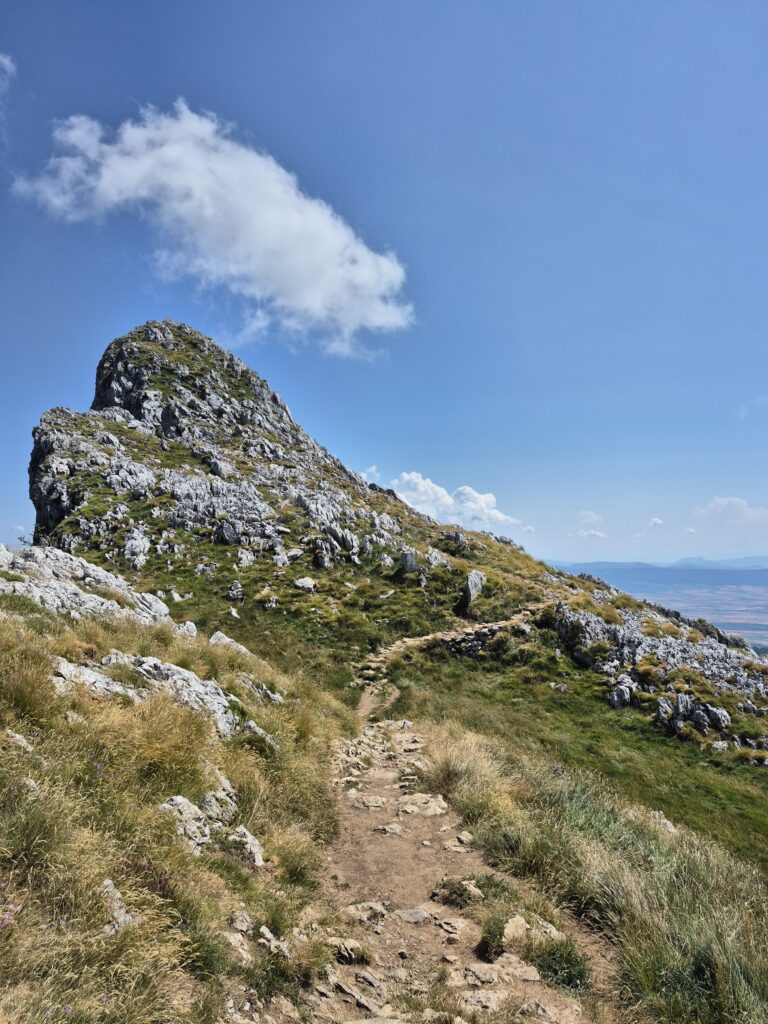
As you reach the top of the initial climb from the plateau, the terrain transitions into a stark, high-alpine environment. You are now at the “Roof of Gipuzkoa.” Aitxuri is the highest peak in the province. The summit is marked by a small mailbox (a common Basque tradition) and offers a panoramic view that, on a clear day, stretches all the way to the Pyrenees.
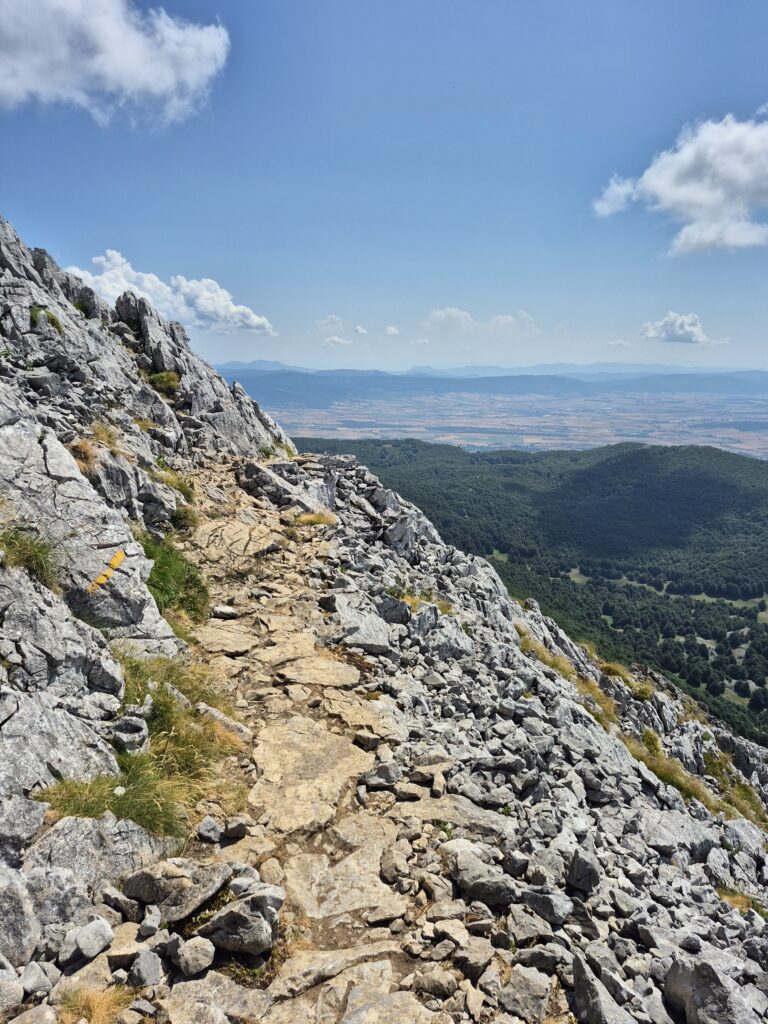
Summit #2: Aketegi – 1,548m
The trail then follows the jagged ridge line. It’s a short, technical scramble from Aitxuri to Aketegi, which is often confused with its neighbor but is technically the second-highest point. The path here is narrow and exposed; you’ll navigate a series of rocky switchbacks and limestone “razors.”
Pro Tip: Keep an eye out for the local Griffin vultures. This ridge is home to the largest colony in the province, and they often circle low over the limestone cliffs as you traverse the peaks.
The Final Ascent: Aizkorri Summit (1,528m) – 8.5km
From the refuge, follow the signs toward the peak. The terrain shifts dramatically from soft grass to sharp, exposed limestone karst.
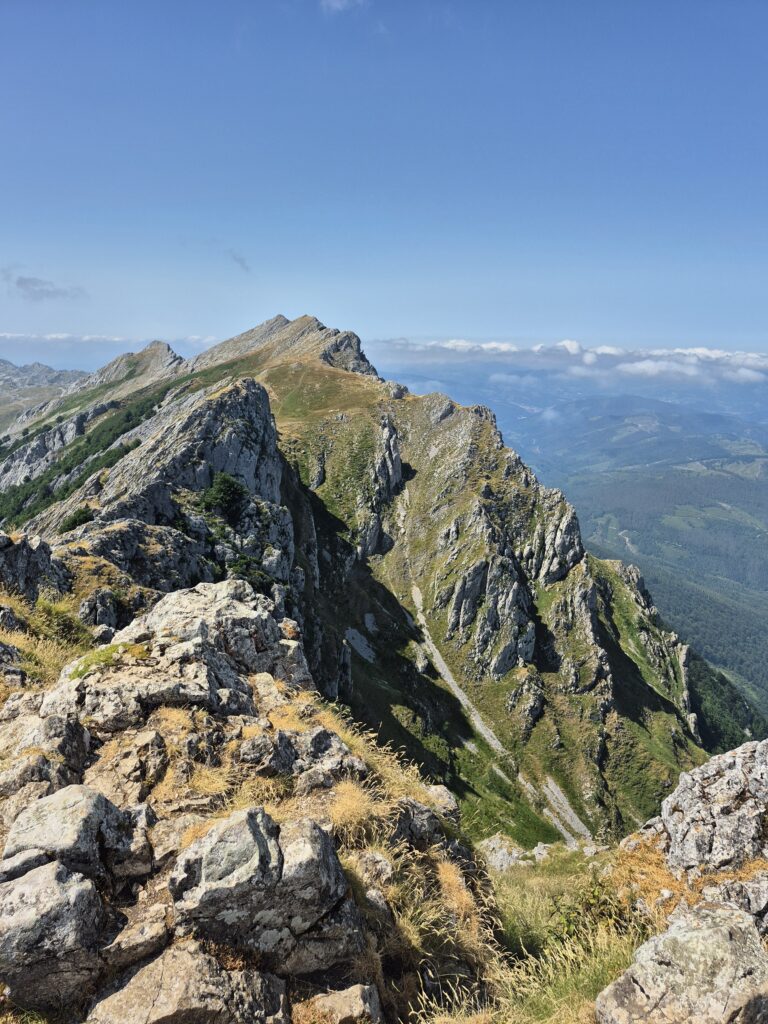
- After clearing the two highest points, the trail drops slightly before the final push to the most iconic peak: Aizkorri. Although it is the third-highest in the range, it is the spiritual heart of the massif.
- The Ascent: The final ridge section is narrow and requires steady footing over polished limestone.
- The View: Unlike the earlier peaks, this vantage point puts you directly above the San Adrián Tunnel and provides a top-down perspective of the Goierri valley below.
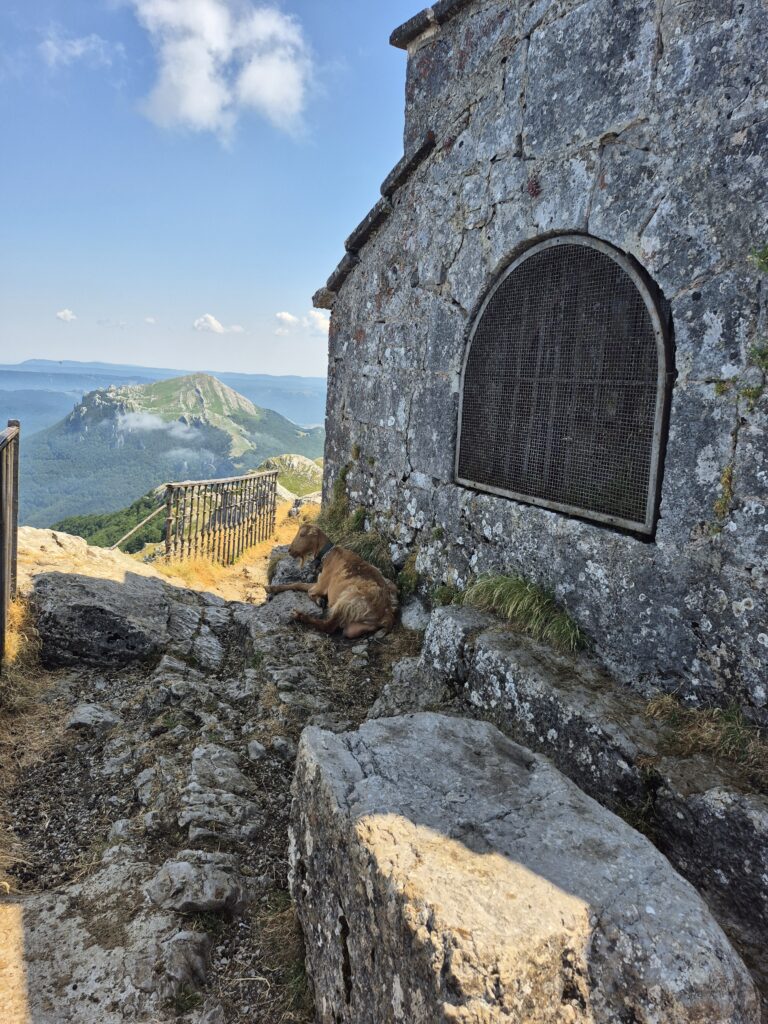
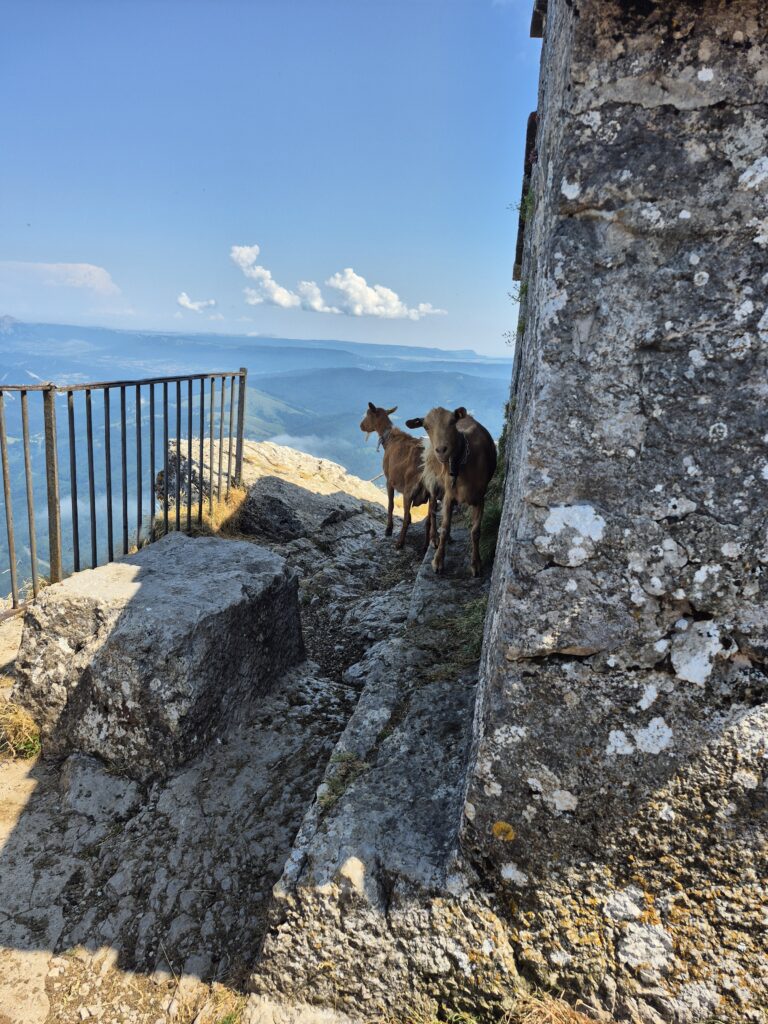
- Once you reach the Ermita de Santo Cristo, take a seat on the stone bench on the leeward side of the chapel. It’s the perfect spot to break out a snack (preferably some Idiazabal cheese that you picked up from the refuge below) while tucked away from the notorious Aizkorri wind. When we were there we shared the ridge with some very chilled Basque goats (Azpi Gorri). At one point we got too close and a few of them scattered over the edge. We were so scared that we had caused them to fall off the cliff edge and hurt themselves but when we peered over, we saw them darting across the tiniest ledges on the side of the mountain. It was amazing to witness.
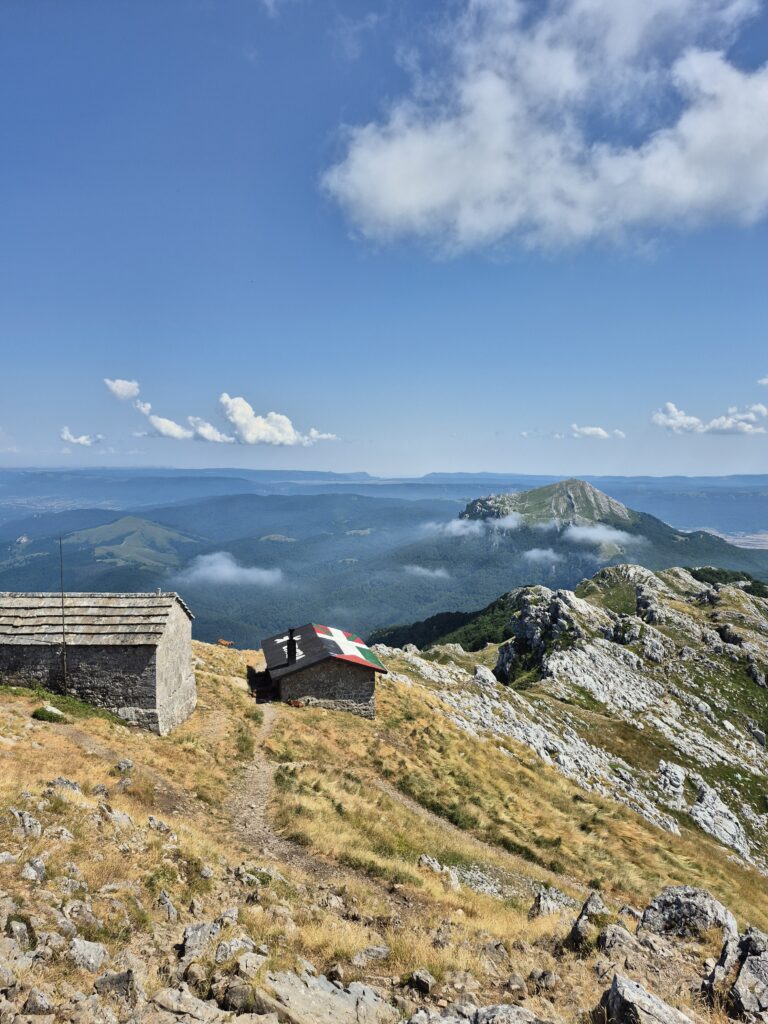
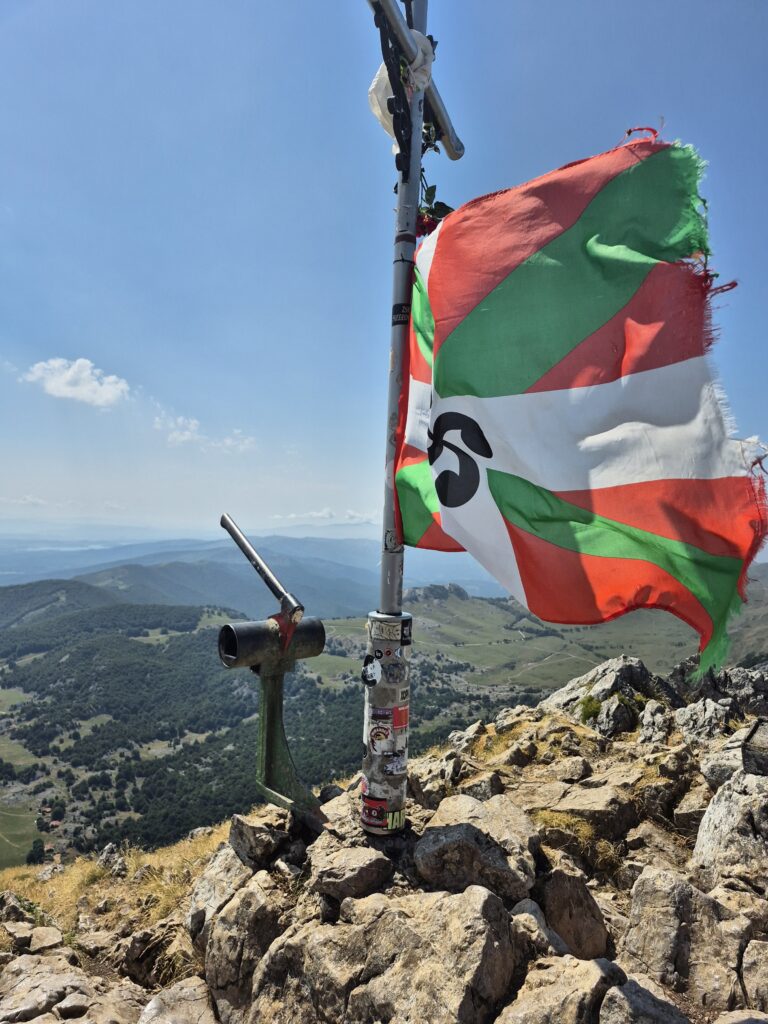
Refugio de Urbia & The Ermita – 13.5km
At the heart of the meadows, you’ll find the Refugio de Urbia and its neighboring small chapel. Now that you have conquered Aizkorri and its neighbouring peaks, you can sit down with a bottle of cider and feel like you’ve truly earned it.
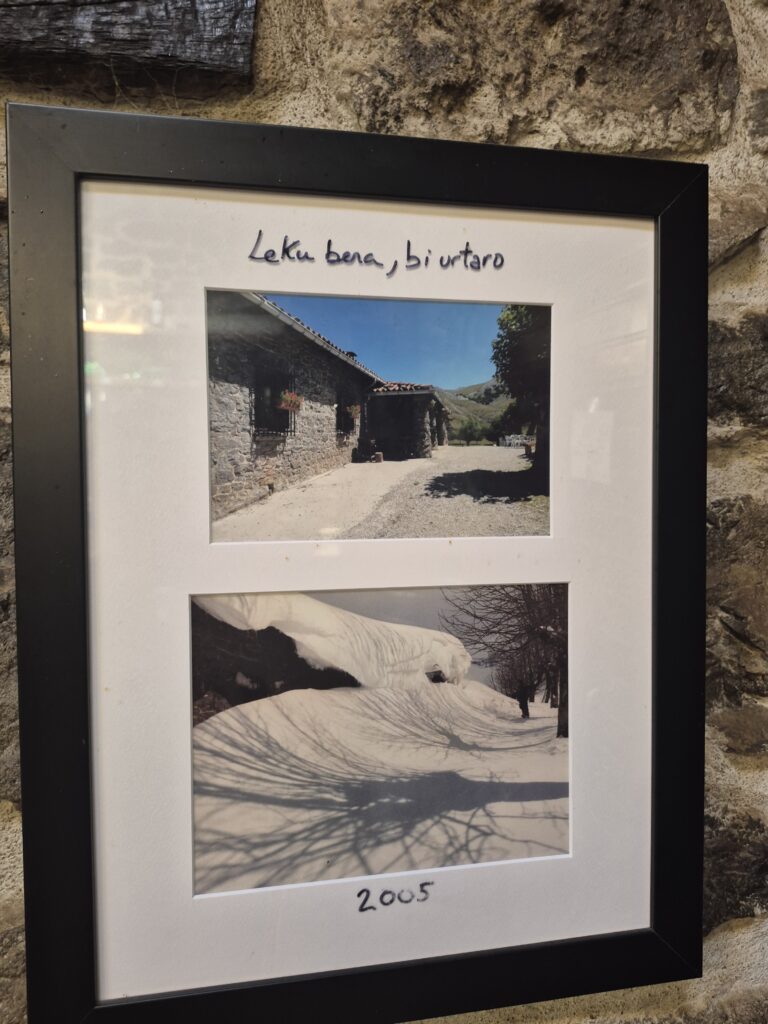
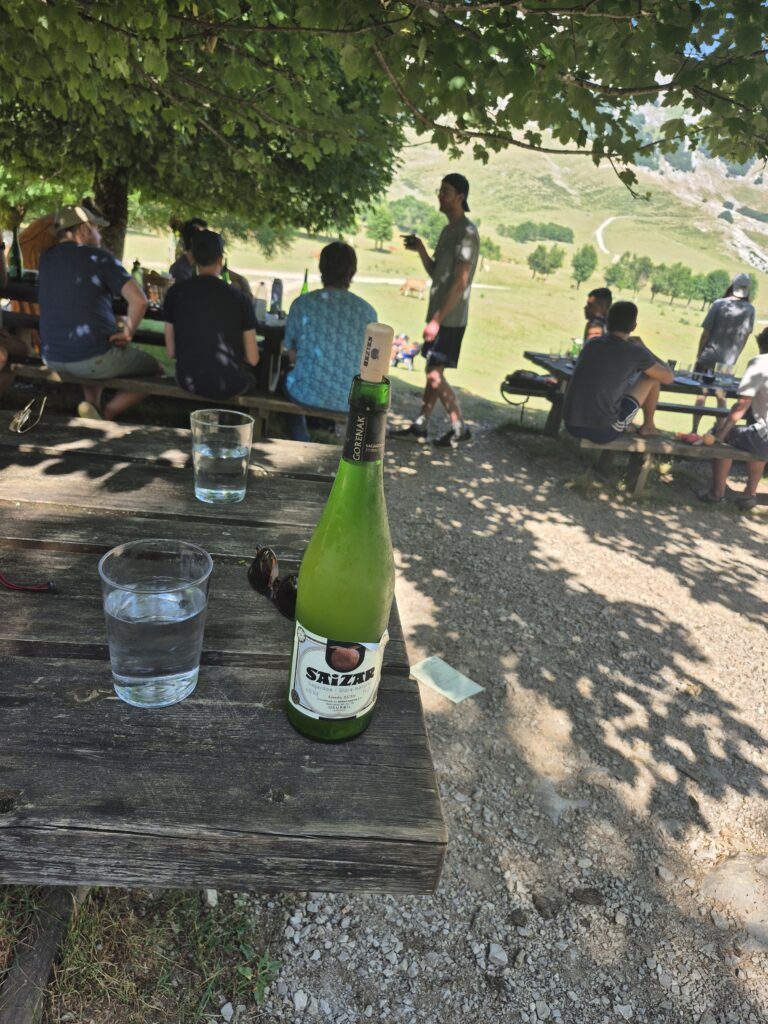
We highly recommend stopping here for a “bocadillo” of local Idiazabal cheese. The terrace offers a perfect view of the ridge youhave just climbed, and if you are lucky you will get a table under the trees and out of the sun. The atmosphere is quintessential Basque mountain culture – rugged, friendly, and deeply connected to the land.
During our stop, we noticed that every table of hikers was enjoying a green bottle, pouring the contents from a significant height. Naturally, we enquired about it and were promptly given a full bottle of Basque cider (Sagardoa). The ritual is fascinating: the cork is removed and then replaced with a specific notch carved into it, allowing you to pour with the cork still in the bottle.
It’s poured from a height – a technique called escanciar – to “break” the cider against the glass. This aerates the liquid, releasing the natural carbonation and volatile aromas that give the cider its characteristic zing. This was the most refreshing thing and on every hike after this, we dreamt of having an ice cold bottle of sagardoa to cool us down.
To accompany the cider, we also enjoyed a plate of broken eggs on chips (huevos rotos). It wasn’t something I thought I would enjoy in the middle of a strenuous hike, but the salt and protein were actually exactly what we needed before the final push to the ridge. In total, along with the cider, this cost us €11.60. What a bargain!
It was hard to drag ourselves away from the sun-drenched terrace of the Refugio de Urbia, especially with the last of the Basque cider still hitting the spot, but with the limestone peaks behind us, we eventually began the long descent back through the ancient beech forest toward the Arantzazu Sanctuary. By the time we reached the car, we were more than ready to swap our trail shoes for some spectacular food and drink in our chosen base for this hike – check out our Summit & Sláinte Scorecard for Vitoria-Gasteiz here for the best post-hike spots.
🎒 The Essentials: What’s in My Pack?
The weather in the Basque Country can shift rapidly once you start to gain elevation. Here is the gear I relied on for the summit push:
- Watch: I’m currently using a Garmin 645 Music. It has enough battery to survive a full day of hiking or running, and the “breadcrumb” return-to-start function has saved me more than once from some sticky situations. However, I’ve hit the limit of what a non-mapping watch can do in the high mountains. I’m looking to upgrade to a unit with full GPS topo maps and significantly better battery life in the near future—so stay tuned for an upcoming gear review!
- Footwear: We like to move fast in the mountains and want the option of running the flats or descents. To that end, my wife and I both wear and love Hoka Speedgoat trail running shoes. I’ve been a huge fan of these shoes since the Speedgoat 2. While they don’t have the aggressive, deep lugs of my Inov-8 X-Talon Ultra 260 V2s, they are a much more versatile shoe and can handle almost anything the Pyrenees throws at them. The Vibram Megagrip outsole provides exceptional grip and enough cushioning for long days on the trail without sacrificing ground feel. I specifically prefer the non-Gore-Tex versions; if my feet get wet, I want them to drain and dry quickly rather than trapping the water inside. You’ll definitely appreciate that grip on the “stairs” between Lac Gentau and Lac Roumassot, where the terrain gets rocky and uneven.
- Socks: I am a huge fan of Stance running socks – so much so that I find it hard to wear anything else, even on my “off” days. They feature quirky designs and they wick away moisture incredibly effectively. I’ve never had a blister with them, even when running through the notoriously wet Irish fells.
- Baselayer: I find that my standard running shorts and T-shirts are the most comfortable for fast hiking. I’m a huge fan of No Club Running Club’s tees. They feature super cool artwork, use quick-drying lightweight fabric, and—crucially for the exposed Pyrenean ridges—offer UPF 40+ UV protection.
- The “Secret Weapon”: On this trip, I officially fell in love with Passenger’s 365 Active button-up shirts. They are lightweight, quick-drying, and have a Polygiene anti-odour finish to keep you fresh. Having never hiked in a button-up shirt before, it’s been a revelation; they allow the air to flow through and look smart enough for a pub visit afterward. I’m not ashamed to admit I wore mine for four straight hiking days without a wash, and it still smelled fine. What a find!
- Windbreaker: A lightweight windbreaker is essential. Even on a sunny day, the wind at Lac de Bersau (2,080m) can be biting. My current go-to is the Montane Featherlite Windproof Jacket. It’s an incredibly light, packable, and breathable layer. I specifically prefer the non-hooded version; if it actually starts to rain, I’ll be reaching for a dedicated waterproof shell anyway, and I can’t stand a spare hood blowing about and annoying me when moving at speed on a tricky descent.
- Waterproof layer: I carry Montane Minimus Nano Waterproof Pants, which I use as part of my mandatory gear for fell races as they pack up into the size of an apple, but I have to admit that on European summer hiking trips, I am yet to pull them out from my bag. I tend to stick my waterproof jacket on and trust that my bottom half will dry out when the rain stops. For my top half I carry my trusty Montane Minimus jacket which has been keeping me warm and dry for the last 3 years. It’s super lightweight and packs up into it’s own pocket.
- Running Cap: Fractel caps are my headwear of choice. Lightweight,UPF 30+ UV protection, quick-drying, and roll up small. Love them! Have to stop buying them!
- The “Can’t Live Without” Accessory: Whether I’m running or hiking, I never hit the trail without a Buff. They are incredibly versatile and perfect for regulating heat; I’ll wear mine as a neck gaiter when the morning air is crisp, then move it to my wrist or use it as a headband to manage sweat as the effort increases. It’s the ultimate multi-tool for temperature control.
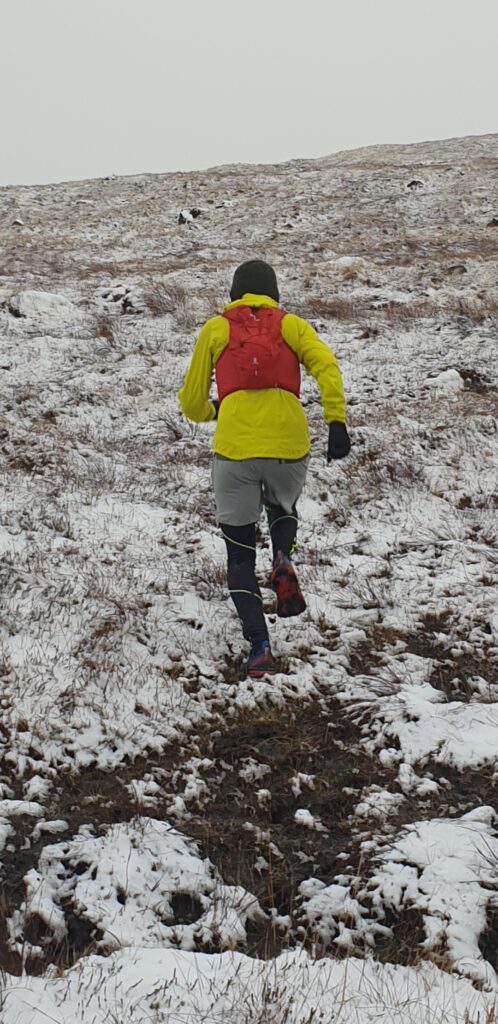
- Pack & Hydration: Since we like to move quickly, I favor a running hydration vest over a traditional backpack. I use the Salomon ADV Hydra Vest 8, which holds all my layers and gear perfectly with zero bounce when I decide to pick up the pace. I carry two 500ml flasks on the shoulder straps for easy access. On this trip, I used the Salomon SOFT FLASK XA FILTER. These are a total game-changer; they allowed me to refill directly from the waterfalls and streams along the Ayous circuit without worrying about bacteria. I use this pack for everything from long marathon training runs, to carrying mandatory gear in fell races, to long hikes like this one. Above is a picture of it in the Mournes.
- Navigation: My go-to for planning and following hikes is Outdooractive. I use the Premium subscription, which is essential for this kind of terrain because it allows you to download high-resolution maps for offline use when signal drops in the deep valleys. It also gives you the ability to print off to-scale paper maps—a must-have backup for any serious mountain day.
- The Spanish Secret: When I’m specifically on the Spanish side of the border, I also switch over to Wikiloc. It has a much higher volume of user-generated content for Spanish routes, which is great for finding those “hidden” trail variations that might not show up on the more curated apps.